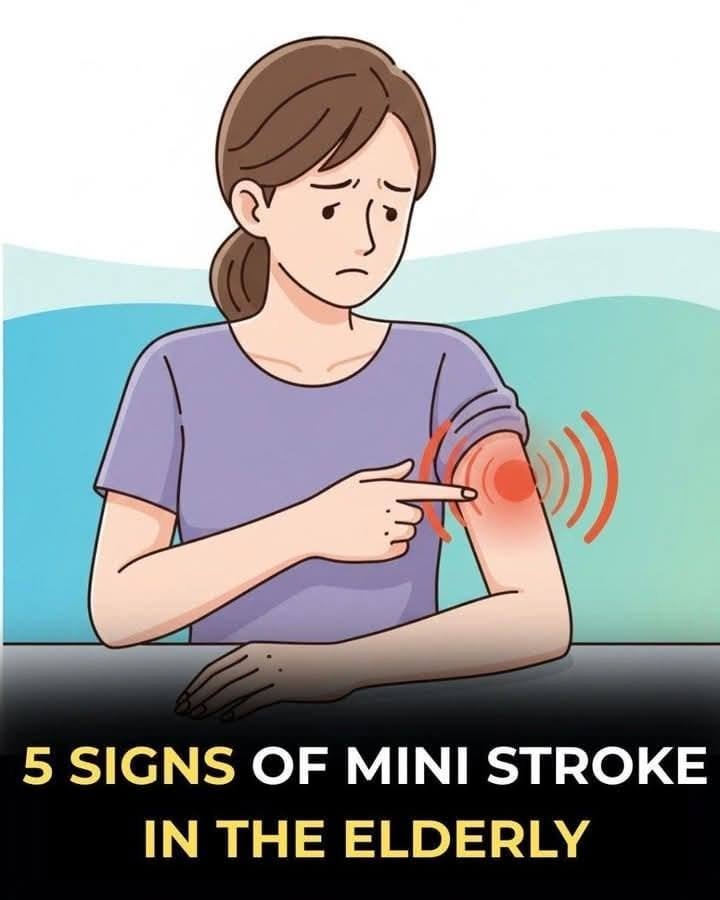
5 Signs of a Mini-Stroke (TIA) in Older Adults
When a transient ischemic attack (TIA)—often called a “mini-stroke”—occurs, it acts as a temporary blockage of blood flow to the brain. In older adults, these warning signs can sometimes be subtle or mistaken for normal signs of aging, fatigue, or joint stiffness. However, because a TIA is a critical alarm for a potential major stroke, recognizing these five key signs immediately is vital:
Key Signs to Watch For
-
1. Sudden One-Sided Weakness or Heaviness:
-
What it looks like: A sudden inability to lift an arm, a heavy dragging feeling in one leg, or a general loss of muscle strength down one entire side of the body.
-
-
2. Sudden Facial Asymmetry or Numbness:
-
What it looks like: One side of the mouth drooping when trying to smile, or a sudden, unexplained numbness spreading across the cheek or lips.
-
-
3. Brief Episodes of Slurred or Incoherent Speech:
-
What it looks like: Struggling to articulate words, slurring sentences, or speaking in a way that doesn’t make sense, even if the episode lasts only a few minutes.
-
-
4. Sudden Loss of Vision or Double Vision:
-
What it looks like: A sudden blurring of sight, darkening of vision in one eye (like a shade pulling down), or double vision that makes it hard to focus.
-
-
5. Unexplained Dizziness, Vertigo, or Loss of Balance:
-
What it looks like: A sudden, intense bout of unsteadiness, stumbling, or feeling as though the room is spinning, completely unprovoked by inner-ear issues or standing up too fast.
-
💡 The Golden Rule of TIA
Even if these symptoms completely resolve within 10 to 15 minutes and the person feels totally fine afterward, never ignore them. A TIA is a major medical warning sign that requires an immediate emergency evaluation to check for underlying blood vessel blockages or clot risks.
Are you looking into these signs out of caution for a loved one, or trying to understand recent symptoms?
