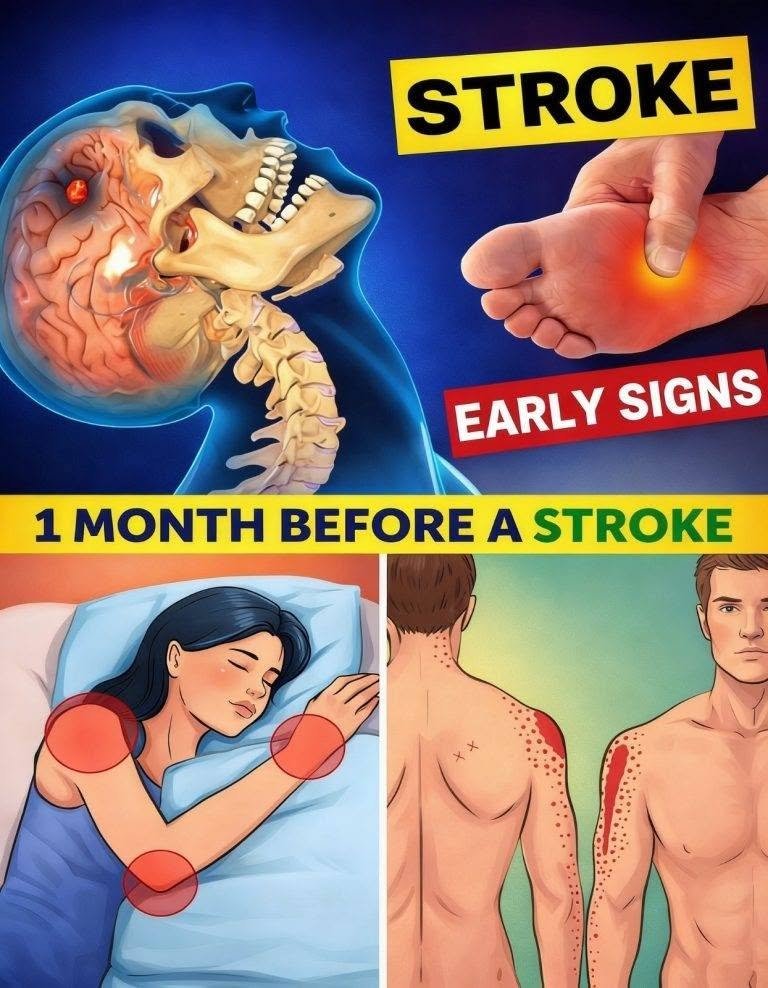
8 Warning Signs Before a Stroke and 9 Practical Prevention Tips
While major strokes happen suddenly, clinical research highlights that the brain often sends subtle warning signals—known as Transient Ischemic Attacks (TIAs) or early vascular alerts—days or even weeks beforehand. Recognizing these early signs can provide a critical window for medical intervention.
Part 1: 8 Warning Signs That Can Precede a Stroke
-
1. Transient One-Sided Weakness: A sudden, temporary loss of strength or a “pins and needles” feeling down one arm, leg, or side of the face that resolves on its own.
-
2. Brief Episodes of Slurred Speech: Struggling to articulate words, speaking gibberish, or experiencing sudden difficulty understanding others for a few minutes.
-
3. Sudden Vision Changes: Temporary blurring, double vision, or a sudden partial loss of sight (like a dark shade pulling down over one eye).
-
4. Unexplained Loss of Balance: A sudden bout of severe dizziness, vertigo, or stumbling unprovoked by inner-ear issues.
-
5. The “Worst Headache of Your Life”: An intensely severe, sudden headache unlike any normal tension headache or migraine, sometimes accompanied by a stiff neck.
-
6. Unilateral Facial Asymmetry: Catching a glimpse in the mirror and noticing a slight sag around one side of the mouth or cheek.
-
7. Sudden Cognitive Confusion: An abrupt, profound mental sluggishness or feeling entirely disoriented for short windows of time.
-
8. Brief Episodes of Dizziness and Lightheadedness: Sudden vertebrobasilar symptoms where blood flow temporarily dips to the back of the brain, causing unsteadiness.
Part 2: 9 Evidence-Based Tips to Prevent a Stroke
Protecting your vascular and neurological health comes down to consistent, daily lifestyle habits:
-
1. Monitor and Control Blood Pressure: High blood pressure is the single biggest risk factor for stroke. Keep a regular log and work with your doctor to keep readings in a healthy range.
-
2. Manage Blood Sugar Levels: Keep a close eye on your glucose, as chronic high blood sugar damages blood vessels and promotes clot formation.
-
3. Stay Hydrated to Protect Circulation: Dehydration thickens the blood, making it much easier for clots to form. Drink adequate water throughout the day.
-
4. Prioritize Heart-Healthy Nutrition: Focus on lean proteins, fiber-rich vegetables, healthy fats (like olive oil and avocado), and low-sodium choices to reduce vascular strain.
-
5. Incorporate Gentle Daily Movement: A brisk 20-to-30-minute walk daily improves circulation, lowers blood pressure, and supports metabolic health.
-
6. Protect Your Sleep & Watch for Sleep Apnea: Treat sleep apnea promptly, as untreated nocturnal oxygen drops trigger sudden blood pressure spikes and clot risks.
-
7. Review Medications Regularly: Partner with your physician or pharmacist for routine medication reviews to catch and adjust drugs that might cause dizziness, confusion, or blood pressure fluctuations.
-
8. Limit Excess Alcohol: Keep alcohol consumption moderate, as heavy drinking spikes blood pressure and increases stroke risk.
-
9. Never Ignore “Mini-Stroke” Symptoms: If you or a loved one experience any sudden neurological symptoms that vanish quickly, treat it as an emergency and seek immediate medical evaluation.
Are you reviewing these prevention tips out of general health caution, or is there a specific risk factor you are looking to manage?
