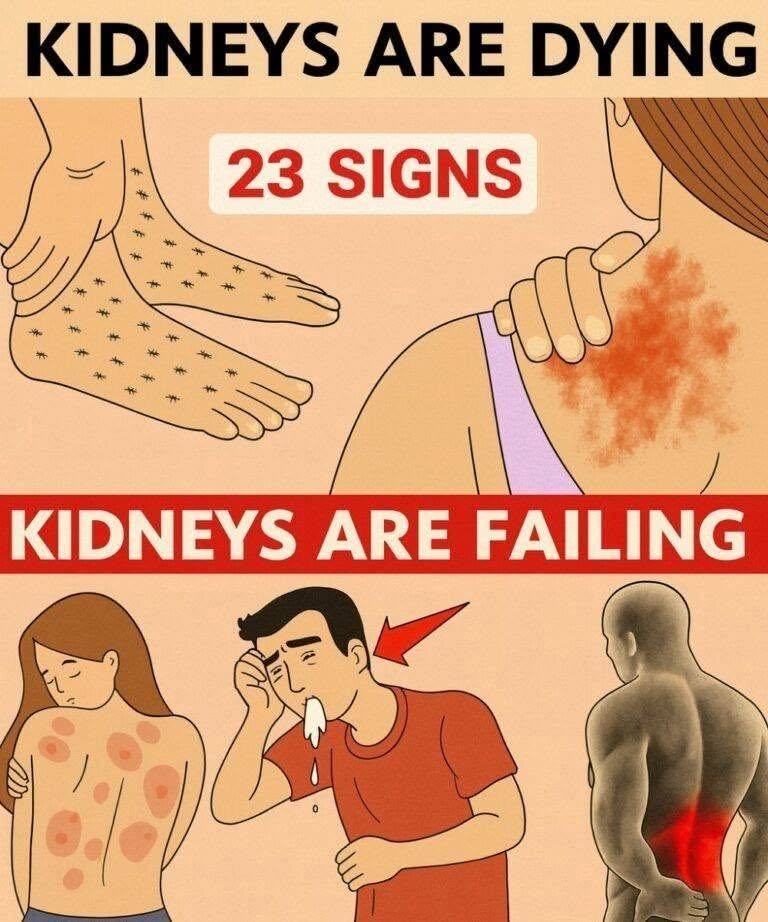
Viral lists highlighting “strange signs your kidneys might be in trouble” often focus on how cleverly our kidneys communicate when their filtration, fluid regulation, or hormone-producing roles begin to slip. Because early-stage chronic kidney changes can be notoriously “silent”, the body often relies on subtle, unexpected physical cues.
Unpacking what these unusual symptoms actually mean helps separate internet myths from valuable clinical awareness:
Key Unusual Signs of Kidney Strain
-
1. Excessively Foamy or Bubbly Urine:
-
What it means: If your urine frequently looks frothy—resembling scrambled eggs or the head on a poured beer—it often indicates proteinuria (protein leaking through damaged kidney filters into the urine).
-
-
2. Persistent Puffiness Around the Eyes (Periorbital Edema):
-
What it means: Waking up with heavy puffiness around your eyes, particularly in the morning, can happen when the kidneys leak significant amounts of protein into the urine rather than keeping it balanced in the bloodstream.
-
-
3. Unexplained, Deep-Seated Itching (Pruritus):
-
What it means: When kidneys struggle to filter waste, phosphorus and other toxins accumulate in the blood, leading to severe, whole-body dryness and intense itching that doesn’t easily resolve with standard lotions.
-
-
4. A Metallic Taste or “Ammonia” Breath:
-
What it means: A buildup of urea in the blood (uremia) can alter your sense of taste, make meat taste metallic, or cause breath to carry a faint, unusual odor.
-
-
5. Frequent Nighttime Urination (Nocturia):
-
What it means: As kidney tissue loses its ability to concentrate urine properly, the body compensates by producing larger volumes of more dilute urine, forcing more frequent trips to the bathroom after dark.
-
-
6. Unexplained Muscle Cramps:
-
What it means: Electrolyte imbalances—specifically shifts in calcium, phosphorus, or sodium that the kidneys normally regulate—can irritate nerves and trigger painful nighttime muscle spasms, particularly in the calves.
-
-
7. Swollen Ankles and Feet (Edema):
-
What it means: Impaired kidney function means excess sodium and fluid are retained in the body, which gravity pulls downward into the lower legs and feet.
-
💡 Protecting Long-Term Kidney Health
Because the kidneys work silently alongside your cardiovascular and metabolic systems, protecting them relies on keeping blood pressure and blood sugar in check, staying adequately hydrated, and being cautious with the long-term or frequent use of over-the-counter NSAIDs (like ibuprofen), which can strain kidney filtration units.
Are you exploring these signs out of general wellness curiosity, or have you or a loved one noticed any specific changes like persistent fatigue or swelling?
