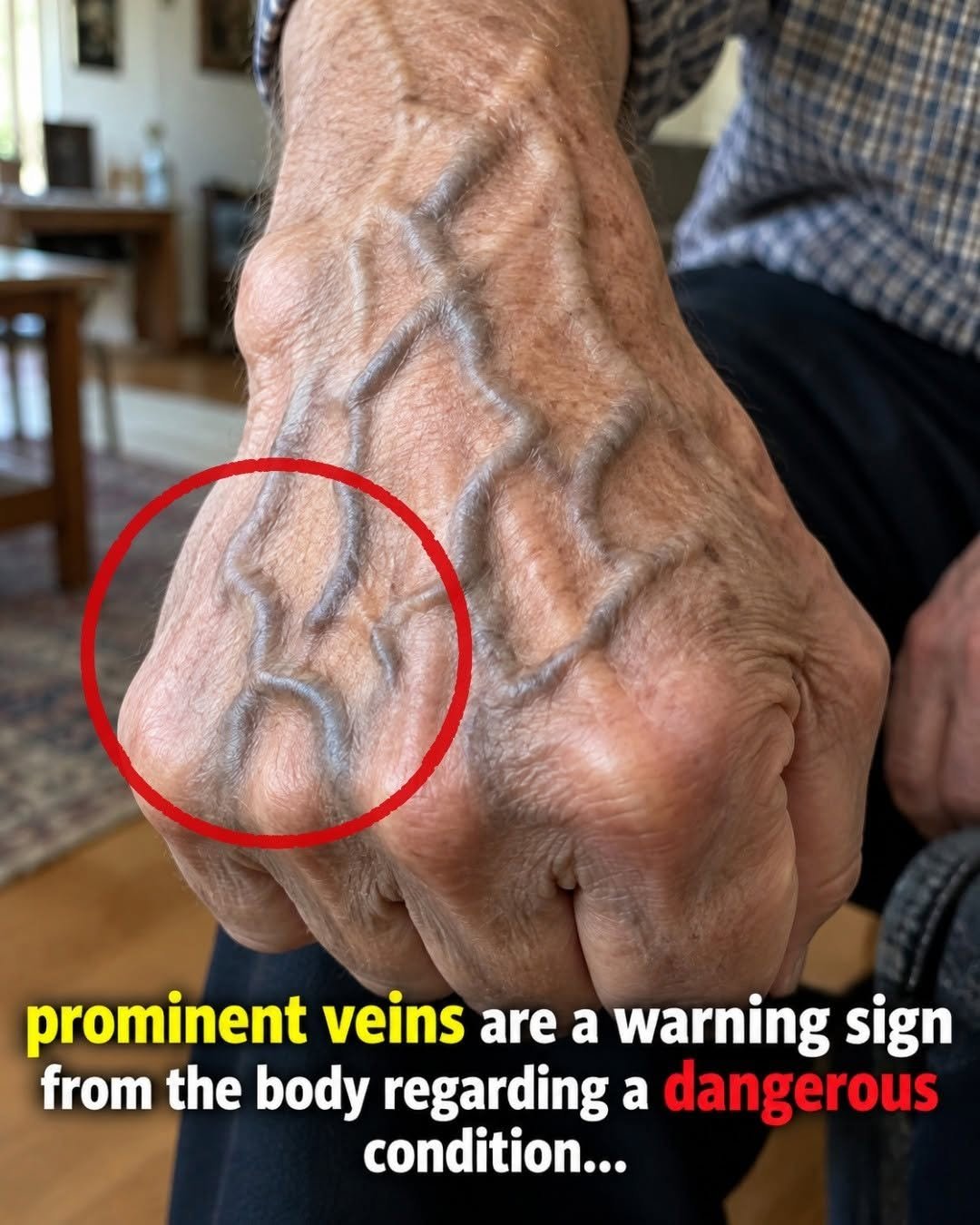
Visible Blue Veins After 60: What Your Circulation Is Telling You
Sensationalized health headlines love to frame visible blue veins in older adults as a frantic “screaming” warning sign of impending vascular catastrophe. While dramatic, this framing misses the nuance of how normal aging interacts with our vascular system.
As we cross into our 60s and beyond, seeing more prominent, greenish-blue veins—particularly on the hands, arms, legs, and feet—is extremely common. However, understanding the difference between standard age-related changes and actual circulatory strain helps you know when a vein is just telling a normal story of time, versus when it needs a closer look.
Why Veins Become More Visible After 60
-
1. Thinning Skin and Loss of Subcutaneous Fat:
-
What happens: As we age, the skin naturally thins and the layer of fat just beneath the surface (subcutaneous fat) diminishes. Fat acts like a natural blanket; when it thins out, blood vessels that were previously hidden sit closer to the surface, making them pop into view visually.
-
-
2. Natural Loss of Skin Elasticity and Collagen:
-
What happens: Collagen and elastin production slows down with age. This loss of structural firmness means skin doesn’t hug underlying structures as tightly, allowing surface veins to become more prominent and sometimes slightly tortuous (winding).
-
-
3. Venous Insufficiency (Varicose and Spider Veins):
-
What happens: Inside your veins, tiny, one-way valves work against gravity to push blood back up to the heart. Over decades, these microscopic valves can weaken, allowing a small amount of blood to flow backward and pool. This increases pressure inside the vessel, causing it to stretch, bulge, and turn a darker blue or purple (forming varicose veins).
-
-
4. Changes in Body Composition and Hydration:
-
What happens: Shifts in muscle mass and overall fluid balance can subtly alter how blood circulates through surface vessels, temporarily making veins on the hands or arms stand out more sharply.
-
When Visible Veins Point to Circulation Strain
While mild bulging or surface visibility is usually a cosmetic or normal structural aspect of aging, you should pay attention if visible veins are accompanied by specific warning signs of chronic venous insufficiency (CVI) or vascular restriction:
-
Persistent Aching or Heaviness: Legs that feel leaden, tired, or deeply achy by the end of the day, particularly after prolonged standing.
-
Ankle and Lower Calf Swelling: Puffy ankles that worsen as the day goes on, signaling that fluid is struggling to move upward against gravity.
-
Skin Discoloration and Texture Changes: A brownish or reddish staining of the skin around the ankles, or skin that feels dry, tight, and leathery (lipodermatosclerosis).
-
Throbbing, Itching, or Burning: Sensations of heat, itching, or restless discomfort directly over bulging veins.
💡 Proactive Ways to Support Circulation After 60
If you want to keep your blood flowing smoothly and minimize the discomfort of sluggish venous return, consistency is key:
-
Elevate Your Legs: Take 15 minutes in the afternoon or evening to elevate your legs above the level of your heart, giving gravity a helpful break.
-
Keep Moving: Regular, low-impact movement—like our cardiologist-recommended brisk walk—engages the calf muscle pump, which acts like a secondary heart to push venous blood back upward.
-
Stay Hydrated: Adequate fluid intake keeps blood viscosity normal, making it easier for your cardiovascular system to circulate efficiently.
-
Consider Compression Wear: If approved by your doctor, graduated compression stockings can gently support surface veins and prevent fluid pooling during long periods of sitting or standing.
Are you noticing visible veins mostly on your hands and arms as part of natural skin thinning, or are you experiencing any heaviness or aching in your legs?
