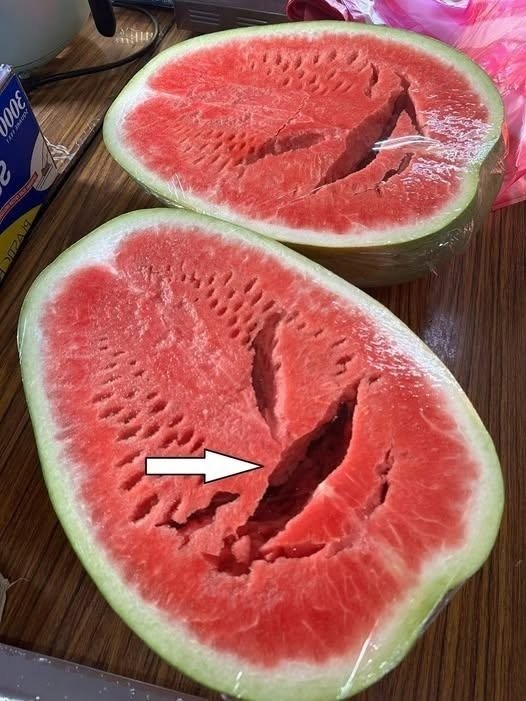
Dramatic headlines warning that you must “stop eating it immediately” if you see cracks inside a cut watermelon are designed to spark instant panic over food safety. While a cracked or unusually hollow watermelon might look a little strange, the reality behind these fissures is usually far more mundane—and far less dangerous—than viral fear-mongering suggests.
Understanding why these cracks happen helps you separate a harmless cosmetic quirk from actual spoilage.
What Causes Cracks Inside a Watermelon?
Those internal splits, gaps, or hollow cavities are technically known as hollow heart, and they are purely an agricultural phenomenon:
-
Uneven Pollination or Weather Stress: Hollow heart happens during the growing process. If the watermelon experiences irregular weather conditions—such as sudden temperature drops, inconsistent rainfall, or poor pollination while the fruit is developing inside—the inside grows at a different rate than the outside.
-
The Result: The outer rind finishes expanding while the inner flesh lags behind, pulling apart and creating hollow spaces or jagged cracks inside the melon.
-
Is It Safe to Eat? Yes. While the texture right around the crack might feel slightly mealy, woody, or dry due to the stretching, hollow heart does not mean the melon is toxic, diseased, or contaminated with harmful bacteria. It is simply a cosmetic defect that occurs naturally on the vine.
How to Tell the Difference: Natural Cracks vs. Actual Spoilage
While hollow heart cracks are harmless, you do want to know when a watermelon has actually gone bad. True spoilage looks and smells very different from a simple agricultural split:
-
Foul Smell or Fermentation: If a watermelon smells sour, alcoholic, or distinctly off when you cut into it, bacteria or wild yeasts have invaded the flesh. Do not eat this.
-
Slime or Discoloration: Fresh watermelon flesh should be crisp and vibrant pink or red. If parts of the inside are turning a greyish-brown, slimy, or mushy, it is rotting and past its prime.
-
Mold Growth: Any visible white, green, or black mold on the cut surface or rind means the fruit has been compromised by fungi and should be discarded.
💡 The Big Picture
If you slice open a watermelon and find internal cracks, take a quick sniff and check the texture. If it smells fresh, sweet, and clean, those fissures are just a harmless sign of hollow heart from its time on the vine, and it is entirely safe to enjoy.
Have you recently cut into a watermelon that had these unusual hollow spots, or did one of these dramatic online food warnings just catch your eye?
