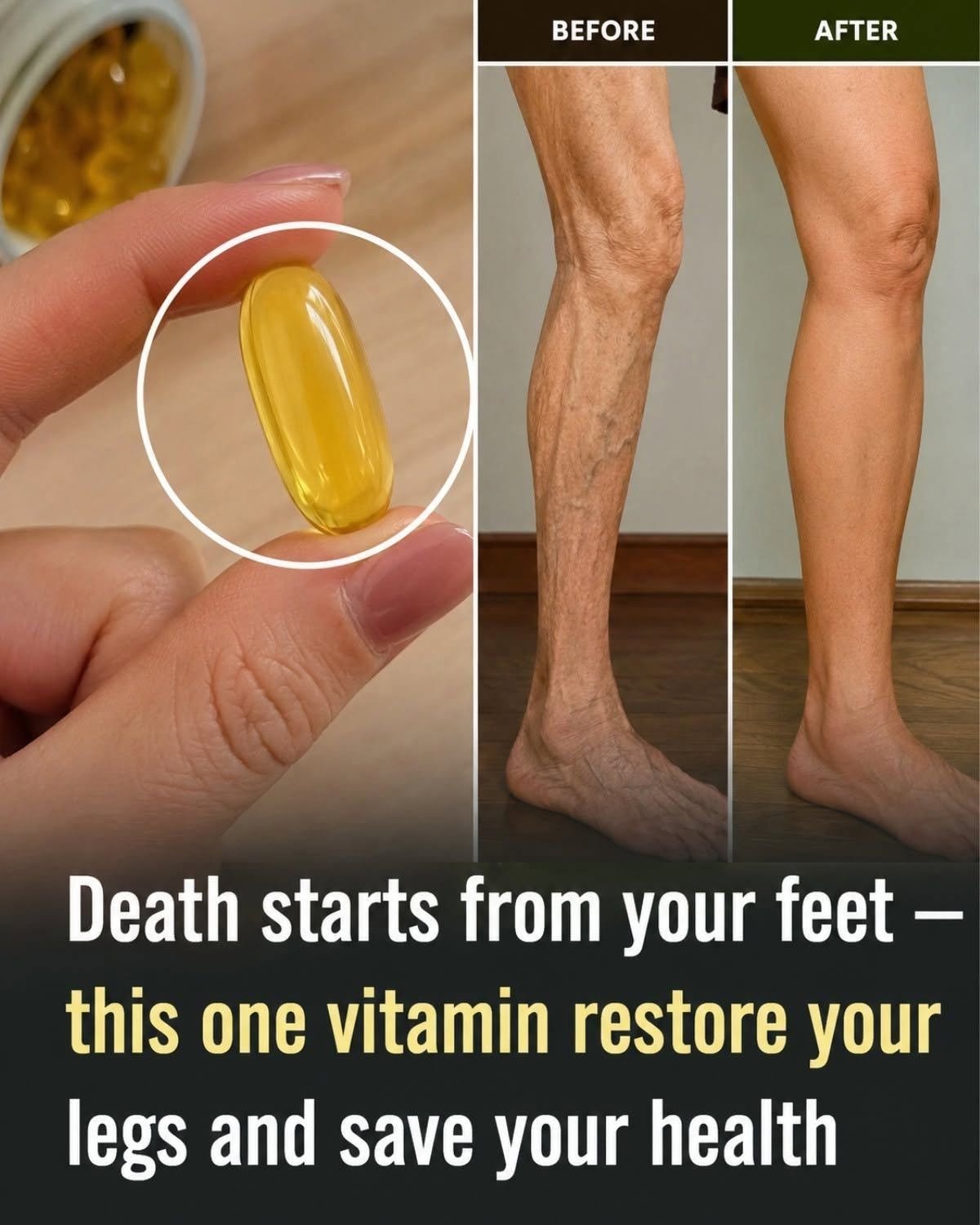
The Best Vitamin for Your Legs: What “Dead” Feet and Heavy Calves Are Missing
Sensationalized wellness headlines love to promise a single “best vitamin” that will instantly cure heavy calves, tingling toes, or that unsettling “dead feet” sensation. While internet health blogs frequently crown nutrients like Vitamin B12, Vitamin B1 (Thiamine), or Vitamin D as a miracle leg tonic, the reality of lower-limb discomfort is a bit more nuanced.
When your legs feel heavy, sluggish, or unusually numb, your body isn’t usually begging for a single pill—it is signaling that your nerves, circulation, or metabolic systems need structural support.
The Nutrients Tied to Leg Heaviness and Nerve Health
-
1. Vitamin B12: The Nerve Signaling Essential
-
Why it’s highlighted: B12 is vital for maintaining the protective myelin sheath that insulates your nerves. A deficiency can directly lead to peripheral neuropathy—causing numbness, tingling, a “pins and needles” prickle, or a sensation of “dead” or clumsy feet.
-
The reality: If low B12 is the root cause, supplementation works wonders. However, it won’t fix heavy calves caused by poor blood circulation or fluid pooling.
-
-
2. Vitamin B1 (Thiamine): The Circulation and Energy Link
-
Why it’s highlighted: Thiamine supports cellular energy and small blood vessel integrity. Severe shortages can lead to fluid retention and muscular fatigue.
-
The reality: While crucial for metabolic health, high-dose B1 won’t clear up heavy, tired legs if the underlying culprit is vein valve fatigue or structural back strain.
-
-
3. Magnesium and Potassium (The Electrolyte Pair):
-
Why they matter: While technically minerals rather than vitamins, these two govern muscle contraction and relaxation. A shortage frequently triggers cramping, restless legs, or a heavy, tight feeling in the calves after a long day.
-
Real-World Causes of “Dead” Feet and Heavy Calves
If your legs frequently feel heavy or your feet feel like they’ve gone dead, looking beyond simple vitamin deficiencies helps pinpoint what’s actually happening:
-
Mild Nerve Compression (Spinal or Peripheral): Sitting for too long or minor pressure on the lower spine can temporarily slow nerve signals to the feet, causing that classic numbness or “dead” feeling.
-
Sluggish Venous Return: If tiny one-way valves in your leg veins are struggling against gravity, blood and fluid pool in your lower calves by the end of the day, creating a literal “heavy-legged” sensation.
-
Deconditioning: When calf muscles aren’t engaged regularly, the “calf muscle pump”—the body’s natural mechanism for pushing blood and lymph fluid back upward—weakens, making legs feel fatigued much faster.
💡 Practical Steps to Re-Energize Your Lower Limbs
-
Keep the Calf Pump Active: Simple ankle circles, seated heel raises, and daily brisk walking engage your lower-limb muscles to naturally improve local circulation and fluid movement.
-
Elevate Your Legs: Give gravity a break at the end of the day by propping your legs up above your heart for 15 to 20 minutes to ease calf heaviness.
-
Check Your Blood Markers: If you experience chronic tingling, numbness, or persistent fatigue, a routine blood panel can easily check your B12, Vitamin D, and electrolyte levels to see if a genuine deficiency is at play.
Are you noticing this heavy feeling or numbness mostly after sitting for a long time, or does it seem to creep in toward the end of the day?
