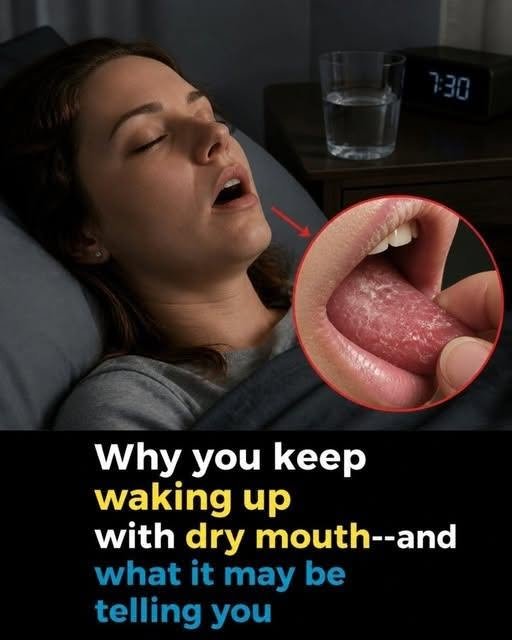
Viral health articles love to turn everyday annoyances like waking up with a parched mouth into a scary diagnosis, hinting that every sip of water you need in the middle of the night points to an underlying metabolic crisis.
Dentists, ENTs, and general practitioners point out that while chronic dry mouth (xerostomia) can occasionally signal systemic issues, the vast majority of morning dry mouth comes down to simple anatomy, environment, and daily habits.
Why You Wake Up With Dry Mouth
-
1. Mouth Breathing (The Most Common Culprit):When you sleep on your back, have mild nasal congestion from allergies, a deviated septum, or sleep apnea, your airway can become partially blocked. This forces you to breathe through your mouth all night. The continuous stream of air evaporating the moisture on your oral mucosa leaves your mouth feeling like a desert by morning.
-
2. Evening Dehydration or Alcohol Consumption:If you didn’t drink enough water throughout the evening—or if you had a glass of wine or beer before bed—your body’s hydration balance shifts. Alcohol is a potent diuretic and a central nervous system depressant, inhibiting saliva production and leading to intense morning dryness.
-
3. Medications:Hundreds of common prescription and over-the-counter medications—including antihistamines, decongestants, antidepressants, high blood pressure medications, and muscle relaxants—have a classic side effect: reducing salivary gland output.
-
4. Natural Aging and Decreased Saliva Production:As we get older, our salivary glands naturally produce less saliva. This is why older adults experience chronic dry mouth much more frequently, especially overnight.
When Dry Mouth Does Deserve Medical Attention
While usually harmless, chronic dry mouth can sometimes serve as an early clinical indicator of conditions that require attention:
-
Obstructive Sleep Apnea (OSA): If your dry mouth is accompanied by loud snoring, waking up gasping for air, or daytime fatigue, it is often a sign of sleep apnea, which forces chronic mouth breathing throughout the night.
-
Uncontrolled Diabetes: As discussed previously, chronic high blood sugar causes frequent urination and systemic dehydration, which rapidly parches oral tissues and reduces saliva flow.
-
Autoimmune Conditions (Sjögren’s Syndrome): In rarer cases, chronic severe dry mouth and dry eyes are hallmarks of autoimmune disorders where the body’s immune system attacks its own moisture-producing glands.
How to Protect Your Oral Health
Saliva isn’t just for comfort; it is your mouth’s natural defense shield. It neutralizes acids, washes away food particles, and prevents tooth decay and gum disease. If you frequently wake up dry:
-
Ensure your bedroom isn’t too dry by using a bedside humidifier.
-
Review your medications with a pharmacist or doctor if dry mouth is a daily issue.
-
Stay consistently hydrated throughout the day rather than chugging a gallon right before sleep.
-
Address nasal blockages or allergy triggers with your doctor.
💡 The Big Takeaway
Waking up with a dry mouth is usually just a sign that you breathed through your mouth overnight, had a stuffy nose, or drank alcohol before bed. However, if it happens persistently every single night, it’s worth investigating for sleep apnea or medication side effects.
Do you frequently wake up parched, or did a viral health article catch your eye?
