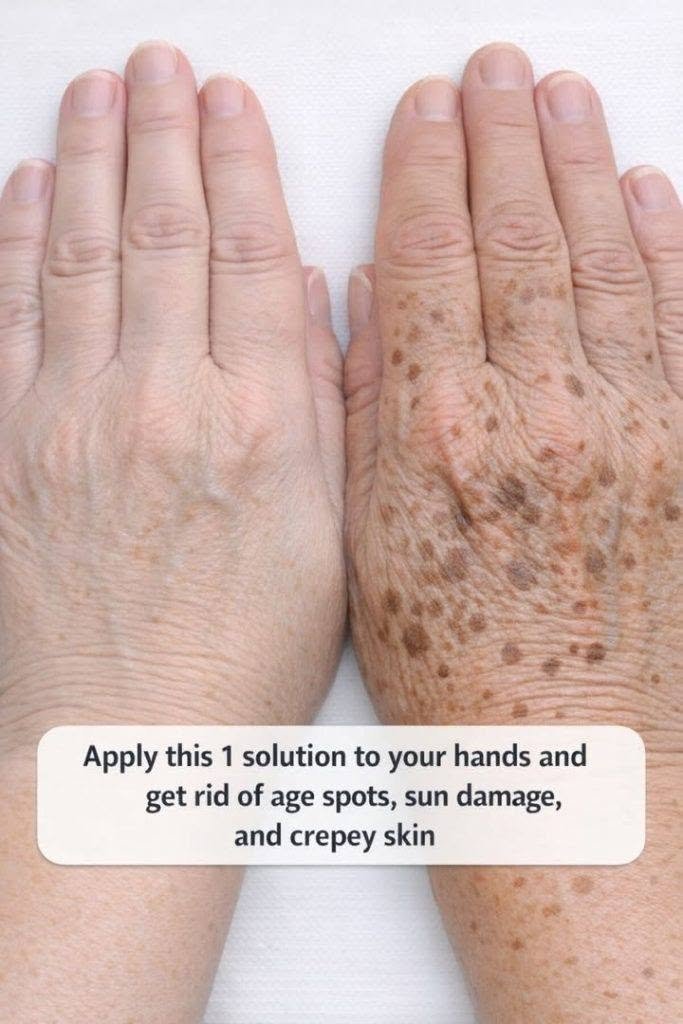
Viral beauty blogs and TikTok reels love to feature “secret family tricks”—usually involving lemon juice, apple cider vinegar, baking soda, or hydrogen peroxide—promising to completely erase stubborn age spots on your hands in just three minutes with zero effort.
Dermatologists and pigment experts point out that while these home remedies make for great viral content, skin biology doesn’t work that fast. True age spots require patience, proper science, and protection.
What Are “Age Spots” Really?
-
The Medical Name: Age spots are officially called solar lentigines (or liver spots, though they have nothing to do with your liver).
-
The Cause: They are not caused by aging alone; they are localized accumulations of melanin (skin pigment) triggered by cumulative, years-long exposure to ultraviolet (UV) radiation from the sun. Your skin cells produce extra melanin as a defense mechanism against sun damage, and over time, those pigment clusters form flat, darker patches on sun-exposed areas like the back of your hands.
Why the “3-Minute Kitchen Trick” Fails
-
The Surface Myth: Pigment (melanin) lives deeper down in the epidermis. Slathering an acidic kitchen mixture or a harsh abrasive onto your hands for a few minutes only affects the outermost dead skin cells. At best, you might get a tiny bit of temporary surface exfoliation, but the pigment underneath remains completely untouched.
-
The Danger of Chemical Burns: Viral recipes often recommend using undiluted lemon juice or apple cider vinegar and leaving it on the skin, sometimes exposing hands to sunlight afterward. This can lead to a painful condition called phytophotodermatitis—where fruit juices react with UV light to cause severe blistering, chemical burns, and paradoxical worsening of dark spots (post-inflammatory hyperpigmentation).
Evidence-Based Ways to Treat and Fade Age Spots
Fading hyperpigmentation on the hands takes time (usually weeks to months of consistent care) because you have to wait for your skin cells to naturally turn over and migrate upward:
-
1. Daily Broad-Spectrum Sunscreen (The Most Critical Step):If you treat age spots with expensive creams but forget to apply SPF 30+ to the backs of your hands daily, the sun will instantly reactivate the melanin, undoing all your progress.
-
2. Topical Brightening Agents (Skincare Actives):Dermatologists recommend over-the-counter creams containing proven pigment-inhibiting ingredients:
-
Vitamin C: A powerful antioxidant that inhibits tyrosinase (the enzyme responsible for melanin production) and brightens the skin.
-
Retinoids (Retinol): Speed up cellular turnover, helping to shed pigmented surface cells faster.
-
Alpha Hydroxy Acids (AHAs like Glycolic Acid): Gently exfoliate the upper layers of skin to reveal fresher, more evenly toned cells underneath.
-
-
3. Professional Dermatological Treatments:For faster or more stubborn age spots, in-office procedures like Q-switched lasers, intense pulsed light (IPL) therapy, or chemical peels can safely shatter the melanin clusters in just a few sessions.
💡 The Big Takeaway
There is no 3-minute kitchen hack that will erase years of sun-induced age spots. Fading pigmentation on your hands requires consistent sun protection, targeted brightening ingredients, and a bit of biological patience.
Are you looking for safe skincare ingredients to manage sun spots on your hands, or did a viral beauty trick catch your eye?
