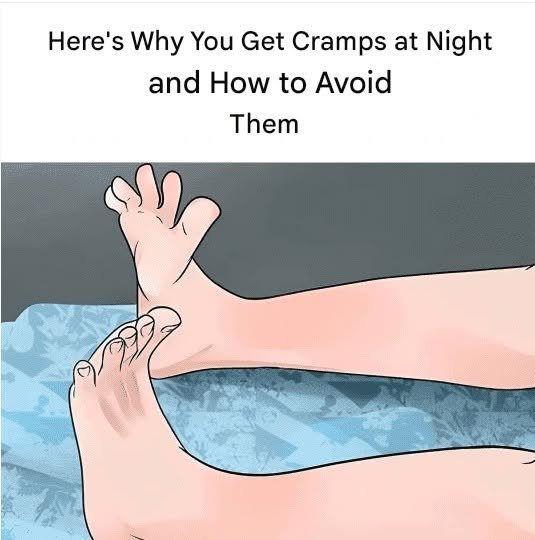
Viral wellness reels love to use definitive hooks like “This is why you get cramps at night!” to reveal a single, shocking culprit—usually claiming that your nightly muscle spasms are caused by a mysterious “toxin buildup,” a total magnesium collapse, or severe systemic failure.
Medical physiologists, sports medicine physicians, and sleep specialists look at the science of nocturnal leg cramps with a much more nuanced perspective. While midnight calf cramps are famously agonizing, they are rarely caused by just one neat little secret; instead, they are usually the result of mechanical and neuromuscular quirks that happen as your body winds down for sleep.
The Real Physiological Triggers Behind Night Cramps
When a muscle suddenly seizes up while you’re fast asleep, it isn’t because your body is failing—it is a misfire in the communication between your nervous system and your muscle fibers. The primary contributors include:
-
1. Prolonged Shortened Muscle Positions:When you sleep on your back with your toes pointed downward, or curl up tightly on your side, your calf muscle remains in a shortened, relaxed position for hours. If a stray electrical signal from a nerve fires while the muscle is already shortened, it can instantly lock up into a violent, painful cramp.
-
2. Neuromuscular Fatigue:If you spent the day standing for long hours, walking on hard surfaces, or pushing through an unaccustomed workout, your nervous system’s control over muscle relaxation can fatigue. As you drift off to sleep, those tired nerves can misfire, causing an involuntary contraction.
-
3. Age and Peripheral Nerve Excitability:Nocturnal leg cramps become significantly more common as people age (particularly past age 50). This is largely due to natural, age-related changes in the peripheral nerves that supply your lower extremities, making them slightly more prone to spontaneous, hyperactive firing.
Separating Internet Myths From Clinical Facts
-
The “Deficiency” Fallacy: While extreme electrolyte imbalances (like severe dehydration or low potassium) can cause cramping, routine blood tests in night-cramp sufferers almost always return entirely normal electrolyte levels. Popping handfuls of magnesium or calcium rarely cures random nocturnal spasms.
-
When It Is Worth Investigating: Most nighttime cramps are harmless and idiopathic (meaning they happen for no known dangerous reason). However, if your cramps are constant, severe, or accompanied by numbness, weakness, or swelling, a doctor should evaluate them to rule out issues like peripheral artery disease or nerve compression.
What Actually Helps When a Cramp Hits?
When a midnight cramp jolts you awake, waiting for a “detox remedy” to kick in is useless. You need mechanical intervention:
-
Stretch the Antagonist Muscle: Forcefully pull your toes upward toward your shin (dorsiflexion) and straighten your leg to physically stretch out the seizing calf muscle.
-
Gentle Movement: Walking around the room for a minute helps reset the neuromuscular reflex and encourages the muscle to relax.
-
Heat or Massage: Applying a warm compress or massaging the tight knot can soothe the residual soreness once the acute spasm subsides.
💡 The Big Takeaway
There is no single “secret” reason why we get night cramps. They are typically a harmless, albeit painful, misfire of tired nerves and muscles held in shortened positions overnight—not a sign of a medical emergency.
Are you dealing with frequent nighttime cramps yourself, or did a dramatic health video catch your eye?
