Viral wellness channels and physical therapy reels love to promise that a single, extreme “miracle stretch” can instantly eradicate all lower back, hip, and leg pain by targeting the piriformis muscle.
Physical therapists, sports medicine physicians, and orthopedic specialists take a much more clinical, targeted approach. While the piriformis can be a notorious troublemaker, treating deep lower body pain requires understanding how this specific muscle interacts with your sciatic nerve—and why aggressive stretching can sometimes backfire.
The Anatomy: What is the Piriformis and Why Does It Hurt?
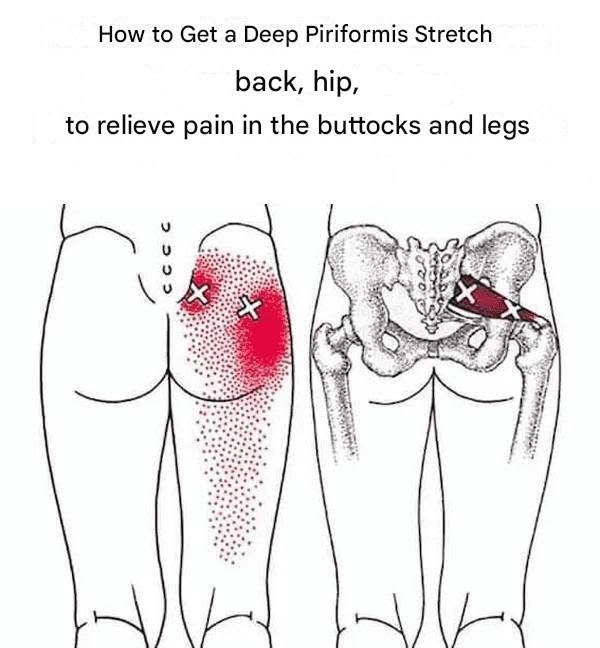
The piriformis is a small, deep muscle located in the buttocks, running diagonally from your lower spine to the top of your thighbone. Its primary job is to help rotate your hip outward and stabilize your pelvis.
-
The Sciatic Connection: Your massive sciatic nerve runs directly underneath—and sometimes right through—the piriformis muscle.
-
Piriformis Syndrome: When the piriformis muscle becomes chronically tight, goes into spasm, or gets heavily inflamed from prolonged sitting, heavy lifting, or running, it can squeeze or irritate the sciatic nerve. This triggers piriformis syndrome, sending shooting pain, numbness, or a deep ache down the buttocks, back of the thigh, and sometimes all the way down the leg (mimicking true sciatica caused by a lumbar disc herniation).
Safe and Effective Deep Piriformis Stretches
Because the piriformis is a deep hip rotator, stretching it requires bringing your leg into a combination of hip flexion, adduction (bringing it across your body), and external rotation. Here are two clinically recommended stretches:
-
1. The Figure-4 Stretch (Supine Position):
-
How to do it: Lie flat on your back with both knees bent and feet flat on the floor. Cross your right ankle over your left knee, creating a “figure-4” shape. Reach your hands behind your left thigh and gently pull your left knee toward your chest until you feel a deep, comfortable stretch in your right glute/hip. Hold for 30 seconds, breathing deeply, then switch sides.
-
Why it’s safe: Doing this on your back keeps your spine neutral and prevents you from over-flexing or straining your lower back.
-
-
2. The Seated Pigeon Stretch (Chair Variation):
-
How to do it: Sit upright in a sturdy chair. Cross your right ankle over your left knee. Keeping your spine straight and hinging at your hips, gently lean your torso forward until you feel a deep stretch in the right hip. Hold for 30 to 60 seconds, then switch sides.
-
Why it’s great: It’s accessible, highly effective, and easy to do throughout the workday if you spend long hours sitting.
-
Crucial Clinical Caveats: Don’t Overdo It
-
The Danger of Aggressive Stretching: A common mistake people make is forcing their bodies into aggressive, pretzel-like yoga poses (like a full floor pigeon pose) when their hips are tight. If you push too hard, you can actually irritate the sciatic nerve further or strain the surrounding hip tendons. If a stretch causes sharp, shooting nerve pain, stop immediately.
-
Addressing the Root Cause: Stretching a chronically tight piriformis provides temporary relief, but if your pelvis is unstable or your glutes are weak (meaning the piriformis is forced to overwork all day just to stabilize your hips), the tightness will just keep returning. Combining gentle stretching with core and glute-strengthening exercises (like bridges or clamshells) provides long-term relief.
💡 The Big Takeaway
A deep piriformis stretch can offer fantastic relief for glute and hip tightness by taking pressure off the sciatic nerve, but it isn’t a magical cure-all. Gentle, controlled stretching combined with proper hip mechanics is the safest path to easing stubborn lower body pain.
Are you dealing with tight hips from sitting at a desk, or trying to manage a specific nagging ache?
