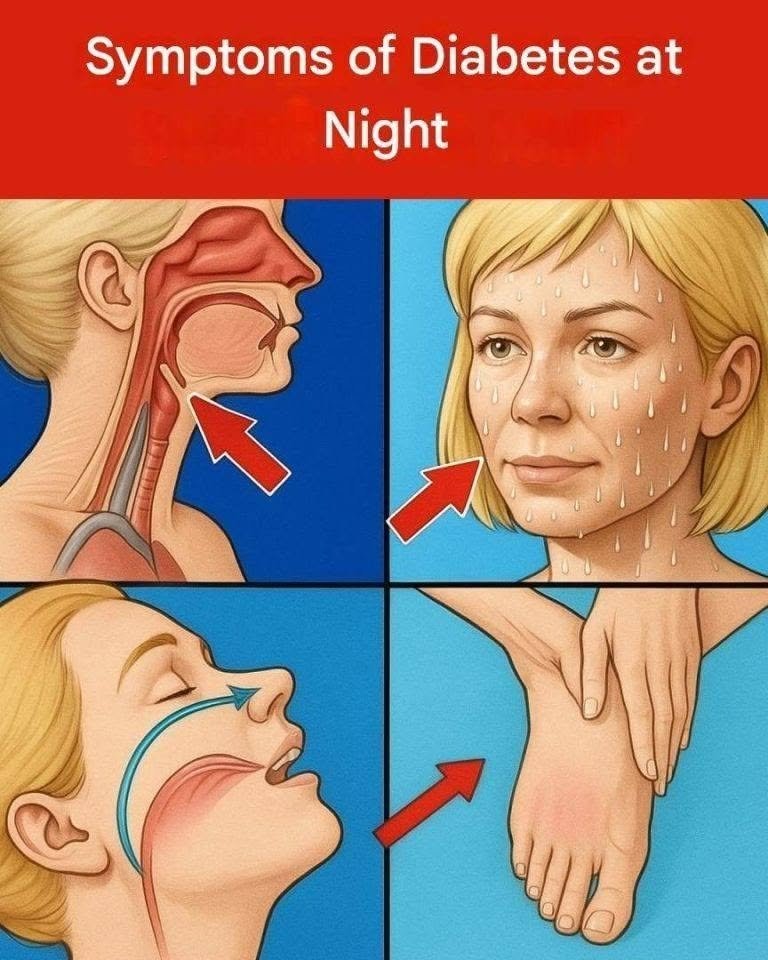
When wellness feeds narrow a list down from nine signs to five, they are usually highlighting the most acute, unmistakable ways uncontrolled blood sugar disrupts a night of sleep.
Endocrinologists and primary care physicians see these specific disruptions every day in clinic. Because high blood sugar (hyperglycemia) forces your body into a constant state of processing and purging, it directly sabotages the physiological systems that are supposed to let you rest.
The 5 Most Prominent Nighttime Diabetes Symptoms
When glucose levels run chronically high, five distinct signals tend to wake people up or shatter their sleep quality:
-
1. Frequent Nocturnal Urination (Nocturia):
-
The Clinical Reality: Excess sugar in your bloodstream acts as an osmotic magnet. Your kidneys pull water out of your tissues to flush out the surplus glucose, resulting in heavy, unavoidable trips to the bathroom multiple times a night.
-
-
2. Intense, Unquenchable Thirst (Polydipsia):
-
The Clinical Reality: Because your kidneys are dumping fluids to clear out the sugar, your brain triggers a powerful dehydration alarm. This wakes you up with a bone-dry mouth and an urgent need for water in the middle of the night.
-
-
3. Numbness, Tingling, or Burning in the Feet:
-
The Clinical Reality: Chronically elevated glucose damages your peripheral nerves over time (diabetic neuropathy). When you lie down flat in bed, these damaged nerves often fire off uncomfortable pins-and-needles, burning, or numbness sensations that are much harder to ignore in the quiet of night.
-
-
4. Sudden Night Sweats or Unexplained Clamminess:
-
The Clinical Reality: Fluctuating glucose levels—especially sudden nighttime dips (hypoglycemia) triggered by certain medications or erratic insulin action—can throw your autonomic nervous system into a panic response, leaving you waking up drenched in sweat or shivering.
-
-
5. Nocturnal Leg Cramps and Restless Limbs:
-
The Clinical Reality: Electrolyte imbalances caused by frequent urination, combined with compromised microcirculation, frequently trigger painful, sudden muscle spasms in the calves or a deep, crawling restlessness in the legs that makes sleep nearly impossible.
-
Moving Beyond the Nighttime Checklist
While recognizing these patterns is a great way to tune into your body, nighttime symptoms are clues, not a diagnosis.
-
The Overlap: Waking up at night to use the bathroom or experiencing leg cramps can also stem from things like evening fluid habits, sleep apnea, or normal age-related changes.
-
The Medical Answer: If you notice these patterns repeating night after night, the only way to get clarity is through professional blood work. A simple HbA1c test will measure your average blood sugar over the last three months and give you and your doctor a definitive answer.
💡 The Big Takeaway
High blood sugar doesn’t take a break when the sun goes down; instead, the metabolic strain makes itself loud and clear when your body tries to rest. Frequent midnight thirst, heavy bathroom trips, and nerve tingling are classic red flags that your blood glucose needs a clinical checkup.
Are you noticing any of these disruptions in your own sleep, or did a specific health article catch your eye?
