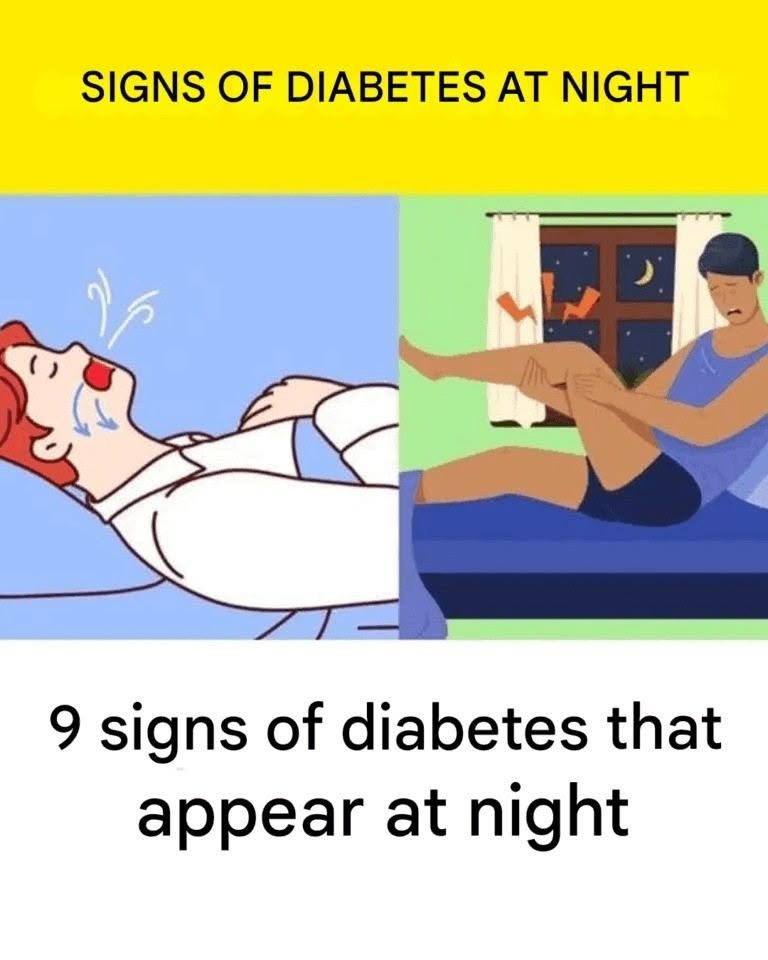
That classic health headline captures a sneaky reality about metabolic disease: while type 2 diabetes often creeps up silently during the day, the quiet hours of the night can amplify subtle physiological warning signs that are easy to miss when you’re busy or distracted.
When blood sugar (glucose) is chronically elevated, it alters fluid balance, nerve signaling, and hormonal cycles. When you lie down to sleep, these disruptions often become impossible to ignore.
Here are the nine signs of diabetes that frequently manifest or peak at night, explained through a physiological lens:
—
### 9 Nighttime Signs of Diabetes
1. **Frequent Nighttime Urination (Nocturia):**
* *The Mechanism:* When blood glucose levels exceed what your kidneys can reabsorb (the renal threshold), the excess sugar spills into your urine. Because glucose acts as an osmotic agent, it drags massive amounts of water along with it. This massive fluid shift fills your bladder rapidly, waking you up multiple times a night.
2. **Insatiable Thirst and Dry Mouth (Polydipsia):**
* *The Mechanism:* Because your kidneys pull water from your tissues to flush out excess glucose, your body experiences cellular dehydration. Waking up in the middle of the night with a parched, dry mouth and an urgent need to chug water is a classic consequence of this midnight fluid depletion.
3. **Restless Legs and Nocturnal Muscle Cramps:**
* *The Mechanism:* Chronically high blood sugar damages peripheral nerves (diabetic neuropathy) and depletes vital electrolytes (like magnesium, potassium, and calcium) through excessive urination. This electrical instability in your nerves and muscles triggers painful cramping, twitching, or an irresistible urge to thrash your legs around as you try to sleep.
4. **Night Sweats and Vague Temperature Dysregulation:**
* *The Mechanism:* Uncontrolled blood glucose can disrupt the autonomic nervous system—the network that controls involuntary functions like sweating and body temperature. Furthermore, if blood sugar plummets overnight (nocturnal hypoglycemia, often triggered by diabetes medications or late-night insulin spikes), your body dumps stress hormones like adrenaline and cortisol to rescue your glucose levels, soaking your pajamas in sweat.
5. **Numbness, Tingling, or “Pins and Needles” in the Feet:**
* *The Mechanism:* High circulating blood sugar starves and damages the tiny blood vessels (vasa nervorum) that feed your peripheral nerves. When you lie flat in bed, changes in local blood circulation and reduced movement allow nerve irritation to flare up, causing burning, prickling, or “falling asleep” sensations primarily in the feet and toes.
6. **Sudden, Intense Midnight Hunger (Polyphagia):**
* *The Mechanism:* Insulin’s job is to shuttle glucose from your bloodstream into your cells for fuel. If insulin resistance prevents your cells from receiving that glucose, they send a starvation signal to your brain. This can wake you up with a ferocious, jittery hunger even if you ate a full dinner hours earlier.
7. **Bizarre, Vivid Nightmares or Sleep Disruptions:**
* *The Mechanism:* Unstable blood sugar—whether spiking or dropping while you sleep—acts as a physiological stressor. Your brain responds to nighttime metabolic turbulence by releasing stress hormones, which fragment your sleep architecture and trigger intense, anxiety-laden dreams or sudden awakenings with a racing heart.
8. **Blurred Vision When You Wake Up:**
* *The Mechanism:* High glucose levels in the bloodstream change the fluid balance and osmotic pressure inside the lenses of your eyes, causing them to temporarily swell or warp. While this can happen during the day, people often notice it starkly upon waking up in the dark or reaching for their phone in the middle of the night.
9. **Persistent Itchy Skin or Genital Irritation:**
* *The Mechanism:* High glucose concentrations in bodily fluids and sweat create an ideal breeding ground for yeast (*Candida*) and bacteria. Furthermore, systemic dehydration dries out the skin barrier. The warmth of the bed and blankets often intensifies this irritation, making nighttime itching particularly bothersome.
—
### The Takeaway
While any one of these symptoms can occasionally stem from a heavy late-night meal, poor sleep hygiene, or normal aging, a cluster of them—especially waking up frequently to pee, drink water, and deal with tingling feet—is a clear physiological distress signal.
If these nighttime disturbances sound familiar, a simple fasting blood glucose test or an **HbA1c test** (which measures your average blood sugar over the past three months) can quickly clarify what is happening beneath the surface.
Do you or someone you know experience any of these nighttime disruptions, or are you exploring metabolic markers out of general health curiosity?
