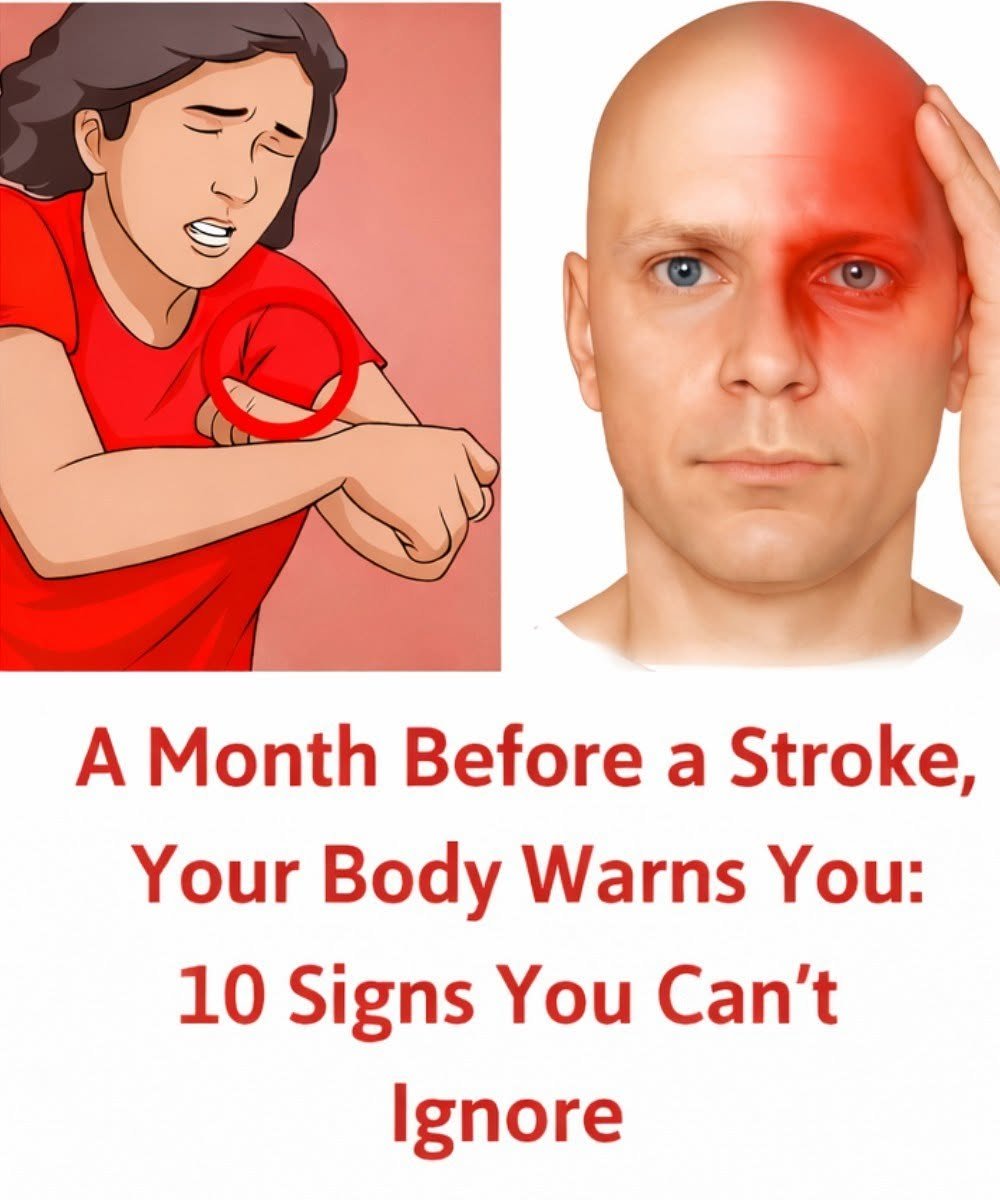
That classic health headline plays on a terrifying reality: we are conditioned to think of a stroke as a sudden, dramatic bolt-out-of-the-blue emergency—someone clutching their face or collapsing mid-sentence. While major strokes do strike abruptly, our vascular biology often sends subtle, whisper-quiet warning signs days or even weeks in advance.
These early events are often Transient Ischemic Attacks (TIAs)—commonly called “mini-strokes”—or micro-vascular disturbances where blood flow to a small region of the brain is temporarily blocked and then restores itself.
Here are the early, subtle stroke warning signs your body can send ahead of time, explained through a neurological and vascular lens:
10 Early Stroke Warning Signs Your Body Can Send in Advance
-
Transient Weakness or Heavy Limbs (One-Sided):
-
The Mechanism: If a small blood clot temporarily reduces blood flow to the motor cortex of your brain, you might experience a fleeting sensation of weakness, clumsiness, or a “heavy” feeling in one arm or leg. You might drop a coffee mug or find that one shoe feels harder to put on, only for normal strength to return minutes later.
-
-
Transient Facial Numbness or Asymmetry (“Droop”):
-
The Mechanism: The cranial nerves controlling your facial muscles originate in areas sensitive to oxygen deprivation. A brief drop in perfusion can cause a sudden, temporary numbness, a tingling “pins and needles” sensation on one side of your face, or a momentary uneven smile in the mirror.
-
-
Sudden, Unexplained Speech Hesitation or Slurring (Aphasia):
-
The Mechanism: Language processing centers (like Broca’s and Wernicke’s areas) require massive amounts of oxygen. If they experience a temporary ischemic episode, you might suddenly struggle to find the right word, catch yourself slurring a syllable, or feel like your tongue is “stuck” for a few seconds.
-
-
Fleeting Vision Changes in One Eye (Amaurosis Fugax):
-
The Mechanism: This is a classic vascular warning sign. A tiny piece of cholesterol plaque or a micro-clot can temporarily travel up the carotid artery and lodge in the retinal artery. It causes a sudden, temporary darkening, blurring, or a sensation like a “shade coming down” over one eye, which then lifts as the clot dissolves.
-
-
Sudden, Unexplained Dizziness or Vertigo:
-
The Mechanism: If reduced blood flow hits the brainstem or cerebellum—the regions governing balance and spatial orientation—you may experience a sudden, dizzy spinning sensation or a feeling of lightheadedness that doesn’t stem from inner-ear issues.
-
-
Brief, Unexplained Confusion or Brain Fog:
-
The Mechanism: A transient shortage of blood flow across broader associative networks in the brain can cause a sudden, startling moment of disorientation, where you momentarily forget where you are, struggle to follow a conversation, or feel suddenly detached.
-
-
Sudden, Severe “Thunderclap” Headache:
-
The Mechanism: While most headaches are benign, a sudden, explosive, blinding headache that hits with absolute maximum intensity out of nowhere can be a sign of micro-bleeding, vascular spasm, or an aneurysm warning sign requiring immediate medical evaluation.
-
-
Unexplained Loss of Coordination or Clumsiness (Ataxia):
-
The Mechanism: If a mini-stroke affects the cerebellum, you might experience sudden spatial clumsiness—bumping into walls, stumbling while walking a straight line, or losing fine motor control in your fingers.
-
-
Sudden Numbness or Tingling Down One Entire Side of the Body:
-
The Mechanism: Sensory pathways traveling from your body up to the sensory cortex can be temporarily interrupted. This causes a sudden, alarming numbness or a cold, tingling sensation that runs down an entire arm, torso, or leg on just one side.
-
-
Unexplained Fatigue and Mental Exhaustion:
-
The Mechanism: When the brain’s micro-vasculature begins to fail due to severe atherosclerosis or chronic high blood pressure, the brain has to work exponentially harder to maintain normal function, often manifesting as an overwhelming, sudden wave of neurological exhaustion weeks before a major event.
-
The Crucial Takeaway: Never Ignore a TIA
The single greatest danger of a mini-stroke (TIA) is that because the symptoms vanish completely within minutes, people brush them off. They assume they were just tired, pinched a nerve, or stood up too fast.
Medically, a TIA is a dire emergency warning—essentially a smoke detector going off before a house fire. Studies show that the risk of a major, debilitating stroke is highest in the days and weeks immediately following a TIA.
Have you or someone you know ever experienced sudden, fleeting neurological quirks like temporary numbness or speech slips, or are you tracking cardiovascular health markers for peace of mind?
