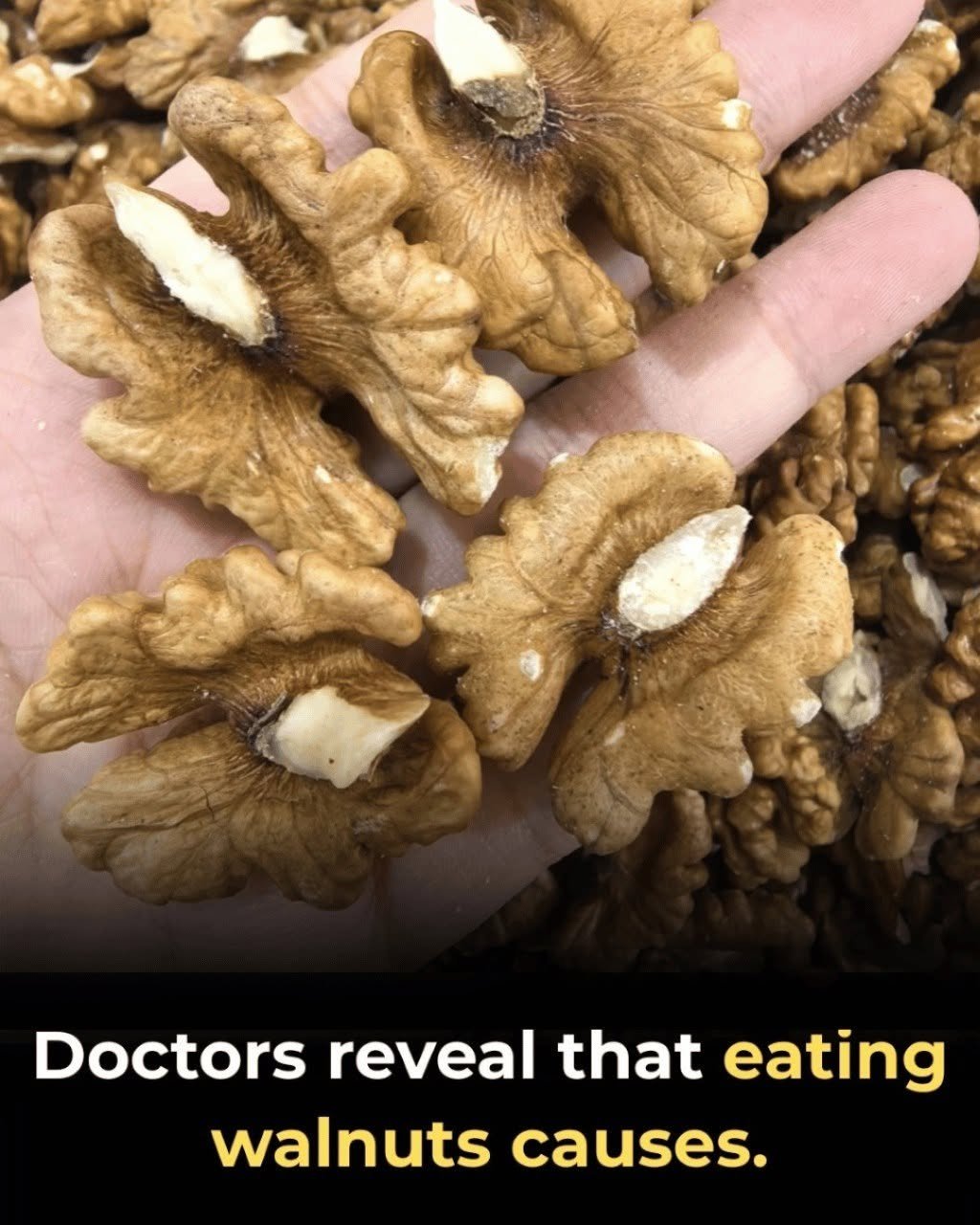
That classic health headline—“What Happens When You Eat Walnuts Every Day”—steps away from the realm of sketchy clickbait and into a food that actually commands immense respect from cardiologists, neurologists, and nutritional scientists alike.
Unlike single-ingredient “miracle” cures, walnuts are a nutritional powerhouse backed by decades of robust clinical research. If you make a habit of eating a daily handful (about an ounce, or roughly 7 shelled walnuts), a very specific and impressive cascade of physiological changes takes place in your body.
Here is what actually happens when you eat walnuts every day, broken down by science:
The Physiological Effects of Daily Walnut Consumption
-
Your Cholesterol Profile Shifts for the Better:
-
The Mechanism: Walnuts are exceptionally rich in alpha-linolenic acid (ALA), which is the plant-based precursor to omega-3 fatty acids. Clinical trials consistently show that incorporating walnuts daily helps lower total cholesterol and reduces LDL (“bad”) cholesterol—specifically small, dense LDL particles, which are the most dangerous type for arterial plaque buildup.
-
-
Your Blood Vessels Become More Flexible (Improved Endothelial Function):
-
The Mechanism: The combination of omega-3s, magnesium, and powerful antioxidants in walnuts helps stimulate the production of nitric oxide, a gas molecule that signals your blood vessels to relax and dilate. This improves overall vascular elasticity and helps regulate healthy blood pressure.
-
-
Systemic Inflammation Dips:
-
The Mechanism: Chronic, low-grade inflammation is a core driver of heart disease, type 2 diabetes, and cognitive decline. Walnuts are loaded with polyphenols and melatonin, which act as potent anti-inflammatory agents, helping to quiet down inflammatory cytokines circulating in your bloodstream.
-
-
Your Gut Microbiome Gets a Diversity Boost:
-
The Mechanism: The rich fiber and polyphenol content in walnuts acts as a prebiotic feast for your gut bacteria. Studies comparing diets with and without walnuts have found that daily walnut consumption significantly increases beneficial, health-promoting gut microbes (like Faecalibacterium prausnitzii), which support gut lining integrity and metabolic health.
-
-
Brain Health and Cognitive Support:
-
The Mechanism: There is a reason walnuts look like tiny brains! They are packed with neuroprotective compounds, including vitamin E, folate, melatonin, and plant polyphenols. These nutrients help combat oxidative stress and inflammation in the brain, supporting memory, processing speed, and long-term cognitive resilience as you age.
-
The One Catch: Caloric Density
While walnuts are nutritional gold, they are also intensely calorie-dense (about 185 calories per ounce). Because they are so rich and satisfying, the goal is substitution rather than addition—swapping out a processed, high-carb snack for a handful of walnuts rather than just adding them on top of an already high-calorie diet.
Do you regularly snack on nuts like walnuts, or are you looking to fine-tune your daily nutrition for heart and brain health?
