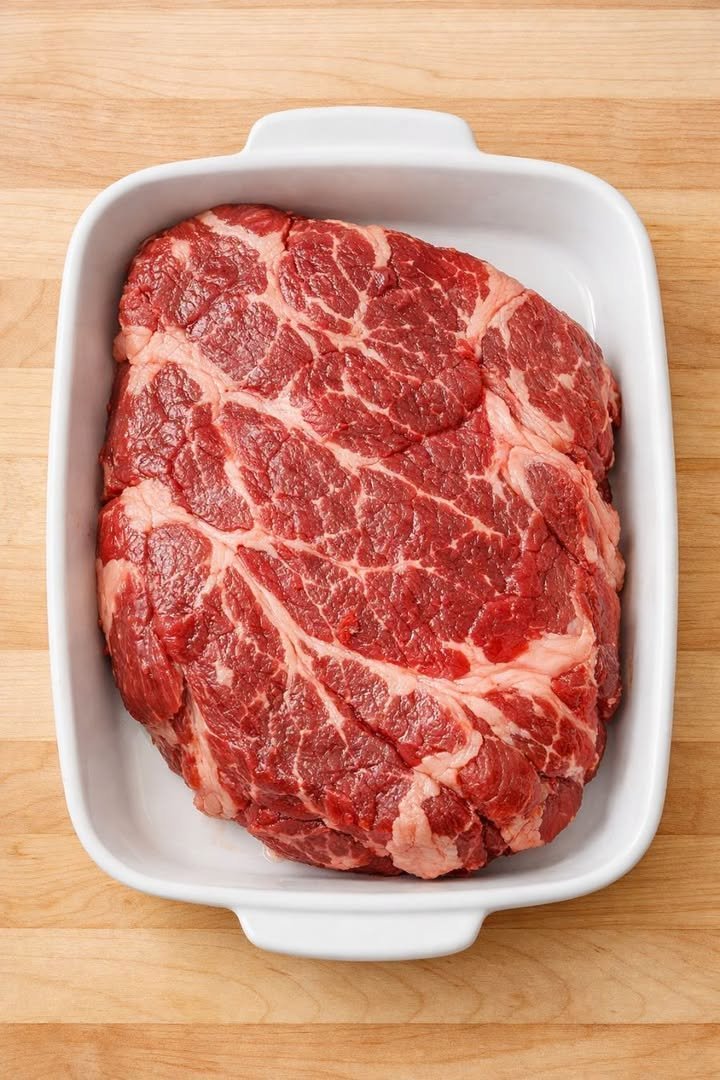
That shift from wellness headlines straight to a raw beef chuck roast is a fantastic pivot into culinary science. If you just pulled a raw chuck roast out of the fridge, you are holding the absolute workhorse of the kitchen.
The chuck cut comes from the shoulder of the cow—an area that works hard day in and day out. Because those muscles are heavily exercised, a raw chuck roast is packed with connective tissue, thick collagen fibers, and tough muscle strands. On its own, raw chuck is entirely unappealing, chewy, and tough.
However, in the hands of the right cooking technique, that tough cut transforms into the most melt-in-your-mouth pot roast, beef stew, or shredded barbacoa you can imagine.
Here is what is happening structurally inside a raw chuck roast and how to cook it right:
The Anatomy of a Chuck Roast
-
The Collagen Matrix:
-
The Structure: Unlike a tenderloin (which sits on the back and does no work), a chuck roast is webbed with tough connective tissue called collagen. Think of collagen like heavy-duty steel cables holding the muscle fibers together.
-
-
Intramuscular Marbling:
-
The Flavor: Chuck roasts usually have fantastic marbling—fine lines of white fat distributed throughout the red meat. As it cooks, this fat renders down, lubricating the meat and giving it that rich, deeply beefy flavor.
-
How to Transform It: The Physics of Cooking Chuck
You cannot cook a chuck roast quickly. If you throw a raw chuck roast on a hot grill like a steak, it will seize up into a dry, leather-like block of rubber. To conquer a chuck roast, you have to use low, slow, moist heat:
-
Breaking Down the Collagen: When you braise or slow-cook a chuck roast at low temperatures (around 140°C to 160°C or on a slow cooker setting) for several hours, something magical happens. The tough collagen slowly melts down into gelatin. Once that structural “glue” liquefies, the muscle fibers naturally fall apart into tender, juicy shreds.
-
The Sear (Building Flavor): Before you submerge it in liquid for a braise, searing the raw exterior of the chuck roast in a hot pan triggers our old friend, the Maillard reaction. Browning those amino acids and sugars builds the deep, savory baseline flavor for your cooking liquid.
Are you planning to toss that chuck roast into a slow cooker for a classic pot roast, or braising it on the stove with red wine and herbs?
