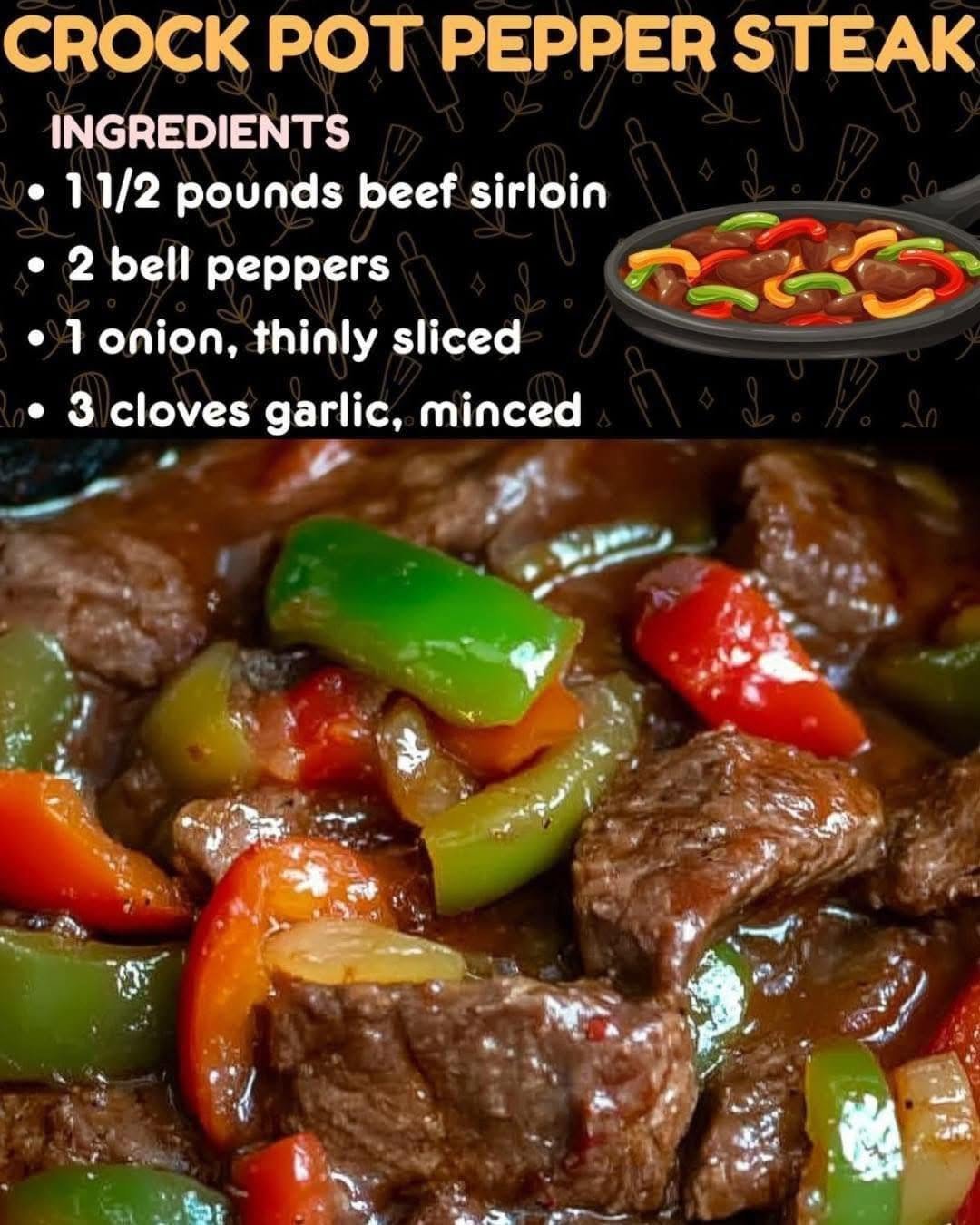
That choice—Crock Pot Pepper Steak—is a classic comfort-food favorite that brings us right back into the practical science of slow cooking.
When you toss strips of beef, bell peppers, onions, and a savory soy-ginger sauce into a slow cooker and walk away for hours, you are setting up a specific sequence of thermodynamic and biochemical reactions. But slow cookers also come with unique culinary challenges—especially when you are cooking lean cuts of meat in a watery sauce all day.
Here is what is happening chemically inside your slow cooker, along with the secrets to nailing a tender, rich pepper steak without turning your vegetables into mush:
The Culinary Science of Slow Cooker Pepper Steak
-
Collagen Breakdown (Why Tough Cuts Turn Tender):
-
The Chemistry: Traditional pepper steak in a stir-fry uses fast-cooking, tender cuts like flank or sirloin cooked over high heat. But in a slow cooker, you are usually using budget-friendly, tougher cuts (like chuck steak or round steak) packed with connective tissue called collagen. Over 4 to 6 hours at a gentle, simmering heat (around 190°F–200°F / 88°C–93°C), that tough collagen slowly hydrolyzes, melting into gelatin and transforming chewy meat into melt-in-your-mouth bites.
-
-
The Vegetable Collapse (The Overcooking Trap):
-
The Physics: While meat loves a long, slow bath, bell peppers and onions despise it. If you put fresh bell peppers in a crock pot for 8 hours, the heat will break down their structural cell walls (pectin), turning them into a drab, khaki-colored, mushy paste. To get that signature crisp-tender texture and vibrant color, vegetables should only be added during the last 30 to 45 minutes of cooking.
-
-
Starch Thickening at Low Temperatures:
-
The Chemistry: Most sauces rely on cornstarch or flour to create that glossy, clingy glaze characteristic of pepper steak. However, starches behave differently in slow cookers. Adding raw cornstarch at the very beginning can result in a grainy, watery sauce because sustained, high heat is usually required to fully gelatinize starch. The pro move is to whisk a cornstarch slurry (cornstarch mixed with cold water) into the simmering juices during the last 15 minutes of cooking.
-
Pro-Tips for Crock Pot Perfection
-
Sear the Beef First (The Maillard Reaction): While you can dump raw beef straight into the crock pot, taking 5 minutes to sear your beef strips in a hot skillet with a little oil creates a rich layer of caramelized flavor via the Maillard reaction. It builds a depth of flavor that a slow cooker alone simply cannot replicate.
-
Keep the Sauce Balanced: Slow cookers trap moisture, meaning liquids don’t evaporate the way they do on a stovetop. Because of this, don’t over-water your sauce; let the onions and peppers release their natural moisture naturally so your sauce doesn’t end up thin and bland.
Are you throwing together a weeknight dinner using a slow cooker, or adapting a traditional stovetop stir-fry recipe for the crock pot?
