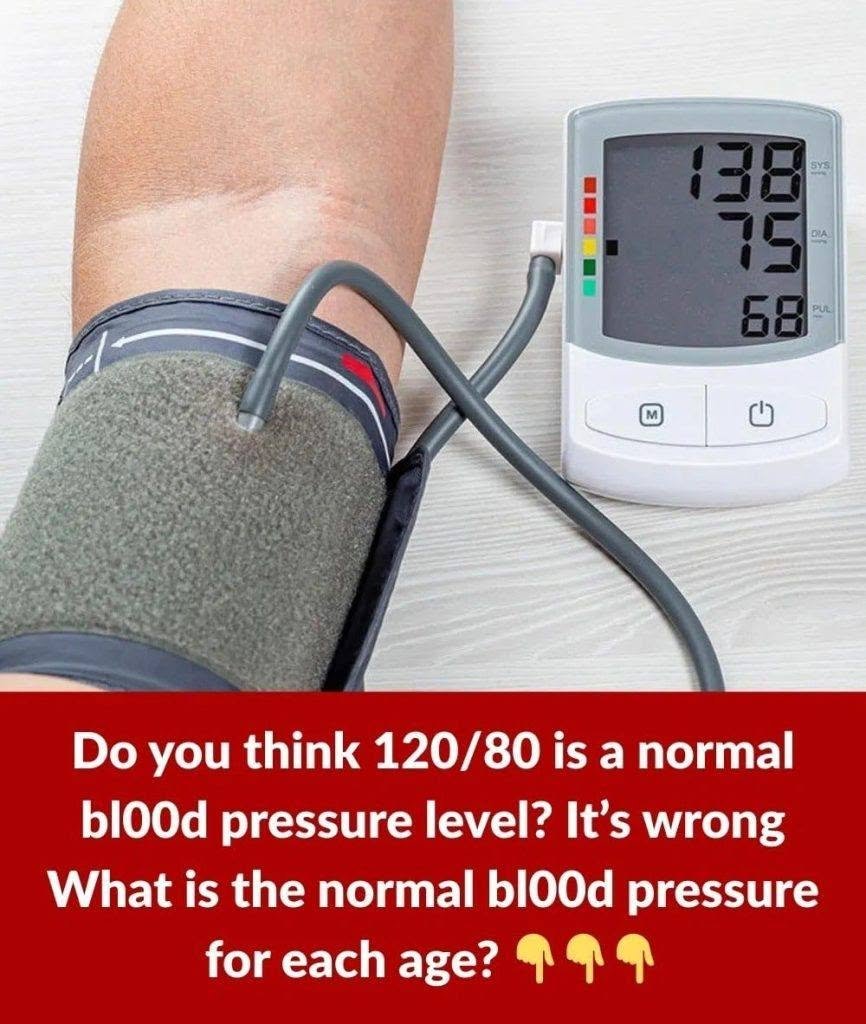
When people ask about normal blood pressure by age, they are usually hunting for a clean chart that tells them whether a rising number is just “normal for getting older” or a sign of trouble.
The clinical reality is fascinating: **While *average* blood pressure naturally creeps up as we age due to arterial stiffening, the *ideal target* for health does not change.** Major cardiovascular guidelines (such as those from the American Heart Association) maintain that the optimal target for all adults is the same, regardless of whether you are 20 or 80.
Here is how blood pressure shifts across the lifespan, broken down by clinical categories and age groups:
—
### 1. The Standard Adult Categories (Ages 18 and Older)
For any adult, clinical blood pressure readings are grouped into distinct categories based on the systolic (top) and diastolic (bottom) numbers:
* **Normal:** Less than **120/80 mmHg** (The gold standard for cardiovascular health at any age).
* **Elevated:** Systolic between 120–129 **and** diastolic less than 80.
* **Stage 1 Hypertension:** Systolic 130–139 **or** diastolic 80–89.
* **Stage 2 Hypertension:** Systolic 140 or higher **or** diastolic 90 or higher.
—
### 2. How Averages Shift by Age (And Why)
While medical guidelines want everyone under 130/80 mmHg, large population data shows what *typically* happens to human averages as the decades pass:
* **Young Adults (18–39 years):** Average readings hover around **110–120 / 70–75 mmHg**. Arteries are highly elastic, easily accommodating blood flow without generating high resistance.
* **Middle Age (40–59 years):** Averages drift upward toward **122–126 / 76–80 mmHg**. Minor lifestyle factors, shifts in stress, and the beginning of natural vascular aging start to nudge the numbers up.
* **Older Adults (60+ years):** Averages often climb past **130–140 / 70–80 mmHg**.
> **The “Isolated Systolic” Trap:** In older adults, it is very common to see the top number (systolic) climb while the bottom number (diastolic) stays low or even drops. This is called *isolated systolic hypertension*, caused by the stiffening of major arteries over time. Even though it’s common in older populations, doctors treat it just as seriously because high systolic pressure increases strain on the heart and stroke risk.
—
### 3. Children and Adolescents (Ages Birth to 18)
For infants, children, and teens, blood pressure cannot be pinned to a single flat number. Because children grow at vastly different rates, pediatricians evaluate blood pressure using **age, gender, and height percentiles** via specialized growth charts. Generally, normal ranges scale upward with age:
* **Newborns:** Typically range around 60–90 / 20–60 mmHg.
* **School-Aged Children:** Typically average around 97–112 / 57–71 mmHg.
* **Adolescents:** Approach adult ranges, usually staying below 120/80 mmHg.
—
### The Clinical Takeaway
Just because a higher blood pressure reading is *common* in older age groups does not mean it is *healthy* or should be ignored. Maintaining a reading below 120/80 mmHg minimizes long-term wear and tear on your arterial walls, protecting your heart, brain, and kidneys.
Are you tracking your own readings or looking into a specific blood pressure concern?
