That classic health-blog cliffhanger—“Note that if you always sleep on your right side, you should have…”—is engineered to make you gasp, check your sleeping posture, and panic that your preferred sleeping position is slowly destroying your internal organs.
When you strip away the sensationalist clickbait and look at gastroenterology, cardiovascular physiology, and sleep medicine, the reality is far more balanced: While side sleeping is generally fantastic for preventing snoring and sleep apnea, your choice of side does uniquely influence your digestion and internal anatomy, though it rarely spells disaster for a healthy person.
Here is what is actually happening inside your body when you rest on your right side versus your left:
1. The Gastroenterology Factor: Right vs. Left Side
The anatomical layout of your upper digestive tract is asymmetrical, which means gravity plays a distinct role depending on which side you face:
-
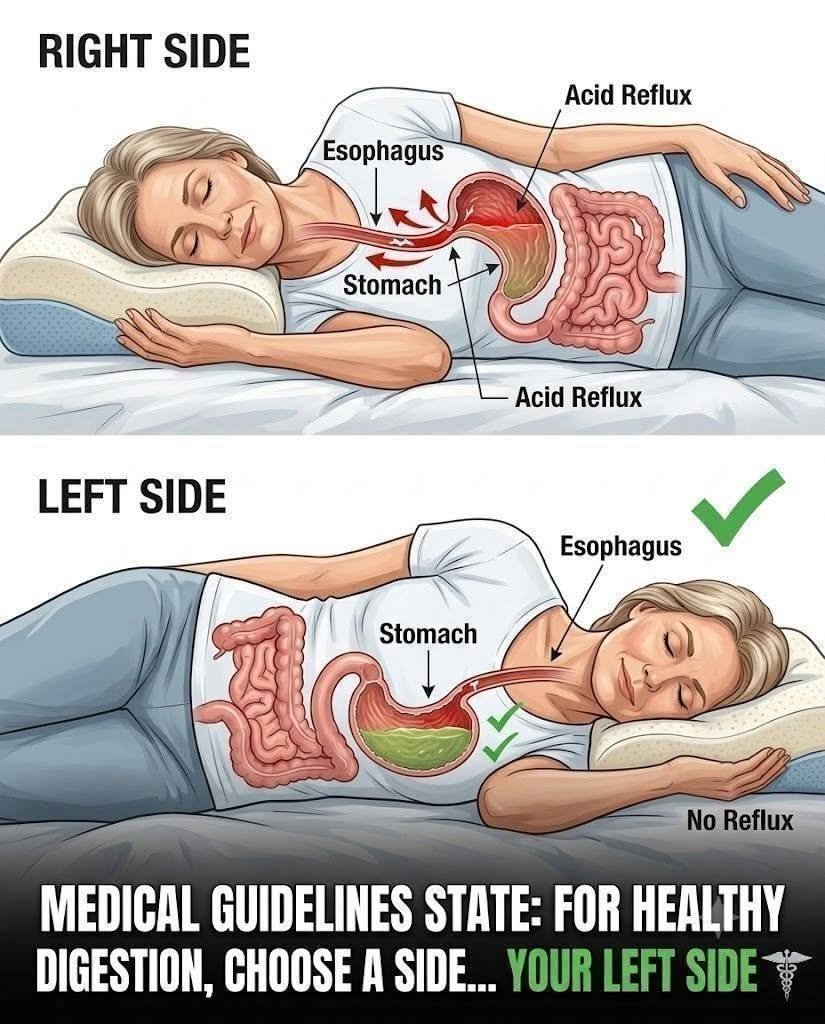
Why Left-Side Sleeping is Favored for Acid Reflux: Your stomach sits on the left side of your upper abdomen, and the junction where your esophagus meets your stomach sits below the level of gastric acid when you lie on your left side. Gravity helps keep stomach acid safely pooled at the bottom of the stomach.
-
What Happens on the Right Side: When you sleep strictly on your right side, the stomach sits higher relative to that esophageal sphincter, and the angle can make it easier for gastric acid to slip upward. If you suffer from frequent acid reflux, GERD, or late-night heartburn, sleeping on your right side can occasionally trigger or worsen symptoms.
2. Cardiovascular Dynamics
-
The Heart’s Position: Your heart is suspended within the mediastinum, slightly left of center. For most healthy people, the heart pumps efficiently regardless of sleep posture.
-
Pregnancy and Circulation: For pregnant individuals, however, side preference is clinically significant. Doctors specifically recommend sleeping on the left side during pregnancy to prevent the heavy uterus from putting direct pressure on the inferior vena cava—the large vein returning blood from the lower body to the heart—thereby maintaining optimal blood flow to both mother and fetus.
3. The Benefits of Side Sleeping Overall
Despite the anatomical quirks of picking a side, side sleeping as a broad category has massive clinical advantages over sleeping flat on your back:
-
Airway Patency: Side sleeping keeps gravity from pulling the tongue and soft palate backward into the throat, dramatically reducing snoring and mild obstructive sleep apnea.
-
Brain Health (The Glymphatic System): Recent neurological research suggests that side sleeping may facilitate the brain’s glymphatic clearance system—the mechanism by which the central nervous system flushes out metabolic waste proteins while you rest.
The Clinical Takeaway
You do not need to panic if you naturally gravitate toward your right side. If you wake up refreshed, without heartburn or numbness, your sleeping position is serving you well. However, if you struggle with chronic acid reflux or GERD, shifting toward your left side is a simple, highly effective behavioral adjustment.
Are you dealing with nighttime heartburn or sleep discomfort, or tracking down another piece of health media?
