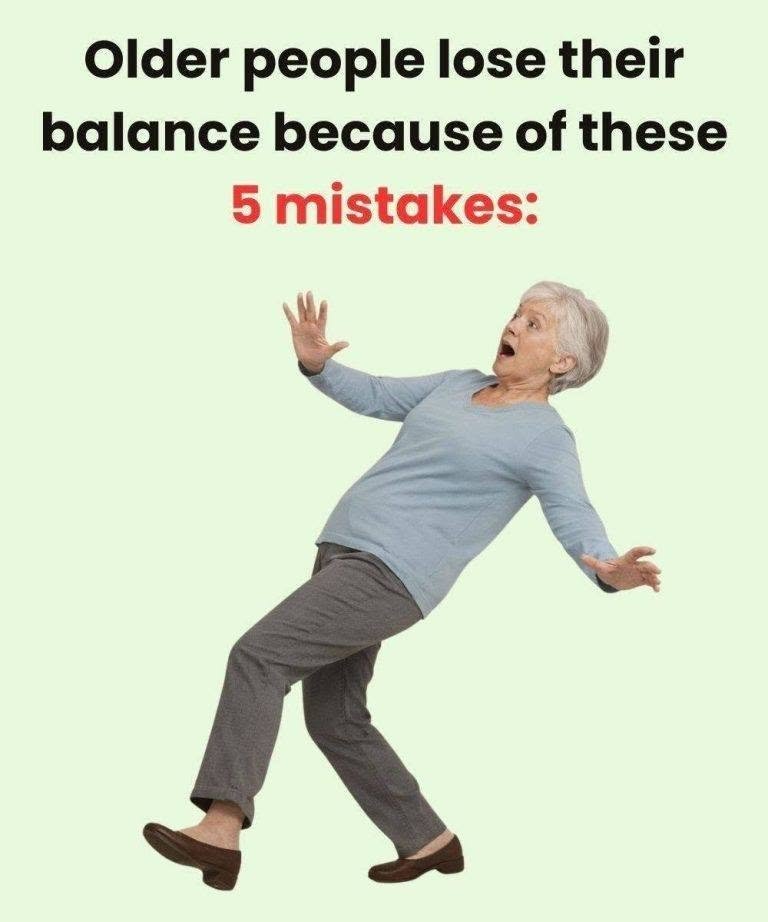
Maintaining good balance as we age is essential for preserving independence, preventing dangerous falls, and staying active. However, many older adults unknowingly make subtle lifestyle and physical mistakes that quietly degrade their stability over time.
According to physical therapists, geriatricians, and balance experts, here are the most common mistakes that affect balance in older adults:
1. Stopping Physical Activity Out of Fear of Falling
-
The mistake: When people feel a bit unsteady, their first instinct is often to stop exercising or sit down more to stay safe.
-
Why it hurts balance: Muscles weaken rapidly through disuse (a process called atrophy), and the vestibular system and proprioceptors (the body’s internal position sensors) get even less practice. Remaining sedentary is one of the fastest ways to make balance worse.
2. Ignoring Footwear and Wearing Slippers All Day
-
The mistake: Walking around the house in soft, unsupportive slippers, thick socks, or worn-out shoes with smooth soles.
-
Why it hurts balance: Your feet are packed with sensory nerve endings that tell your brain where your body is in space. Shoes with thick, rigid soles block those signals, while slippers or socks on hardwood floors dramatically increase the risk of slipping.
3. Neglecting Vision and Hearing Checkups
-
The mistake: Treating declining eyesight or hearing as just an “inevitable part of getting older” without updating prescriptions or addressing issues.
-
Why it hurts balance: Balance is a team effort between your eyes, your inner ear (vestibular system), and your muscles. If your vision is blurry or your inner ear is compromised, your brain loses two of its primary navigation tools. Furthermore, hearing loss has been directly linked by researchers to an increased risk of falls and cognitive fatigue.
4. Overlooking Lower Body Strength (Especially Hips and Ankles)
-
The mistake: Focusing entirely on walking for exercise while ignoring strength training for the lower body.
-
Why it hurts balance: When you start to trip or lose your footing, your ankles and hips must make lightning-fast micro-adjustments to keep you upright. If the muscles surrounding those joints are weak, you won’t be able to catch yourself.
5. Staying Chronically Dehydrated or Over-Medicated
-
The mistake: Not drinking enough fluids throughout the day, or taking multiple medications that cause drowsiness, dizziness, or drops in blood pressure (orthostatic hypotension) without reviewing them with a doctor.
-
Why it hurts balance: Mild dehydration causes lightheadedness, while side effects from certain combinations of blood pressure, sleep, or anxiety medications are a leading hidden cause of sudden falls in older adults.
The Takeaway: Balance is a skill that can be maintained and even improved at any age. Simple steps like wearing supportive shoes indoors, staying hydrated, reviewing medications with a physician, and practicing safe, targeted strength exercises can make a dramatic difference.
Are you looking for practical balance exercises, or checking on these habits for yourself or a loved one?
