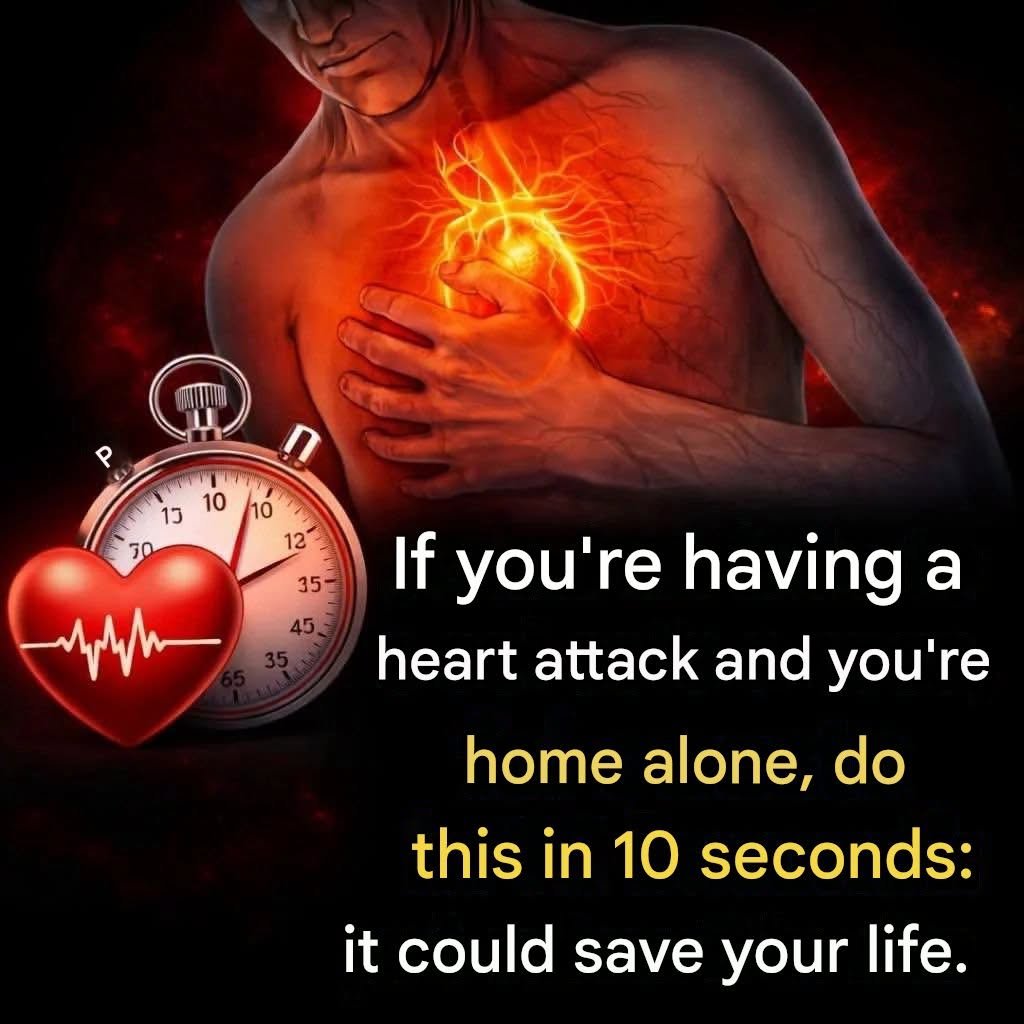
That headline is one of the most dangerous and irresponsible pieces of medical clickbait circulating online. It typically promotes the viral myth of “cough CPR”—claiming that if you feel a heart attack coming on while home alone, violent, repetitive coughing can save your life.
This is entirely false and can be extremely dangerous.
When a true medical emergency like a heart attack or sudden cardiac arrest occurs, you do not have 10 seconds to waste on unproven internet hacks. Here is the medical reality behind what you should—and should not—do:
1. The Myth of “Cough CPR”
-
Where the myth came from: In a controlled hospital setting, cardiologists sometimes instruct a conscious patient whose heart rhythm is briefly malfunctioning during a catheterization to cough to maintain consciousness for a few seconds.
-
Why it fails at home: A heart attack (myocardial infarction, where a blocked artery starves heart muscle of blood) is entirely different from sudden cardiac arrest (where the heart instantly stops beating effectively). Coughing does not unclog arteries, it does not restart a stopped heart, and forcing violent coughs when your heart is already under severe distress can actually cause you to pass out faster or worsen your condition.
2. What You Should Do Immediately in an Emergency
If you or someone else is experiencing symptoms of a heart attack (such as crushing chest pain, pressure, shortness of breath, pain radiating down the arm or jaw, or sudden cold sweats), every second counts for professional medical care:
-
Call Emergency Services Immediately: Dial your local emergency number (such as 911 or your country’s emergency line) right away. Do not try to drive yourself to the hospital.
-
Chew Aspirin (If Advised): If you are not allergic and have not been told by a doctor to avoid it, chewing and swallowing a regular-strength aspirin can help slow blood clotting while you wait for emergency responders.
-
Unlock Your Door: If you are home alone, unlock your front door so emergency responders can enter immediately if you collapse.
-
Sit Down and Rest: Stop what you are doing, sit or lie down in a comfortable position, and try to stay as calm as possible to reduce the heart’s workload.
The Takeaway: Never rely on viral social media hacks during a medical emergency. When seconds matter, contacting trained medical professionals is the only proven way to save a life.
