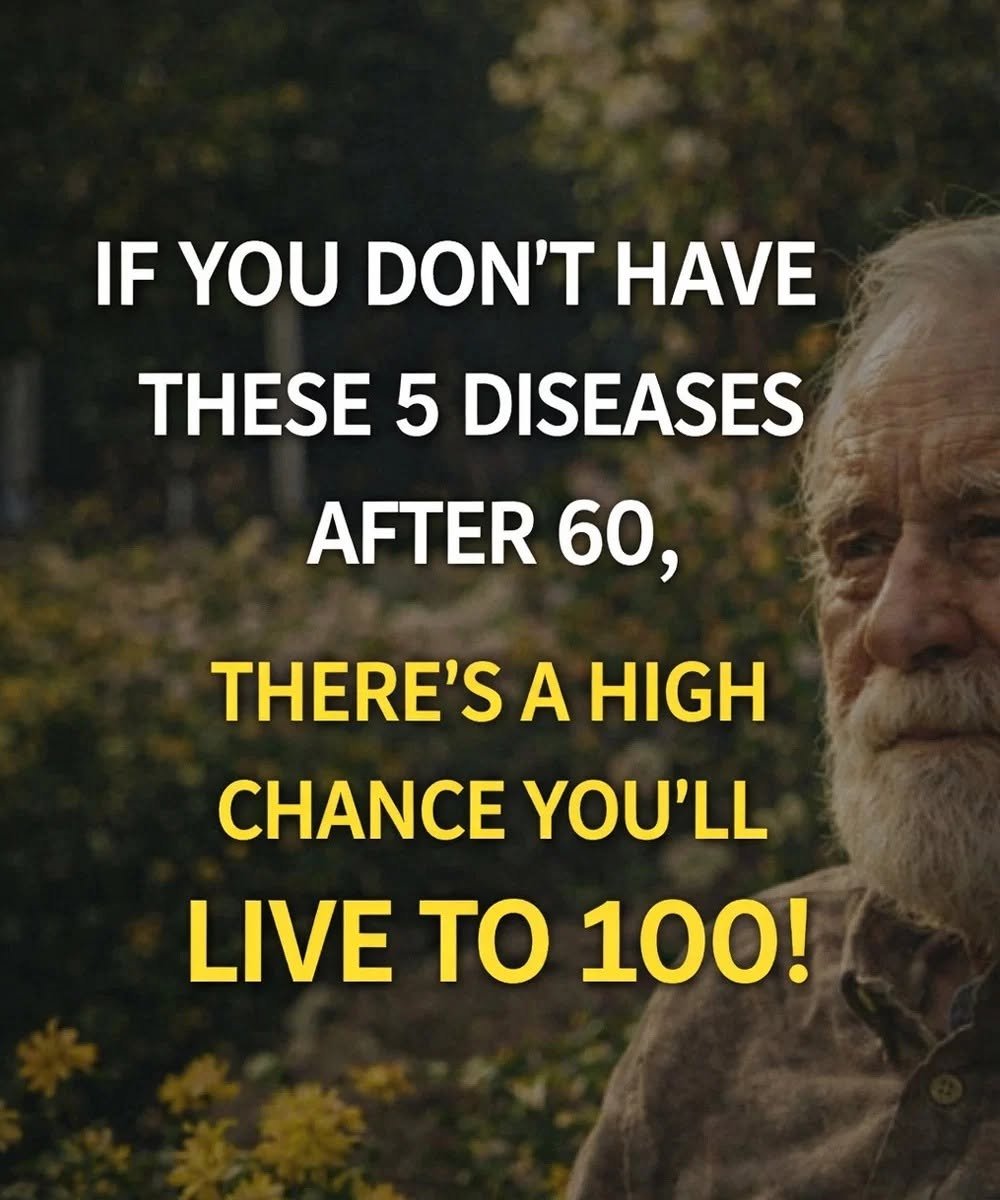
That headline is a masterclass in longevity clickbait, packaging a kernel of statistical truth into an absolute, breathless guarantee. It plays on our universal fascination with reaching the century mark by dangling a simple checklist of diseases as a golden ticket to age 100.
While avoiding major chronic illness dramatically improves your odds of living a long, healthy life, the reality of human longevity is much more nuanced than a simple five-item pass/fail test.
Here is the breakdown of what those headlines usually imply and what aging science actually shows:
1. What the Headline Is Trying to Say (Healthspan vs. Lifespan)
-
The Concept: Longevity researchers talk a lot about healthspan—the number of years you live free from chronic, debilitating disease—versus mere lifespan.
-
The Reality: Reaching age 60 without major chronic conditions (typically heart disease, stroke, type 2 diabetes, cancer, and neurodegenerative disorders like dementia) means your body’s physiological resilience has held up remarkably well. Naturally, dodging those heavy hitters makes surviving into your 80s, 90s, and beyond statistically much more probable.
2. Why the “High Probability” Claim Falls Apart
-
Genetics and Blue Zones: Studies of centenarians (people who live to 100+) show that while avoiding disease helps, exceptional longevity is heavily influenced by a complex cocktail of genetics, resilient cellular repair mechanisms, and lifestyle factors. Some people live to 100 despite having managed a chronic condition for decades.
-
The Multi-Factor Reality: Aging is not determined by avoiding five specific checkboxes. Environmental exposures, lifelong socioeconomic factors, mental well-being, social connection, and sheer physical safety all play massive roles in how long we live.
-
The “Competing Risks” Factor: As medical science gets better at keeping people alive through one condition (like heart disease), people may live long enough to encounter another age-related issue.
3. What Actually Drives Long-Term Health After 60
Instead of focusing on a magical list of diseases to dodge, geriatricians and longevity experts emphasize the proactive pillars that keep the body functioning robustly well into later decades:
-
Maintaining Muscle Mass (Sarcopenia Prevention): Preserving strength and balance through resistance exercise is one of the strongest predictors of independence and survival in older age.
-
Cardiovascular Fitness: Keeping blood pressure and blood sugar well-managed protects both the heart and the tiny blood vessels in the brain.
-
Cognitive and Social Engagement: Staying mentally active and maintaining strong social ties significantly lowers mortality risk and preserves brain health.
The Takeaway: While avoiding major chronic illnesses by age 60 sets you up for a phenomenal quality of life, there is no single guaranteed formula or secret checkpoint for hitting age 100. It is about stacking everyday habits that protect your healthspan.
Are you looking into proactive ways to optimize long-term health and wellness as you or a loved one age?
