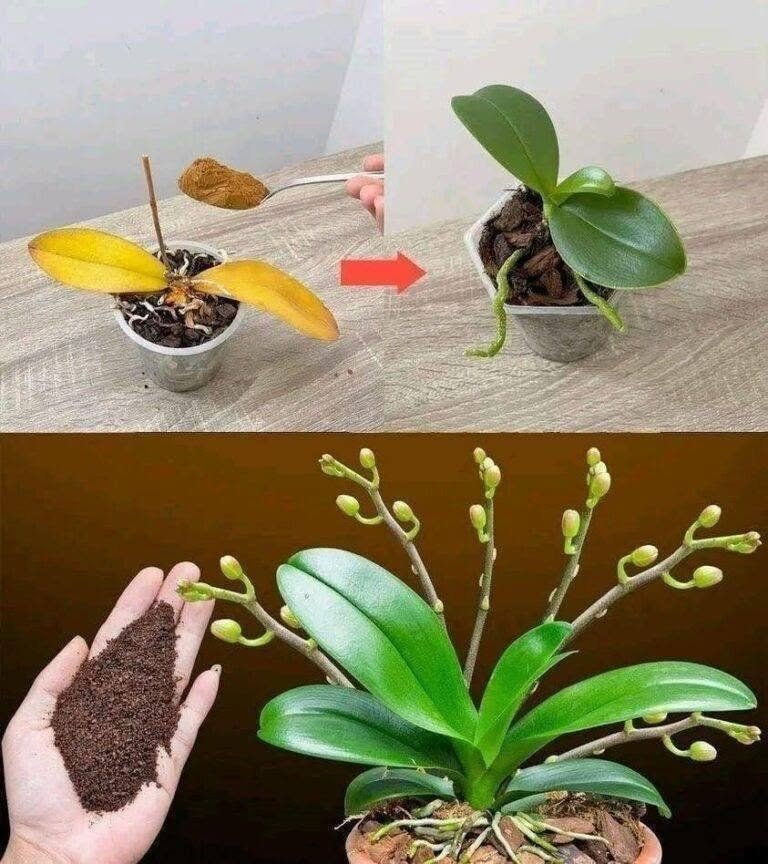
That headline is a classic piece of plant-care clickbait, using the promise of a miraculous, secret kitchen ingredient to make an orchid explode with blooms overnight.
While plant hobbyists love sharing DIY fertilizer hacks (like using diluted rice water, banana peel tea, or Epsom salts), no single teaspoon of anything will instantly force an orchid into a massive, overnight bloom cycle. Orchids are epiphytes with unique biological needs, and they bloom on their own physiological schedule when environmental conditions are right.
Here is the realistic truth behind what orchids actually need to thrive and produce those gorgeous flower spikes:
1. The Reality of DIY Orchid “Miracle Cures”
-
Rice Water or Compost Teas: While soaking water from grains or diluted organic teas can provide trace nutrients like nitrogen, phosphorus, and potassium, they are gentle supplements—not magic triggers. Overusing organic kitchen scraps in orchid bark can actually attract gnats, mold, or rot the delicate roots.
-
The Danger of Overfeeding: Pouring random kitchen liquids into an orchid pot can alter the pH of the growing medium or cause salt buildup, which burns the roots rather than helping them bloom.
2. What Actually Triggers an Orchid to Bloom
If you want your orchid to flower naturally and abundantly, it doesn’t need a secret teaspoon of anything—it needs the right environmental cues:
-
Temperature Drops: Many common indoor orchids (like Phalaenopsis) initiate a flower spike in response to a natural drop in ambient nighttime temperatures (about 10°F cooler at night than during the day) over a few weeks, mimicking the change of seasons.
-
Bright, Indirect Light: Orchids need plenty of bright, filtered sunlight. If they are sitting in a dark corner of a room, they will happily grow green leaves but won’t have the energy required to push out a flower spike.
-
Proper Watering and Root Health: Orchids hate sitting in soggy soil. They grow on trees in the wild, so their roots need chunky bark, great airflow, and a thorough soaking only when the roots turn a silvery-gray color (instead of plump and green).
The Takeaway: There are no shortcuts or miracle teaspoons when it comes to plant care. Consistent light, proper watering, and a natural temperature shift are the real “secrets” to getting an orchid to bloom.
Are you trying to coax a stubborn orchid into reblooming, or nursing one that has finished its flowering cycle?
