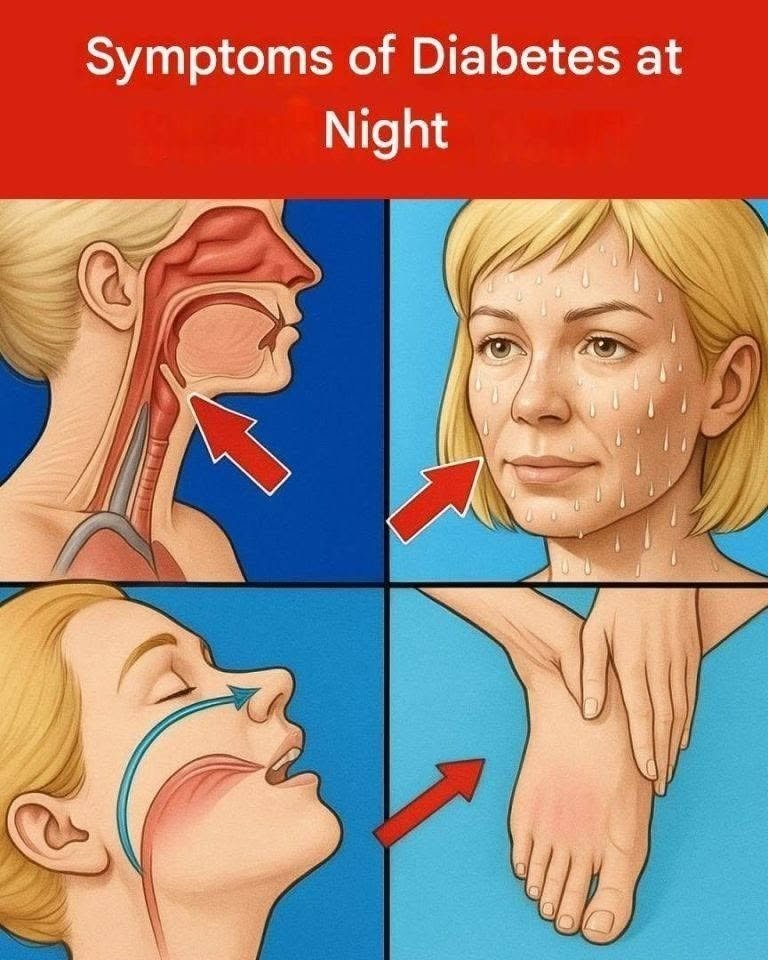
That headline is a classic piece of internet medical clickbait, using the mysterious hook of “nighttime symptoms” to make a routine metabolic condition sound like a nocturnal creeping shadow.
While diabetes affects the body 24 hours a day, certain symptoms can become more noticeable, disruptive, or pronounced once the sun goes down and your daily distractions fade away.
Here is the realistic, evidence-based truth behind diabetes symptoms that tend to flare up or get noticed at night:
1. Frequent Nighttime Urination (Nocturia)
-
Why it happens: When blood sugar levels are elevated, your kidneys work overtime to filter and flush out the excess glucose. Because glucose pulls water along with it, your body produces a much larger volume of urine. When you lie down to sleep, fluid circulation shifts, making those urgent bathroom trips much more frequent.
-
The Reality: While nocturia is a very common classic sign of undiagnosed or unmanaged diabetes, it can also be caused by dozens of other things, from drinking too much water before bed to prostate changes or bladder irritation.
2. Nighttime Leg Cramps and Restlessness
-
Why it happens: Unmanaged blood sugar can cause nerve irritation (neuropathy) or lead to dehydration and electrolyte imbalances (like low magnesium or potassium). When you are resting quietly in bed, these nerve misfirings or muscle spasms become much harder to ignore, often presenting as painful cramping in the calves or an irresistible urge to move your legs.
-
The Reality: While linked to metabolic issues, nighttime leg cramps are also frequently caused by simple muscle fatigue, intense exercise, or plain dehydration.
3. Nocturnal Hypoglycemia (Low Blood Sugar)
-
Why it happens: This is particularly relevant for individuals already taking certain diabetes medications or insulin. If medication doses or evening meals aren’t balanced properly, blood sugar can plummet dangerously low overnight.
-
The signs: Nighttime lows often manifest as waking up sweating, shaking, experiencing vivid nightmares, having a rapid heartbeat, or waking up with a pounding headache and extreme fatigue.
4. Burning Feet, Numbness, or Tingling
-
Why it happens: Chronic high blood sugar gradually damages the tiny blood vessels and nerves supplying your extremities (peripheral neuropathy). During the day, you are moving, distracted, and bearing weight. At night, when your feet are elevated and resting under warm covers, nerve pain, burning, or a “pins and needles” sensation often feels dramatically intensified.
-
The Reality: Persistent numbness or burning in the feet is a red flag that warrants a formal evaluation by a physician to check your HbA1c levels.
5. Excessive Thirst and Dry Mouth (Polydipsia)
-
Why it happens: Because your body is pulling fluid out of tissues to flush out excess sugar through urine, you wake up feeling profoundly dehydrated. A dry, sticky mouth and an intense, unquenchable thirst in the middle of the night are classic indicators of high blood sugar.
-
The Reality: Waking up thirsty can also simply mean your bedroom is too dry, you breathed through your mouth all night, or your dinner was a bit too salty.
The Takeaway: While nighttime symptoms can offer clues, diabetes isn’t a condition that only acts up after dark. A definitive diagnosis requires proper clinical testing—such as a fasting blood glucose test or an HbA1c blood draw—ordered by a healthcare professional, not a self-diagnosis based on nighttime discomfort.
Have you or someone you know been waking up with symptoms like unusual thirst or cramping, or are you just digging into how metabolic health impacts sleep?
