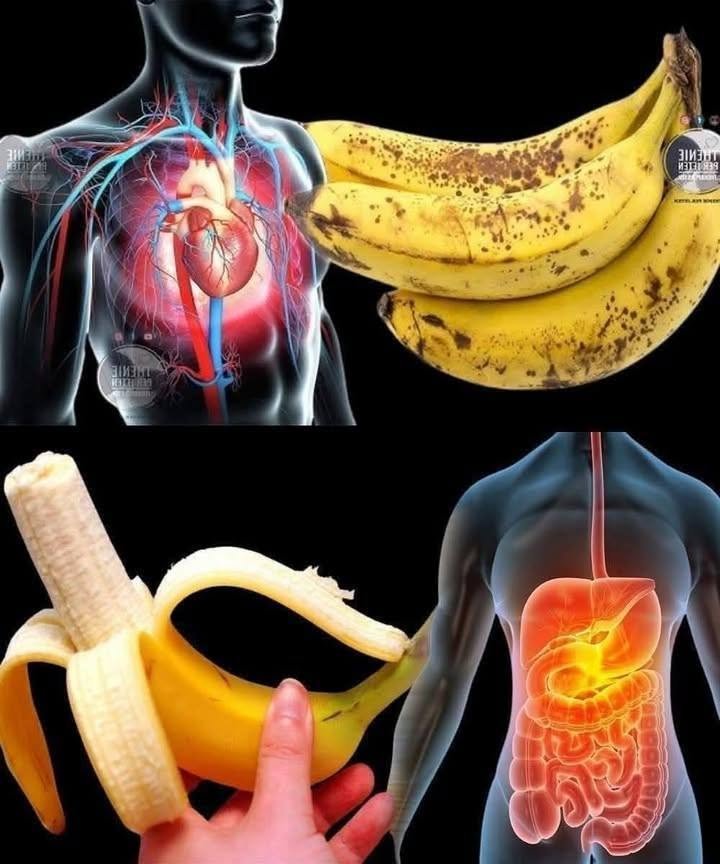
That headline cuts off right before a sensationalized claim—a classic clickbait tactic designed to make you wonder if your daily fruit habit is secretly causing weight gain, a sugar spike, or some bizarre physiological change.
Bananas are one of the most popular, nutrient-dense fruits on the planet, and viral health articles love to target them by twisting basic nutritional science into scary-sounding warnings.
Here is the realistic, evidence-based truth about what actually happens to your body when you eat bananas, stripping away the internet alarmism:
1. The Nutritional Reality: What Bananas Actually Contain
-
Potassium and Electrolytes: Bananas are famous for potassium, an essential mineral and electrolyte that helps regulate fluid balance, nerve signals, and muscle contractions—particularly heart function. A medium banana provides roughly 400 to 450 mg of potassium.
-
Fiber and Resistant Starch: Unripe (or slightly green) bananas are rich in resistant starch, a type of prebiotic fiber that feeds beneficial gut bacteria and helps regulate blood sugar digestion. As bananas ripen, that starch converts into natural sugars (fructose, glucose, and sucrose), making them sweeter and easier to digest.
-
Vitamins and Energy: They are packed with Vitamin B6, Vitamin C, and easily digestible carbohydrates, making them an incredible, natural energy source for active bodies.
2. Debunking Common Banana Clickbait Claims
Viral articles typically finish that sentence with one of a few exaggerated fears:
-
“Increases Sugar Levels Dangerously”: While bananas do contain carbohydrates and natural sugar, they have a low-to-medium glycemic index (around 51). For a healthy individual, the fiber content slows down sugar absorption, preventing dramatic spikes. (Of course, individuals managing strict clinical diabetes need to track total carbohydrate intake, but a banana is not a metabolic poison).
-
“Causes Weight Gain”: Because they are relatively calorie-dense for a fruit (around 105 calories for a medium banana), clickbait often warns they will ruin a diet. In reality, fiber promotes satiety and fullness, making them an excellent, whole-food snack compared to processed sweets.
-
“Leads to Potassium Overload (Hyperkalemia)”: Unless you have severe, end-stage chronic kidney disease—where your kidneys cannot filter out excess minerals—it is virtually impossible to consume dangerous levels of potassium simply by eating whole foods like bananas.
3. How to Enjoy Bananas Wisely
-
Pair with Protein or Fat: If you are sensitive to carbohydrate spikes or want a more sustained energy release, pair a banana with a spoonful of peanut butter, almond butter, or a handful of nuts. The healthy fats and proteins further slow down digestion.
-
Choose Your Ripeness: If you want less sugar and more gut-friendly resistant starch, eat them when they still have a slight tinge of green. If you want quick, easily digestible energy before a workout, grab a fully ripe, spotted one.
The Takeaway: Bananas are not a hidden health hazard; they are a wholesome, nutrient-packed fruit that has sustained human diets for generations. You don’t need to fear them over a sensationalized headline.
Are you looking closely at how fruit fits into a specific dietary plan, or just tracking down the rest of that clickbait hook?
