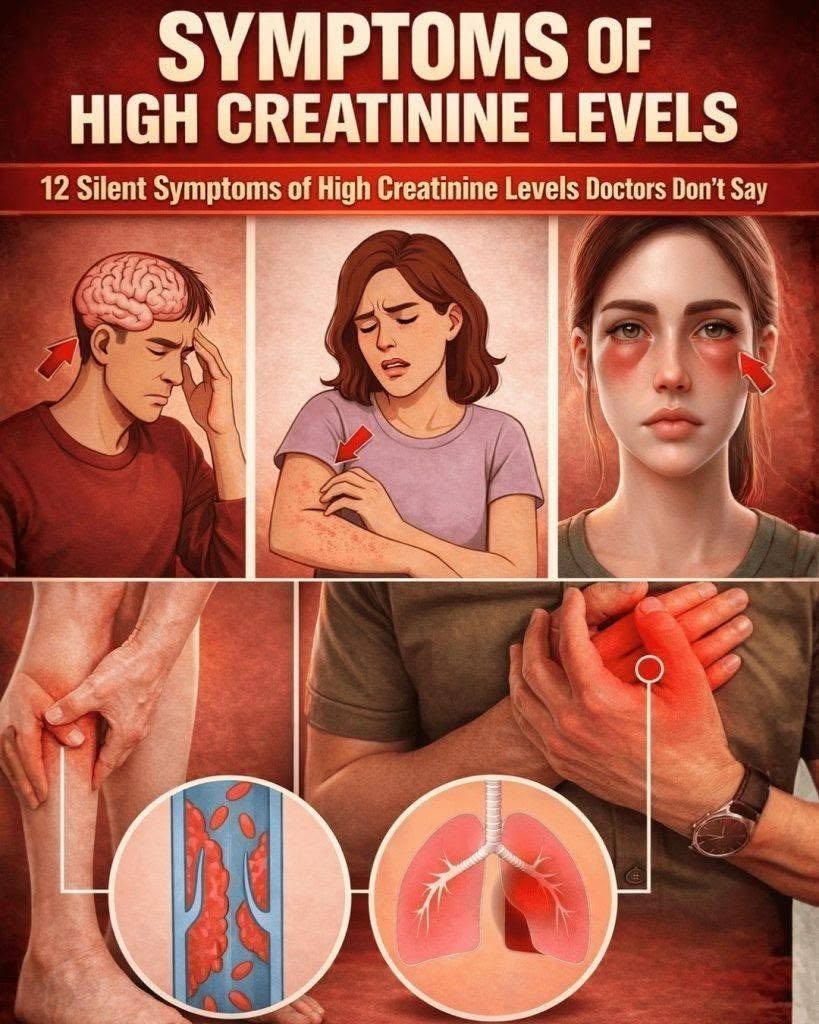
That headline leans on a classic medical scare tactic: taking a technical lab term like “creatinine” and weaponizing it to make you fear silent organ failure. By listing a dozen “subtle signs,” it essentially catalogs common human discomforts—like feeling tired or having a puffy morning face—and frames them as ticking time bombs for kidney disease.
Understanding how kidneys work and what creatinine actually measures helps strip away the anxiety and replace it with clinical reality.
1. What is Creatinine, Anyway?
-
The Reality: Creatinine is a normal, routine waste product generated by everyday muscle breakdown. Your kidneys act as a filtration system, filtering creatinine out of your blood and flushing it out through your urine.
-
The Lab Metric: When doctors check your blood creatinine levels, they are looking at how efficiently your kidneys are filtering. However, creatinine isn’t a standalone indicator of disease; its baseline level naturally depends on your age, sex, race, and total muscle mass. A muscular athlete will naturally have higher creatinine levels than an older, frail adult, even if both have perfectly healthy kidneys.
2. Can You Actually “Feel” High Creatinine?
-
The Misconception: Clickbait articles suggest you can spot high creatinine through subtle daily quirks. In clinical reality, elevated creatinine does not usually cause symptoms on its own in early stages.
-
The Silent Nature of Kidneys: Your kidneys have a massive functional reserve. They can lose a significant amount of filtration capacity before you ever notice physical symptoms. That is why kidney function is caught through routine blood panels (like a basic metabolic panel checking eGFR and creatinine) and urine tests, rather than physical sensations.
3. What Actually Causes Temporary Spikes in Creatinine?
You don’t necessarily have kidney disease just because a lab test shows a slightly elevated creatinine level. Common, non-disease factors include:
-
Severe Dehydration: If you are dehydrated, the volume of fluid in your blood drops, which artificially concentrates creatinine levels on a lab report.
-
Heavy Exercise or Muscle Injury: Intense weightlifting or a strenuous workout breaks down muscle tissue faster, temporarily releasing more creatinine into the bloodstream.
-
Certain Medications: Common drugs like regular, high-dose NSAIDs (ibuprofen, naproxen) or certain antibiotics can temporarily reduce kidney filtration efficiency.
-
High Protein Intake or Supplements: Eating massive amounts of meat or using creatine supplements can nudge levels up.
4. When Are Kidney Changes Actually a Concern?
When chronic kidney disease (CKD) progresses to a point where waste products genuinely build up (known as uremia), symptoms can occur, but they are persistent and distinct—such as pronounced and lasting swelling (edema) in the legs or around the eyes, persistent fatigue linked to anemia, or significant changes in urination patterns. These are diagnosed by a physician through trended lab work over time, not a checklist of vague daily symptoms.
The Takeaway: Feeling tired or puffy-eyed after a bad night of sleep doesn’t mean your creatinine levels are spiking. Kidney health is tracked quietly through routine blood and urine labs ordered by your doctor, not guessed at via sensationalized internet symptom lists.
Are you looking over a recent lab report, or did a health article just make you wonder about routine kidney screening?
