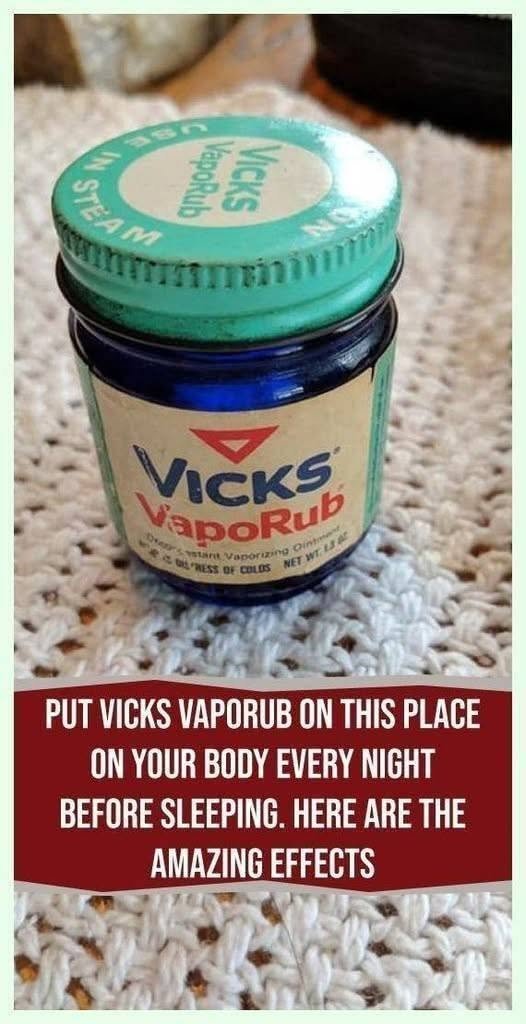
That headline is a staple of internet lifestyle blogs, usually promising quirky “life hacks” where a jar of mentholated chest rub cures everything from toenail fungus to cracked heels.
While Vicks VapoRub is a fantastic, comforting staple for what it was actually designed to do (suppressing coughs and easing chest congestion from a cold), the internet loves to stretch its utility into questionable territory.
Here is the grounded, clinical reality behind Vicks VapoRub—separating its legitimate home uses from internet fiction:
1. What Vicks Actually Does (The Clinical Reality)
-
The Active Ingredients: Camphor, eucalyptus oil, and menthol.
-
How It Works: When applied to the chest or throat, body heat vaporizes these medicated vapors. Inhaling them stimulates nerve endings in the nose and airways, creating a powerful sensation of easier breathing and helping to soothe a cough reflex. It doesn’t actually cure a cold or shrink mucus; it provides symptomatic relief.
2. Popular Internet “Hacks”: Fact vs. Fiction
-
The “Feet and Socks” Cough Trick:
-
The Internet Claim: Rubbing Vicks on the soles of your feet and wearing socks overnight will instantly stop a cough.
-
The Reality: There is no physiological pathway connecting the soles of your feet to your respiratory center. While the strong menthol smell might diffuse under a blanket and feel soothing, rubbing it on your chest where you can actually inhale the vapors is what provides real relief.
-
-
Treating Toenail Fungus:
-
The Internet Claim: Slathering Vicks on a fungal nail will clear it right up.
-
The Reality: Some small, older studies noted that thymol and camphor have mild antifungal properties, and a few people see mild cosmetic improvement. However, it is not a reliable medical cure for fungal infections (onychomycosis), which usually require targeted prescription antifungals or laser treatments.
-
-
Soothing Muscle Aches:
-
The Reality: The camphor and menthol create a cooling-then-warming sensation on the skin that acts as a mild counter-irritant, distracting your brain from deeper muscle aches. While it feels nice on a sore shoulder, it’s just masking minor discomfort temporarily, not healing deep tissue.
-
3. Important Safety Warnings (Where Vicks Can Go Wrong)
People often assume that because an ointment is over-the-counter, it has zero risks. Keep these safety rules in mind:
-
Never Use Under Age 2: The active ingredients (especially camphor) can cause severe respiratory distress, airway inflammation, or allergic reactions in infants and toddlers. Always check pediatric guidelines.
-
Keep Away from Broken Skin and Mucous Membranes: Never put Vicks inside your nostrils, under your nose (especially in kids, where it can be inhaled directly into the lungs and cause lipid pneumonia), or on open cuts. It will cause intense burning and irritation.
-
Never Heat It Up: Vicks should never be heated in a microwave, added to boiling water, or used in a steam vaporizer while hot, as the product can splatter, cause severe burns, or release irritating vapors that damage the eyes and airways.
The Takeaway: Vicks VapoRub is a wonderful, comforting tool for easing cold symptoms when rubbed on the chest as directed. But treating it as a magical cure-all for fungus, foot ailments, or mysterious hacks usually leads to disappointment (or skin irritation).
Are you battling a stubborn cold right now, or did one of these viral Vicks hacks pop up on your feed?
