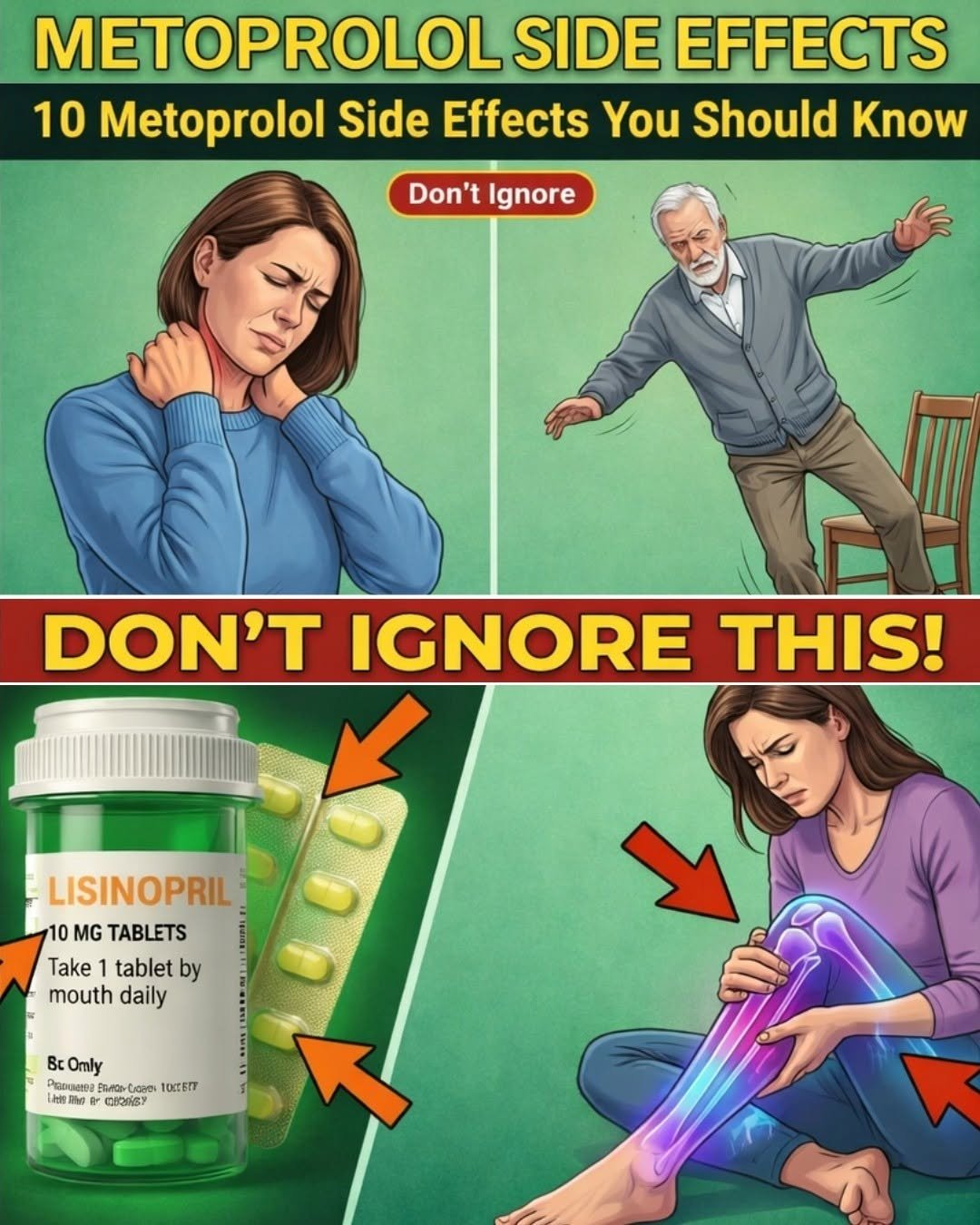
That headline leans heavily on classic medical anxiety tactics. By taking a widely prescribed, highly effective heart medication like metoprolol and warning about “overlooked side effects,” it creates a sense of hidden danger designed to make patients second-guess their treatment plans.
Metoprolol is a beta-blocker. It works by blocking the action of adrenaline on your heart and blood vessels, which slows your heart rate, lowers blood pressure, and reduces the heart’s workload. While it is a literal lifesaver for millions managing hypertension, heart failure, or arrhythmias, all potent medications have systemic effects.
Here is the grounded, clinical reality behind metoprolol’s side effects—separating everyday physiological adjustments from genuine medical concerns:
1. How Beta-Blockers Work (Why Side Effects Happen)
Because adrenaline receptors are located all over the body—not just in the heart—slowing down adrenaline signaling can introduce systemic side effects. Most of these are mild, predictable adjustments your body makes as it adapts to a lower heart rate and blood pressure.
2. Common “Overlooked” Side Effects of Metoprolol
While doctors always warn about severe issues, certain everyday side effects are rarely discussed in detail during a quick clinic visit:
-
Fatigue and Lethargy: Because your heart isn’t beating as fast or pumping as hard, your body may feel lower on energy initially. This often improves after a few weeks as your system adapts.
-
Cold Hands and Feet: By lowering blood pressure and redirecting blood flow toward vital core organs, your peripheral circulation to your fingers and toes decreases, making them feel chronically chilly.
-
Vivid Dreams or Sleep Disturbances: Beta-blockers can cross the blood-brain barrier to varying degrees. Some patients report unusually vivid dreams, insomnia, or mild sleep disruptions.
-
Exercise Intolerance: If you enjoy running or intense workouts, you might notice your heart rate “caps” out early. You will feel winded or tired faster because your heart is intentionally prevented from spiking to match physical exertion.
-
Mild Weight Gain or Metabolism Shifts: Beta-blockers can slightly slow down your resting metabolic rate, making it fractionally easier to put on a few pounds or harder to shed them.
-
Mood Changes or Mild Brain Fog: A small subset of patients report feeling mildly depressed, sluggish, or experiencing subtle concentration issues.
3. Serious Side Effects to Watch For (When to Call a Doctor)
While the symptoms above are mostly manageable inconveniences, certain signs require immediate medical attention rather than internet worry:
-
Severe Bradycardia: If your resting heart rate drops too low (typically consistently below 50 beats per minute) and you feel dizzy, lightheaded, or faint.
-
Worsening Heart Failure Symptoms: Sudden, significant weight gain, swelling in your lower legs, or acute shortness of breath can occasionally indicate that the dose needs adjusting.
-
Bronchospasm: For patients with underlying asthma or severe chronic bronchitis, beta-blockers can sometimes trigger airway constriction, making it harder to breathe.
4. The Golden Rule: Never Stop Beta-Blockers Abruptly
This is the most critical safety rule regarding metoprolol: Never stop taking a beta-blocker cold turkey.
-
When you take a beta-blocker long-term, your heart creates extra adrenaline receptors to compensate.
-
If you suddenly stop the medication, a massive wave of adrenaline floods those extra receptors, which can trigger a dangerous spike in blood pressure, severe tachycardia, or a heart attack (rebound hypertension). If you want to stop or change your dose, your doctor must taper you off slowly over a couple of weeks.
The Takeaway: Metoprolol is a cornerstone of cardiovascular management. While dealing with cold hands or mild fatigue can be annoying, understanding why they happen helps you navigate them safely in partnership with your physician.
Are you or a loved one currently taking metoprolol, or did this article bring up questions about a recent prescription change?
