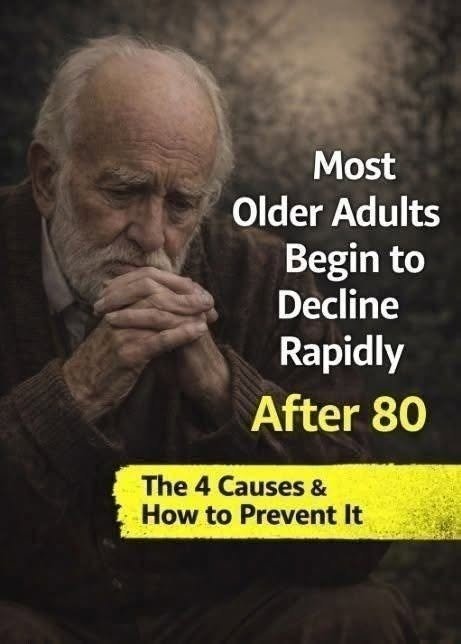
That headline is a masterclass in statistical manipulation and pure, unadulterated gloom. By claiming that older adults “don’t live much longer after 80,” it treats a human life like a scheduled train arrival, implying that turning 80 comes with an invisible expiration date stamped on your calendar.
In demographic and clinical reality, age 80 is not a hard stop, and modern life expectancy data completely shatters that arbitrary narrative.
Here is the grounded, clinical reality behind aging past 80 and what actuarial science actually says:
1. The Actuarial Reality (What the Numbers Actually Say)
-
Conditional Life Expectancy: When demographers look at life tables, they calculate conditional life expectancy—meaning once you successfully reach a certain age, your remaining outlook changes.
-
The Math: According to standard actuarial data from agencies like the Social Security Administration, an average 80-year-old man can statistically expect to live another 7 to 8 years, and an average 80-year-old woman can expect another 9 to 10 years. Many sail right past 85, 90, and beyond. Treating 80 as a cliff ignores the millions of people living vibrant, active lives well into their late 80s and 90s.
2. Why Arbitrary Lifespan Deadlines Fail
-
Pop-Culture Averages vs. Individual Biology: Headlines like this often confuse population averages with individual destiny. They lump together every lifestyle, genetic profile, and health condition into one bleak statistic.
-
The Compression of Morbidity: Gerontologists focus on healthspan—the number of years you live free from chronic, disabling disease. People who maintain cardiovascular health, preserve muscle mass (fighting off sarcopenia), keep their brains engaged, and maintain strong social connections often experience a compressed period of decline at the very end of life, rather than decades of frailty.
3. What Actually Drives Survival Past 80
Centenarians and octogenarians who thrive don’t do it because of luck alone; they share specific physiological traits:
-
Functional Independence: The ability to keep moving, climb stairs, and maintain balance is one of the strongest predictors of longevity in older adults.
-
Resilience: The capacity to bounce back from routine illnesses or infections without a cascading loss of independence.
The Takeaway: Turning 80 isn’t a final countdown; it’s simply another milestone. Human longevity isn’t governed by an arbitrary age limit, but by the physical and mental resilience you build over a lifetime.
Did this bleak little headline pop up right after a string of other doom-and-gloom age articles, or is your feed trying to convince you that time stops ticking the second you hit eight decades?
