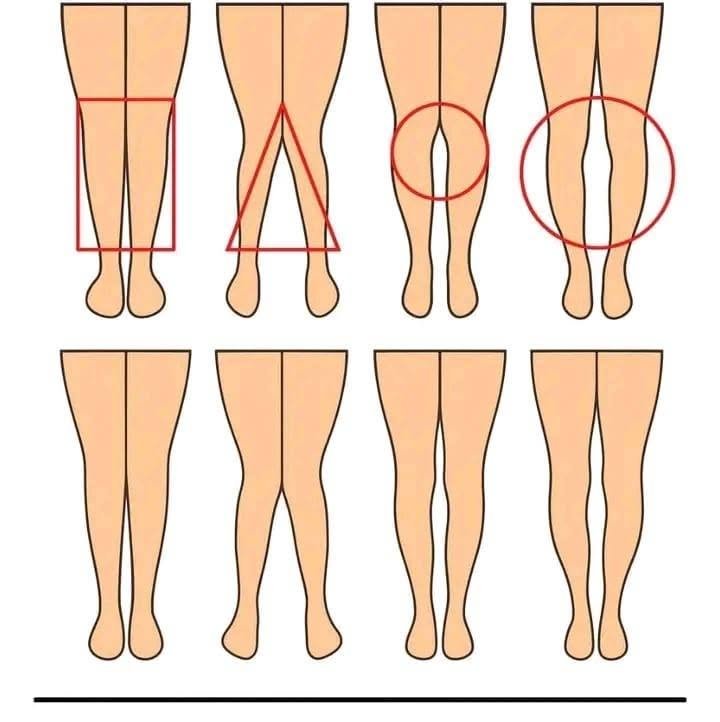
That headline cuts off right before the punchline—“A Woman’s Legs Can Tell How Her [Heart / Liver / Health / Circulation] Is…”—which is a masterclass in classic clickbait suspense. It leaves a massive curiosity gap designed to make you panic and click through a 50-slide gallery just to find out what mysterious diagnosis your limbs are supposedly broadcasting to the world.
In the ecosystem of digital health clickbait, the human body is constantly treated like a malfunctioning slot machine, and legs are a favorite target for bizarre, fear-based diagnostics.
Here is the grounded, clinical reality behind what your legs actually tell medicine, stripped of all the internet sensationalism:
1. The Anatomy of Limb-Based Health Scares
Viral articles love to take normal human variations or minor physical quirks and frame them as terrifying red flags:
-
Spider Veins and Varicose Veins: While chronic venous insufficiency (when vein valves weaken, causing blood to pool) is a real medical condition, clickbait articles treat every tiny superficial blue line as an imminent vascular catastrophe.
-
Leg Swelling (Edema): Mild swelling after standing on your feet for 12 hours, flying on an airplane, or eating a salty meal is normal fluid redistribution caused by gravity. Clickbait, however, immediately jumps straight to total heart or kidney failure.
-
Cramps and Aches: Normal muscular fatigue or mild electrolyte fluctuations are framed as mysterious, systemic failures.
2. What Doctors Actually Look For in Leg Diagnostics
When clinicians evaluate a patient’s lower extremities, they aren’t looking for vague “secrets” or mystical signs. They look for clear, objective medical patterns:
-
Asymmetry and Deep Vein Thrombosis (DVT): If one calf suddenly swells, turns red, feels warm, and aches intensely, that is a classic clinical pattern that prompts an ultrasound to check for a blood clot.
-
Peripheral Artery Disease (PAD): Pain or cramping in the calves that reliably occurs only when walking a certain distance and resolves with rest can indicate narrowed arteries—something diagnosed with specific tests like an ankle-brachial index (ABI), not a lifestyle quiz.
-
Neurological Signs: Numbness, tingling, or weakness evaluated in the context of spinal nerves or systemic metabolic health (like vitamin deficiencies or diabetes), rather than isolated skin quirks.
3. The Body as a Whole, Not a Dashboard
Your legs are an extension of your overall circulatory, muscular, and neurological systems, but they aren’t a crystal ball. They react to gravity, physical activity, hydration, and long hours sitting or standing just like the rest of your body.
The Takeaway: Your legs aren’t secretly leaking diagnostic riddles to the internet. If you ever have localized pain, sudden swelling, or persistent numbness, it’s a straightforward mechanical or circulatory issue to discuss with a doctor—not a viral puzzle.
Did your feed try to tell you that the shape, texture, or veins in your legs mean your health is secretly failing, or did it cut off right before a wild medical claim?
