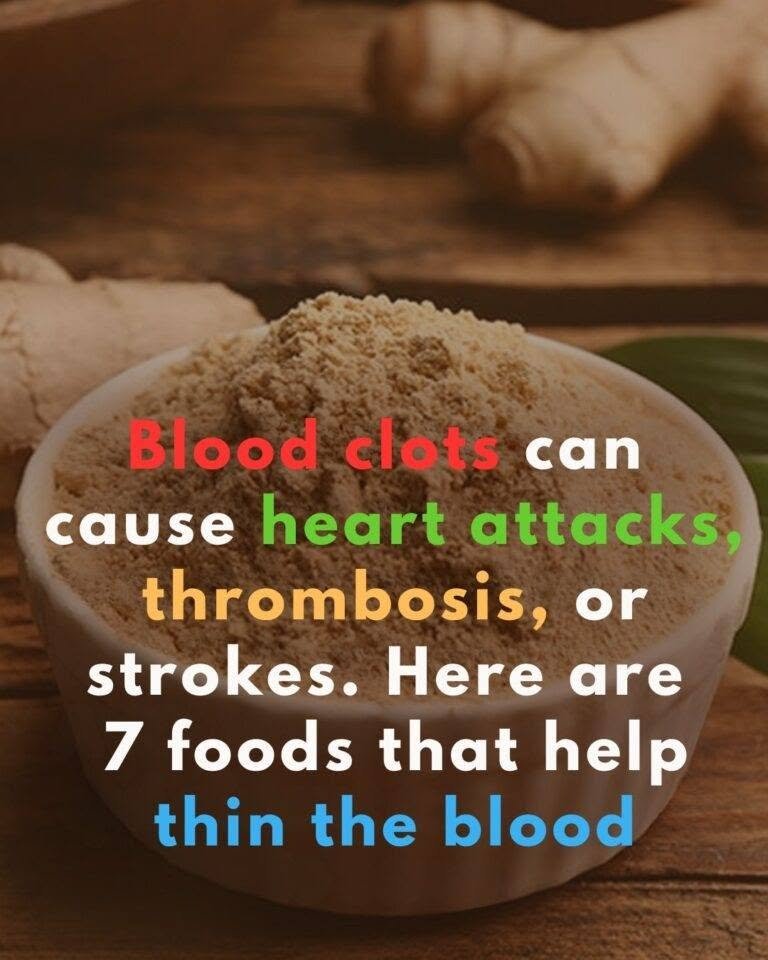
Incorporating natural blood-thinning foods into your diet can support healthy circulation and cardiovascular health. While these foods contain compounds that gently help prevent blood clots, they are not a replacement for prescribed medical blood thinners (like warfarin or aspirin). Always consult your doctor before making major changes to your diet if you take medication.
Here are 7 powerful foods known for their natural anticoagulant and circulation-boosting properties:
1. Ginger
-
How it helps: Ginger contains salicylate, a natural chemical found in plants that is also the basis for aspirin. Salicylates help prevent blood clotting by acting as an anticoagulant.
-
How to use it: Add fresh ginger to stir-fries, steep it in hot water for a soothing tea, or blend it into morning smoothies.
2. Garlic
-
How it helps: Garlic is renowned for its heart-healthy properties. It contains sulfur compounds—such as ajoene—that exhibit powerful antithrombotic (anti-clotting) effects and help lower blood pressure.
-
How to use it: Crush or chop raw garlic and let it sit for 10 minutes before cooking to maximize its active enzymes, then add it to dressings, soups, or roasted vegetables.
3. Cayenne Pepper
-
How it helps: Spicy peppers like cayenne are rich in salicylates and capsaicin. Capsaicin helps stimulate blood circulation, lower blood pressure, and keep platelets from sticking together.
-
How to use it: Sprinkle a pinch into soups, chili, or marinades for an instant metabolic and circulatory kick.
4. Turmeric
-
How it helps: The active compound in turmeric, curcumin, has potent anti-inflammatory properties. Studies show that curcumin can inhibit platelet aggregation, helping to prevent blood clots from forming.
-
How to use it: Blend turmeric into golden milk (with a pinch of black pepper to boost absorption), or use it to season rice, curries, and roasted vegetables.
5. Cinnamon
-
How it helps: Cinnamon contains coumarin, a powerful blood-thinning compound (though Cassia cinnamon has much higher levels of coumarin than Ceylon cinnamon). Regular consumption can help lower blood pressure and reduce inflammation.
-
How to use it: Dust cinnamon over oatmeal, yogurt, or coffee, or steep a cinnamon stick in herbal tea.
6. Fatty Fish (Salmon, Mackerel, Sardines)
-
How it helps: Rich in omega-3 fatty acids, fatty fish help reduce blood viscosity by preventing platelets from clumping together and lowering triglyceride levels.
-
How to use it: Aim for two servings of wild-caught fatty fish per week, baked, grilled, or added to salads.
7. Vitamin E-Rich Foods (Almonds, Sunflower Seeds, Avocado)
-
How it helps: Vitamin E acts as a mild natural anticoagulant by preventing platelets from aggregating. Sources include almonds, sunflower seeds, avocados, and spinach.
-
How to use it: Grab a small handful of raw almonds or seeds as a snack, or toss sliced avocado into salads and whole-grain toast.
Important Medical Note: If you are already taking anticoagulant or antiplatelet medications (such as Plavix, Coumadin, or daily aspirin), consuming large amounts of these foods can increase your risk of bleeding or bruising. Always speak with your healthcare provider before making significant dietary adjustments.
Are you looking to support your cardiovascular health for a specific reason, or exploring ways to improve overall circulation?
