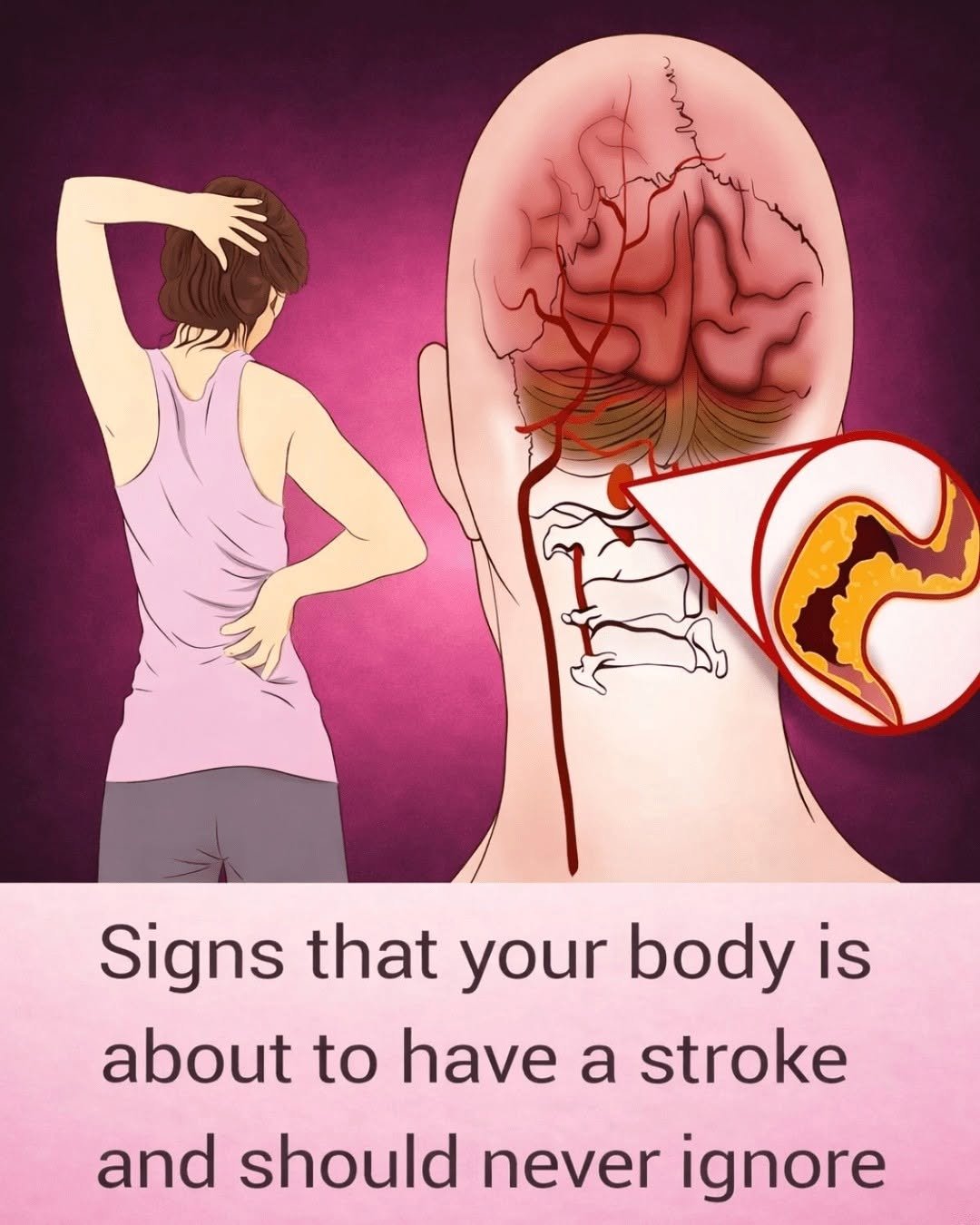
A stroke occurs when blood flow to a portion of the brain is suddenly interrupted by a clot (ischemic stroke) or a burst blood vessel (hemorrhagic stroke). When brain cells are deprived of oxygen, thousands die every second—making early recognition and immediate emergency action critical to minimizing permanent disability or loss of life.
10 Early Warning Signs of a Stroke
1. Sudden Facial Drooping or Numbness
-
What to look for: One side of the face sags, feels numb, or appears uneven. When asked to smile, the person’s mouth may appear crooked or lopsided.
-
Why it happens: Damage to motor neurons in the brain’s motor cortex interrupts signals controlling facial muscles on the opposite side of the body.
2. One-Sided Arm or Leg Weakness (Hemiparesis)
-
What to look for: Sudden numbness, weakness, or inability to move an arm or leg on one side of the body. When both arms are raised, one arm drifts downward involuntarily.
-
Why it happens: Each hemisphere of the brain controls physical movement on the opposite side of the body. Interrupted blood flow to a motor pathway impairs limb control.
3. Slurred Speech or Inability to Speak (Aphasia)
-
What to look for: Speech becomes garbled, slurred, or completely incoherent. The person may struggle to find basic words or fail to understand simple verbal instructions (receptive aphasia).
-
Why it happens: Ischemia affecting Broca’s area (speech production) or Wernicke’s area (language comprehension)—typically located in the brain’s left hemisphere.
4. Sudden Loss of Vision or Double Vision
-
What to look for: Abrupt dimming, blurring, double vision, or total loss of sight in one or both eyes (sometimes described as a “shade pulling down” over an eye, known as amaurosis fugax).
-
Why it happens: Occlusion in the ophthalmic artery or localized tissue ischemia in the visual cortex at the back of the occipital lobe.
5. Sudden “Thunderclap” Headache
-
What to look for: An excruciating, severe headache that strikes instantly with no known cause—frequently described by patients as the “worst headache of my life.”
-
Why it happens: Classic indicator of a hemorrhagic stroke or subarachnoid hemorrhage caused by a ruptured cerebral aneurysm or blood vessel.
6. Sudden Loss of Balance, Dizziness, or Vertigo
-
What to look for: Abrupt loss of coordination, staggering while walking, spinning sensations (vertigo), or an unexplained fall.
-
Why it happens: Ischemia targeting the cerebellum or brainstem, which regulate spatial orientation, balance, and fine motor movement.
7. Sudden Confusion or Cognitive Disorientation
-
What to look for: Unexpected mental fog, inability to recognize familiar people or places, difficulty processing basic information, or sudden memory lapses.
-
Why it happens: Disrupted neural networks across the frontal or parietal lobes responsible for executive function and orientation.
8. Difficulty Swallowing (Dysphagia)
-
What to look for: Sudden choking, coughing while attempting to swallow liquids or food, or an inability to manage saliva.
-
Why it happens: Impaired nerve signaling to the pharyngeal muscles, commonly seen when a stroke affects the brainstem or cranial nerve pathways.
9. Unexplained Numbness or “Pins and Needles”
-
What to look for: A sudden loss of tactile sensation, burning, or tingling across one entire side of the body, face, or an individual extremity.
-
Why it happens: Ischemia in the thalamus, the brain’s primary sensory relay station.
10. Transient Ischemic Attacks (TIAs) or “Mini-Strokes”
-
What to look for: Temporary stroke-like symptoms that appear suddenly and resolve completely within a few minutes to hours.
-
Why it happens: Caused by a temporary clot that dissolves on its own. TIAs are critical red-flag warnings: roughly 1 in 3 people who experience a TIA go on to suffer a major stroke within 90 days.
The Universal Emergency Rule: Think B.E. F.A.S.T.
An expanded version of the classic FAST protocol adds Balance and Eyes to catch up to 95% of all acute strokes:
| Letter | Focus Area | What to Test / Observe |
| B | Balance | Is there a sudden loss of balance, coordination, or sudden dizziness? |
| E | Eyes | Is there sudden loss of vision, double vision, or blurred sight in one or both eyes? |
| F | Face | Ask the person to smile. Does one side of the face droop? |
| A | Arms | Ask the person to raise both arms. Does one arm drift downward? |
| S | Speech | Ask the person to repeat a simple phrase. Is their speech slurred or strange? |
| T | Time | Call emergency services immediately. Note the exact time symptoms first started. |
Critical Emergency Action Steps
Emergency Notice: If you observe even one of these signs—even if the symptoms fade or disappear completely—call emergency medical services immediately.
