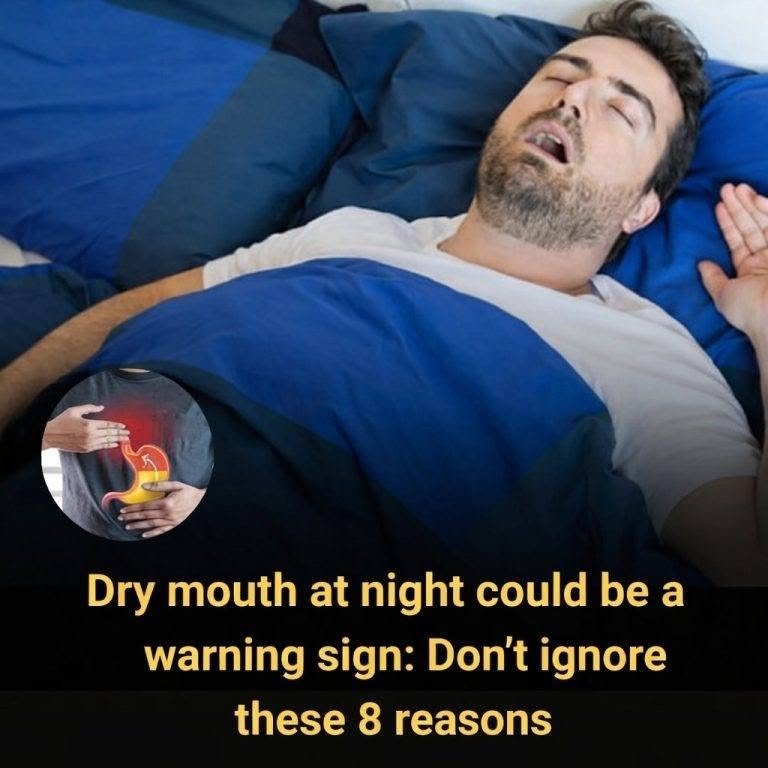
Chronic dry mouth at night (nocturnal xerostomia) is more than an uncomfortable nuisance—it indicates a significant drop in salivary flow while you sleep. Saliva is vital for neutralizing oral acids, washing away food debris, remineralizing tooth enamel, and protecting against bacterial and fungal overgrowth.
When dry mouth persists at night, it often signals an underlying systemic condition, a side effect of medication, or an airway disorder that requires professional evaluation.
8 Warning Signs of Nighttime Dry Mouth You Shouldn’t Ignore
1. Severe Morning Tooth Decay & Receding Gums
-
Presentation: A sudden increase in cavity development—especially along the gumline or between teeth—despite maintaining regular oral hygiene.
-
Clinical Significance: Saliva contains bicarbonate to buffer plaque acids, along with calcium and phosphate to continuously remineralize enamel. Without nighttime saliva protection, oral bacteria proliferate unchecked, leading to rapid tooth decay and periodontitis.
2. Waking Up Choking, Gasping, or Snoring (Sleep Apnea Indicator)
-
Presentation: Repeatedly waking up with an excessively dry, parched throat, accompanied by loud snoring, morning headaches, or daytime fatigue.
-
Clinical Significance: Persistent mouth breathing during sleep—frequently caused by Obstructive Sleep Apnea (OSA) or nasal airway obstruction—forces continuous airflow over oral tissues, evaporating saliva rapidly and exposing the airway to irritation.
3. Persistent Oral Thrush (Fungal Infections)
-
Presentation: White, creamy patches on the tongue, inner cheeks, or roof of the mouth, accompanied by a burning sensation or altered taste.
-
Clinical Significance: Saliva contains antimicrobial proteins such as lysozyme, lactoferrin, and histatins that regulate fungal populations. Reduced salivary volume creates an environment where Candida albicans can overgrow.
4. Dry, Cracked Lips & Angular Cheilitis
-
Presentation: Chronic peeling of the lips (cheilitis) or painful red cracks and sores at the corners of the mouth (angular cheilitis).
-
Clinical Significance: Lack of internal lubrication allows oral pathogens to collect in the moisture folds around the mouth, leading to localized inflammation, secondary fungal infections, and skin breakdown.
5. Sticky, Thick Saliva & Difficulty Swallowing
-
Presentation: Waking up needing water immediately to swallow, or feeling as though the tongue is stuck to the roof of the mouth or cheeks.
-
Clinical Significance: Indicates a severe reduction in the serous (watery) component of saliva, leaving behind thick, mucin-heavy secretions that fail to cleanse or lubricate the oral cavity.
6. Chronic Bad Breath (Halitosis)
-
Presentation: Persistent, strong morning breath that does not resolve after brushing or rinsing.
-
Clinical Significance: Without saliva to flush out dead skin cells and food particles, anaerobic bacteria break down organic debris in the mouth, releasing volatile sulfur compounds (VSCs) that produce foul odors.
7. Dry, Raw, or Burning Tongue (Glossodynia)
-
Presentation: A tongue that appears unusually smooth, red, or pebbled, often accompanied by a persistent burning or tingling sensation.
-
Clinical Significance: Prolonged dryness leads to atrophy of the tongue’s surface papillae and leaves delicate mucous membranes vulnerable to irritation, inflammation, and loss of taste sensitivity.
8. Simultaneous Dry Eyes & Joint Pain (Sjogren’s Disease Red Flag)
-
Presentation: Nighttime dry mouth occurring alongside gritty, itchy dry eyes, joint stiffness, or persistent fatigue.
-
Clinical Significance: Sjögren’s disease is an autoimmune disorder where the immune system mistakenly attacks the body’s moisture-producing glands—specifically the salivary (parotid/submandibular) and lacrimal (tear) glands.
Common Underlying Causes
| Category | Primary Triggers & Mechanisms |
| Medications | Over 400+ common drugs cause xerostomia, including antihistamines, decongestants, blood pressure medications, antidepressants, and statins. |
| Airway & Breathing | Chronic mouth breathing due to nasal congestion, deviated septum, or Obstructive Sleep Apnea (OSA). |
| Autoimmune Conditions | Sjögren’s disease, Rheumatoid Arthritis, Lupus, or Scleroderma damaging exocrine glands. |
| Metabolic Health | Uncontrolled Diabetes Mellitus (high blood sugar causes osmotic diuresis and reduced glandular output). |
| Dehydration & Lifestyle | Low daily fluid intake, excessive alcohol or caffeine consumption, and tobacco/nicotine use. |
Immediate Action & Relief Strategies
-
Use an Overnight Cool-Mist Humidifier: Keeps room air moist, reducing evaporation from mouth breathing.
-
Switch to Alcohol-Free Oral Care Products: Avoid alcohol-based mouthwashes and toothpaste containing sodium lauryl sulfate (SLS), which further dry out and irritate mucous membranes.
-
Try Biotene or Xylitol-Based Oral Gels: Apply a dry-mouth lubricating gel or melt a xylitol disc on your gums before sleep to stimulate saliva production and keep tissues hydrated.
-
Sip Water & Avoid Nighttime Triggers: Keep a glass of water at your bedside. Limit caffeine, alcohol, and salty foods in the evening.
-
Consult Your Healthcare Team: If dry mouth persists for more than two weeks, consult your dentist or physician to evaluate your medications, check for sleep apnea, or order blood tests for autoimmune markers.
