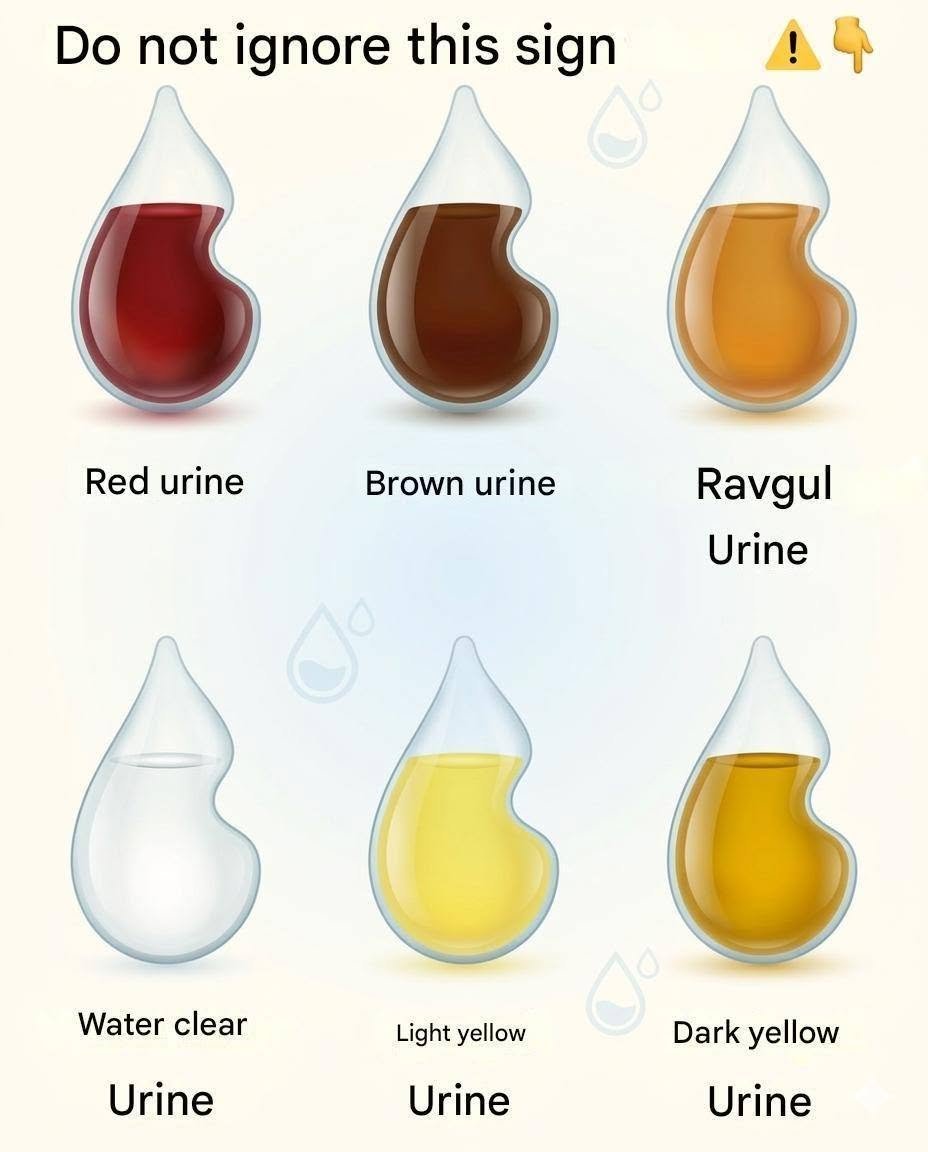
The color of your urine is a surprisingly reliable window into your hydration levels, diet, and overall health. Changes can range from simple water intake adjustments to signs that you need to call a doctor.
Urine Color Guide
-
Transparent / Clear:
-
Meaning: You are drinking a lot of water. While hydration is good, clear urine can mean you’re over-hydrated, which occasionally flushes out essential electrolytes.
-
-
Pale Straw to Transparent Yellow (The Goal):
-
Meaning: You are normally hydrated and healthy. Your body has a good balance of water and waste.
-
-
Dark Yellow / Amber / Honey:
-
Meaning: You are mildly to moderately dehydrated. Your body is trying to conserve water, making your urine more concentrated. Drink a glass of water soon.
-
-
Dark Brown / Cola-Colored:
-
Meaning: Severe dehydration, liver disease (like hepatitis or cirrhosis), or the breakdown of muscle tissue (rhabdomyolysis). If drinking water doesn’t clear this up quickly, contact a doctor.
-
-
Pink, Red, or Reddish-Brown:
-
Meaning: This can be harmlessly caused by eating beets, blackberries, or rhubarb. However, it can also indicate blood in your urine due to a urinary tract infection (UTI), kidney stones, or in rare cases, tumors.
-
-
Orange:
-
Meaning: Dehydration, certain medications (like rifampin or sulfasalazine), or B-complex vitamins. It can also point to liver or bile duct issues.
-
-
Green or Blue:
-
Meaning: Usually caused by colorful foods (like asparagus or food dye), certain medications, or a rare bacterial urinary tract infection (pseudomonas).
-
-
Cloudy or Murky:
-
Meaning: Often a sign of a UTI, kidney stones, or dehydration. If it persists or is accompanied by a foul odor or burning sensation, see a healthcare provider.
-
When to See a Doctor: If your urine is red, brown, or cloudy for more than a day or two without an obvious dietary cause (like eating beets), or if it is accompanied by pain, fever, fatigue, or foul odor, you should consult a medical professional.
Are you noticing a specific color change right now, or are you looking into this out of general curiosity?
