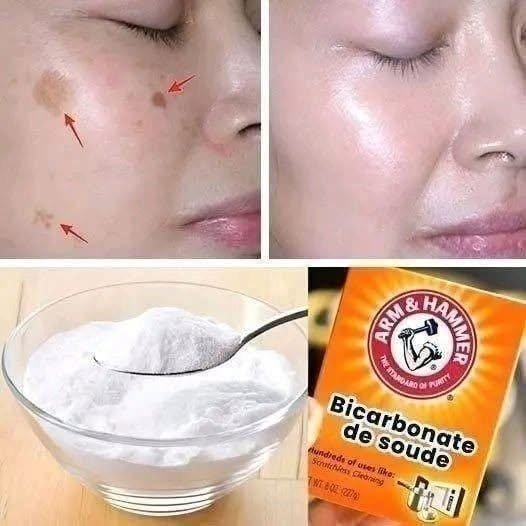
Clinical Reality Check: Baking soda (sodium bicarbonate) is not a treatment for dark spots, wrinkles, or dark circles. Applying it to facial skin does the exact opposite of internet hacks: its extreme alkalinity (~pH 9) destroys the skin’s acid mantle, and its grit causes micro-abrasions, leading to chronic barrier compromise, worsened pigmentation, and periorbital chemical/mechanical irritation. (Note: This exact myth was addressed previously; the dermatological facts and safe alternatives remain identical.)
Baking Soda Claims vs. Dermatological Reality
| Target Issue | Claimed Effect | Dermatological Reality |
| Dark Spots (Hyperpigmentation) | “Bleaches” or lifts surface pigment | Causes micro-inflammation that triggers or worsens dark spots (post-inflammatory hyperpigmentation), especially in melanin-rich skin. |
| Wrinkles | Tightens and “irons out” lines | Zero impact on dermal collagen or elastin. The tight feeling is actually acute skin dehydration and stratum corneum contraction/damage. |
| Dark Circles | Brightens and flushes shadow | Periorbital skin is ultra-thin (0.5 mm); alkalinity and scrubbing cause contact dermatitis, erythema, and barrier breakdown that worsens visual shadowing. |
Why Baking Soda Fails for These Conditions
-
pH Mismatch: Healthy skin requires a slightly acidic barrier (pH 4.5–5.5). Baking soda’s heavy alkalinity (~pH 9) strips protective ceramides and invites dysbiosis.
-
Zero Pathway Match:
-
Dark spots require tyrosinase inhibition or accelerated turnover (e.g., azelaic acid, vitamin C, retinoids).
-
Wrinkles require collagen induction and matrix protection (e.g., retinoids, daily broad-spectrum SPF).
-
Dark circles stem from vascular pooling, thin skin revealing orbicularis oculi muscle, or tear-trough shadowing—none of which sodium bicarbonate addresses.
-
Evidence-Based Alternatives That Actually Work
-
For Dark Spots: Azelaic acid (10%), Niacinamide (5%), Vitamin C (L-ascorbic acid), or low-strength AHAs/BHAs formulated at safe, buffered pH.
-
For Wrinkles: Topical retinoids (adapalene, retinol, or prescription tretinoin), peptides, and strict daily UV protection.
-
For Dark Circles: Topical caffeine serums (for transient vasoconstriction/puffiness), hydrating hyaluronic acid, adequate sleep, or evaluating iron/allergy status.
Safety Red Line: Never apply baking soda near the eyes. Periorbital contact risks severe irritation, contact dermatitis, or accidental micro-abrasion of the ocular surface. Stop immediately if you experience stinging, burning, or red erythema.
Are you trying to fade post-acne dark marks, or tackle under-eye fatigue and texture?
