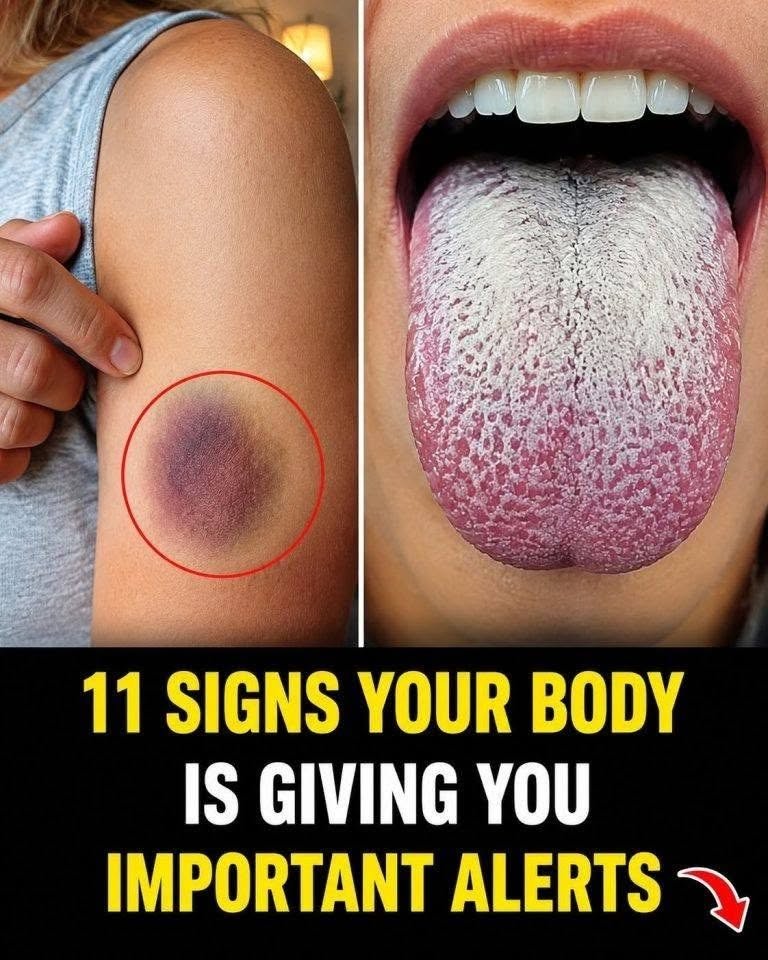
That headline is a classic clickbait fear factory. By claiming your body is secretly firing off “11 important alerts,” it treats everyday human sensations—like a twitchy eyelid, a random bruise, a bit of fatigue, or a cramp—like dashboard warning lights on a failing car.
It preys on somatic hypervigilance, making you second-guess every normal, mundane creak and groan your body makes.
Here is the grounded, clinical reality behind why the human body creates these “alerts” and how medicine actually separates background noise from actual red flags:
1. The Human Body is Not a Car Dashboard
-
The Noise-to-Signal Ratio: Living tissues experience constant micro-fluctuations. Muscles twitch, joints pop, skin gets dry, energy dips in the afternoon, and digestion changes based on what you ate for lunch.
-
The Clickbait Strategy: Viral health lists take universal, harmless bodily quirks and stitch them together into a terrifying checklist. If you read 11 items, the law of averages guarantees you will experience at least two or three of them on any given day, convincing you that you have an underlying medical emergency.
2. Common “Alerts” vs. Clinical Reality
-
The Exhaustion Trap: Feeling tired after a poor night’s sleep or a stressful week is framed as “adrenal fatigue” or cellular collapse, when 99% of the time, it simply means you need sleep, hydration, or a break.
-
Minor Aches and Twitches: Eye twitches or mild muscle spasms are usually caused by caffeine, stress, or minor electrolyte shifts—not a neurological crisis.
-
Skin and Nail Variations: A brittle nail or a dry patch of skin is typically a reaction to weather, handwashing, or mild friction, not a rare systemic disease.
3. How Real Doctors Listen to Your Body
Clinicians don’t evaluate health by scanning a list of 11 vague viral symptoms. They look for specific clinical criteria:
-
Persistence and Progression: Does the symptom resolve on its own, or does it steadily get worse over weeks?
-
Constellations of Symptoms: A single isolated symptom (like a mild headache) is rarely diagnostic. Doctors look for patterns and clusters of red flags (e.g., headache plus sudden vision changes plus high fever).
-
Objective Diagnostics: Blood panels, imaging, and physical exams replace guesswork with hard data.
The Takeaway: Your body isn’t constantly trying to send you secret code red alerts through minor quirks. Most of the time, it’s just living, breathing, and reacting to a normal day.
Did your feed try to diagnose you with all 11 signs of impending doom, or did you manage to scroll past before it convinced you that a tired eye means total system failure?
