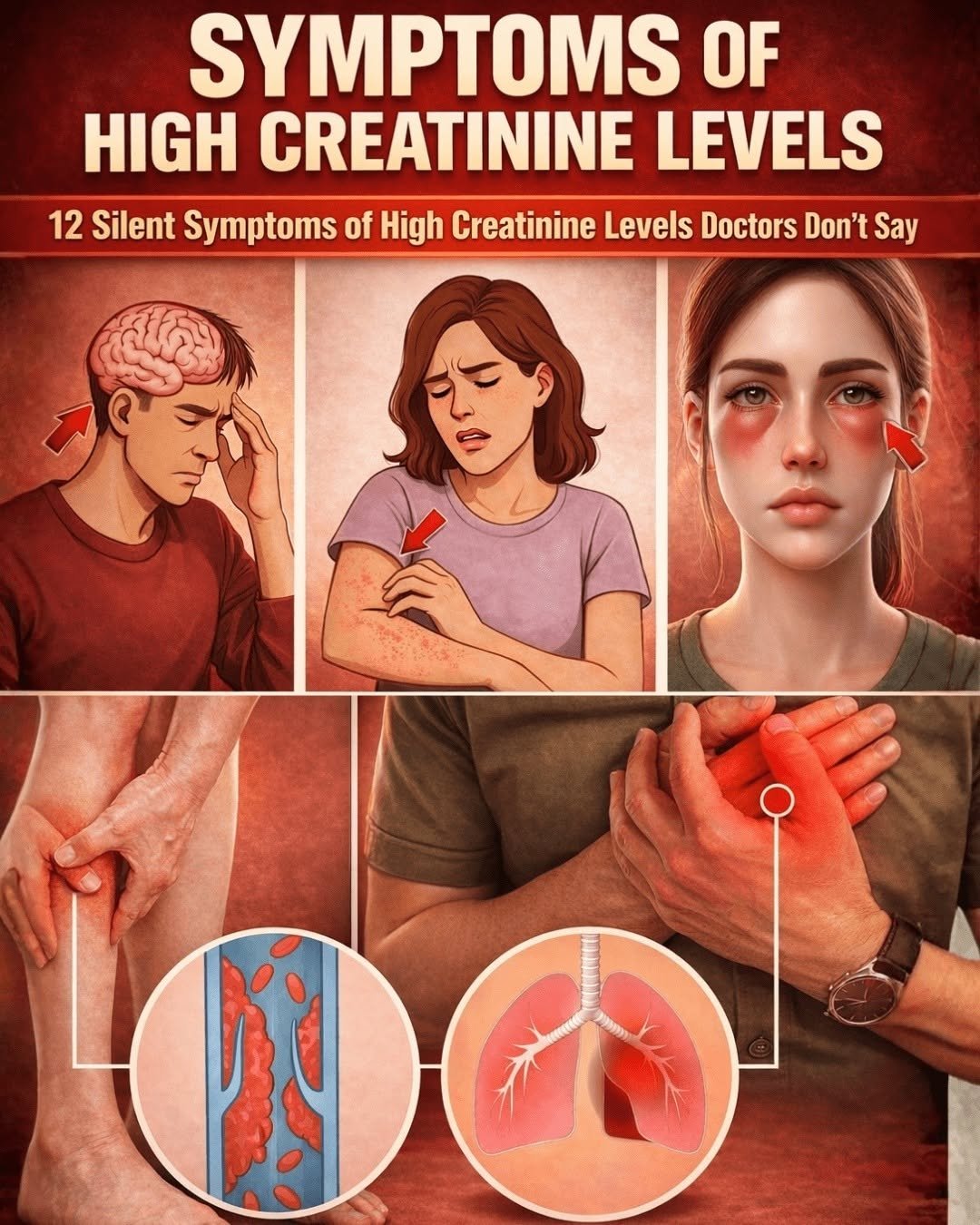
Clinical Reality Check: High creatinine is a marker of reduced glomerular filtration (impaired kidney clearance), not a direct toxin that causes symptoms on its own. Mild-to-moderate elevations in serum creatinine often produce zero symptoms (the “silent” phase of early-to-moderate CKD), as nephrons compensate. Overt symptoms usually only emerge when GFR drops significantly (Stage 3b/4/5 CKD).
12 Signs Often Attributed to Decreased Renal Function / Elevated Creatinine
| Sign / Symptom | Physiological Context | Clinical Reality |
| 1. Persistent Fatigue / Weakness | Reduced erythropoietin (EPO) production leading to anemia, plus uremic solute accumulation. | Common in moderate/advanced CKD; non-specific early. |
| 2. Foamy or Bubbly Urine | Glomerular filtration barrier damage allowing protein (albuminuria) into urine. | Direct renal marker, though not caused by creatinine itself. |
| 3. Periorbital or Lower Extremity Edema | Sodium/water retention due to GFR drop and/or nephrotic-range proteinuria. | Noticeable puffiness around eyes in morning or ankle swelling by evening. |
| 4. Sleep Disturbances / Insomnia | Uremic toxin accumulation, restless legs, or nocturnal volume overload/shortness of breath. | Frequent in declining renal clearance. |
| 5. Dry, Itchy Skin (Uremic Pruritus) | Phosphorus-calcium imbalance, parathyroid hyperstimulation, and uremic retention. | Usually late Stage 3–5, rarely subtle early-stage creatinine bump. |
| 6. Changes in Urination Frequency (Nocturia) | Loss of urine-concentrating ability (medullary washout/tubular dysfunction). | Waking multiple times at night; non-specific (prostate, diabetes, etc.). |
| 7. Muscle Cramps or Twitches | Electrolyte shifts (calcium, magnesium, potassium) and uremic neuromuscular irritability. | Common, multi-factorial cause. |
| 8. Metallic Taste in Mouth / Ammonia Breath | Urea breakdown into ammonia in saliva via urease-producing gut bacteria (uremia). | Late-stage finding (GFR < 30). |
| 9. Loss of Appetite / Nausea / Vomiting | Uremic gastropathy and systemic inflammation affecting gut motility. | Advanced renal impairment sign. |
| 10. Shortness of Breath | Fluid overload (pulmonary congestion) or renal anemia lowering oxygen-carrying capacity. | Can mimic cardiac/pulmonary disease. |
| 11. High Blood Pressure (Hypertension) | Renin-angiotensin-aldosterone axis activation and fluid retention. | Both a cause and consequence of declining kidney function. |
| 12. Difficulty Concentrating / “Brain Fog” | Mild uremic encephalopathy or sleep disruption from chronic nocturnal symptoms. | Non-specific. |
The Diagnostic Truth About Creatinine
-
The “Late Rise” Problem: Serum creatinine can remain deceptively normal even while GFR is declining (due to compensatory hyperfiltration in remaining nephrons).
-
Better Early Screeners: eGFR (calculated from creatinine, age, sex/race), Urine Albumin-to-Creatinine Ratio (uACR), and cystatin C catch early kidney stress long before broad “symptoms” appear.
-
Non-Renal Bumps: High creatinine can temporarily spike from heavy exercise, high-protein intake, dehydration, or drugs (like trimethoprim or cimetidine) without true kidney disease.
Safety Note: Do not scan symptom lists for early kidney disease. A simple basic metabolic panel (BMP/CMP) with eGFR and a spot urine albumin-to-creatinine ratio (uACR) give the actual status of renal function.
Are you reviewing a specific lab result showing elevated creatinine, or investigating a recent health symptom?
