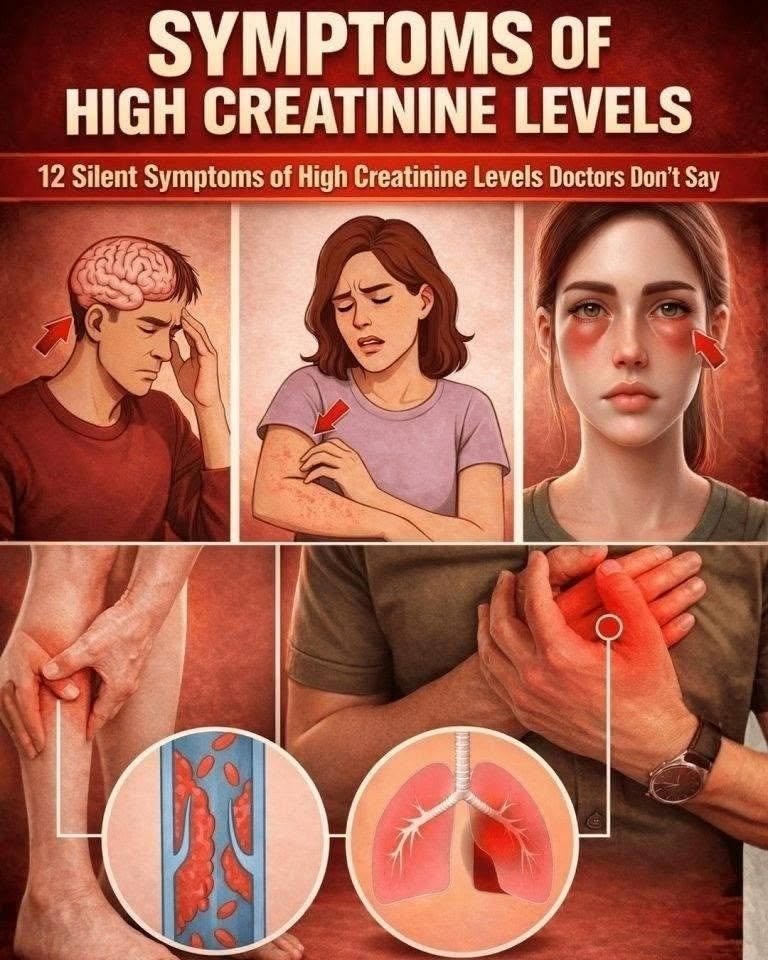
The Anatomy of Kidney Anxiety: Deconstructing the “Subtle Signs” Trope
The digital health landscape thrives on converting routine physiological metrics into clinical cliffhangers. Few biomarkers are exploited quite as frequently as creatinine. When an article flashes a warning about “12 subtle signs of high creatinine and kidney problems,” it relies on a specific psychological lever: ambiguity. By mapping normal, non-specific human sensations—such as afternoon fatigue, dry winter skin, minor eye puffiness, or a fleeting muscle cramp—onto a vital organ like the kidney, the text manufactures an immediate, paralyzing sense of vulnerability.
To understand why this is a distortion of clinical reality, we must look at how the kidneys actually function, how creatinine is generated, and why diagnostic medicine relies on objective chemistry rather than subjective guesswork.
1. What Is Creatinine, Really? (Metabolic Reality vs. Myth)
A common misconception propagated by sensationalized media is that creatinine is a toxic invader or a pollutant accumulated from the environment or diet. In biological reality, creatinine is an entirely normal, routine end-product of everyday cellular metabolism.
-
The Muscle Connection: Creatinine is generated by the breakdown of creatine phosphate in skeletal muscle. Your muscles use creatine for quick bursts of energy, and as they metabolize it, they release creatinine into the bloodstream at a remarkably steady, predictable rate determined largely by your total muscle mass, age, and biological sex.
-
The Filtration Engine: Your kidneys are extraordinarily sophisticated micro-filtration units. Blood flows into the renal cortex, passes through millions of microscopic clusters called glomeruli, and gets filtered. Creatinine is water-soluble and passes easily out of the blood and into the urine, keeping blood levels within a tight, safe range.
-
The Margin of Resilience: The human body possesses immense functional reserve. Kidneys do not fail silently while leaving you with a quirky list of subtle daily symptoms. In fact, a person can lose a substantial percentage of their total filtering capacity before serum creatinine levels begin to noticeably creep upward, let alone cause clinical symptoms.
2. Deconstructing the “Subtle Signs” Fallacy
If true kidney dysfunction does not manifest as subtle, isolated quirks, what are the symptoms that health clickbait tries to exploit? Let us examine the actual clinical gap between everyday fatigue and true renal compromise:
-
The Fatigue Fallacy: Internet lists frequently cite general tiredness as a primary sign of high creatinine. In reality, fatigue is one of the most ubiquitous symptoms in human medicine, tied overwhelmingly to poor sleep, stress, nutritional gaps, or viral recovery. True uremic fatigue—caused by the actual accumulation of organic waste products when kidneys fail—occurs alongside severe, systemic metabolic changes, not as an isolated “subtle sign.”
-
Puffiness and Fluid Shifts: While advanced kidney disease can lead to generalized fluid retention (edema) due to protein loss or sodium imbalance, morning eye puffiness is vastly more often caused by allergies, poor sleep posture, high sodium intake the night before, or simple genetics, rather than failing renal clearance.
-
Skin Changes and Itching: Chronic kidney disease-associated pruritus (itching) is a real clinical phenomenon, but it stems from complex systemic imbalances in phosphorus, calcium, and parathyroid hormone in advanced stages of renal decline—not from a mild, fluctuating bump in serum creatinine.
3. The Clinical Standard: Objective Metrics Over Subjective Guesswork
Nephrologists and primary care physicians do not diagnose kidney disease by asking patients if they feel sluggish or have dry skin. They rely on concrete, quantifiable diagnostic criteria:
-
Serum Creatinine Blood Test: A basic metabolic panel or comprehensive metabolic panel measures the precise concentration of creatinine in milligrams per deciliter. Because muscle mass directly impacts baseline creatinine (e.g., an athletic bodybuilder naturally produces more creatinine than an older, frail adult), a single number requires contextual clinical interpretation.
-
eGFR (Estimated Glomerular Filtration Rate): Laboratories automatically calculate your eGFR using your serum creatinine level, age, sex, and body surface area. This algorithm provides an estimated percentage of how efficiently your kidneys are filtering your blood.
-
Urinalysis and Albumin-to-Creatinine Ratio (ACR): Often an even earlier and more sensitive indicator of renal stress than blood creatinine is the presence of protein (specifically albumin) in the urine. Healthy glomerular filters retain large proteins; when they experience stress from conditions like hypertension or diabetes, albumin leaks into the urine long before blood chemistry changes significantly.
The Takeaway: High creatinine is not a cryptic riddle solved by decoding everyday fatigue or minor bodily aches. It is a precise laboratory value evaluated through standard blood and urine panels. True kidney health is monitored by science, not by fear-inducing internet checklists.
