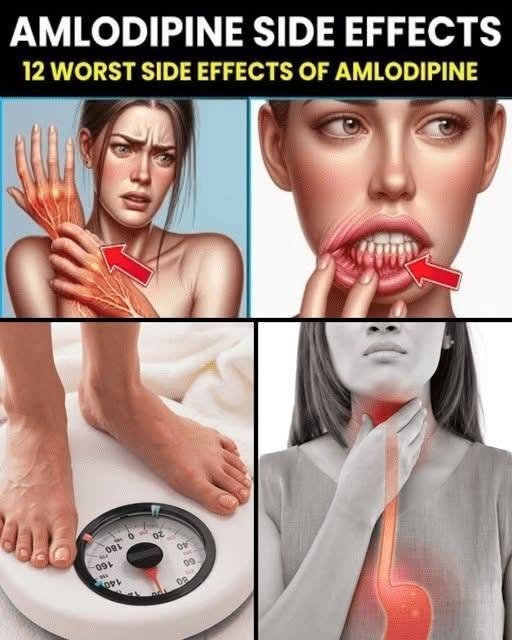
That classic alarmist headline—“12 Worst Side Effects of Amlodipine You Should NEVER Ignore”—takes right up where the last scare tactic left off, doubling down on the exact same prescription medication with an even longer, more terrifying list of phantom dangers.
When you strip away the tabloid hyperbole, the goal isn’t to inform you; it’s to take a widely prescribed, thoroughly studied blood pressure medication and make you fear every single pill you swallow.
In clinical pharmacology, drug manufacturers are legally required to list every single adverse reaction reported by even one person during clinical trials—ranging from severe medical emergencies down to mild inconveniences reported at the exact same rate as a sugar pill (placebo).
Here is how cardiologists and clinical pharmacists actually categorize Amlodipine’s side effects, separating true clinical signals from internet scare tactics:
The Real Side Effect Profile of Amlodipine
-
Common and Manageable (The Ones You Actually See):
-
Peripheral Edema (Ankle Swelling): As mentioned previously, because Amlodipine relaxes and widens arterial blood vessels, hydrostatic pressure can cause a mild shift of fluid into the lower extremities. It looks alarming, but it is a localized hemodynamic effect, not heart failure or kidney collapse.
-
Flushing or Dizziness: Mild vasodilation can occasionally cause a brief sensation of warmth in the face or a touch of lightheadedness when changing positions quickly.
-
-
Rare and Serious (The True Medical Red Flags):
-
Severe Hypotension: If a dose is too high or interacts poorly with other severe blood pressure drugs, blood pressure can drop too low, causing fainting or extreme dizziness.
-
Worsening Angina: In very rare cases when first starting the medication or increasing the dose, some patients with severe underlying coronary artery disease can experience an increase in chest pain.
-
How to Navigate Medication Information Safely
-
Look at the Likelihood: A side effect that occurs in less than $1\%$ of patients is very different from one that affects $20\%$. Clickbait lists deliberately present a laundry list of rare symptoms as if they happen to everyone.
-
Talk to Your Pharmacist: Your pharmacist is your best, most accessible resource for medication safety. If a side effect is bothering you—whether it’s swollen ankles or fatigue—they can explain whether it’s a known reaction to your specific dosage and coordinate with your physician.
The Takeaway
Amlodipine remains a cornerstone treatment for managing hypertension and protecting cardiovascular health. You don’t need a 12-item panic checklist to take it safely; you just need open communication with your healthcare provider.
Are you managing a blood pressure regimen, or looking into specific symptoms you or a loved one have experienced?
