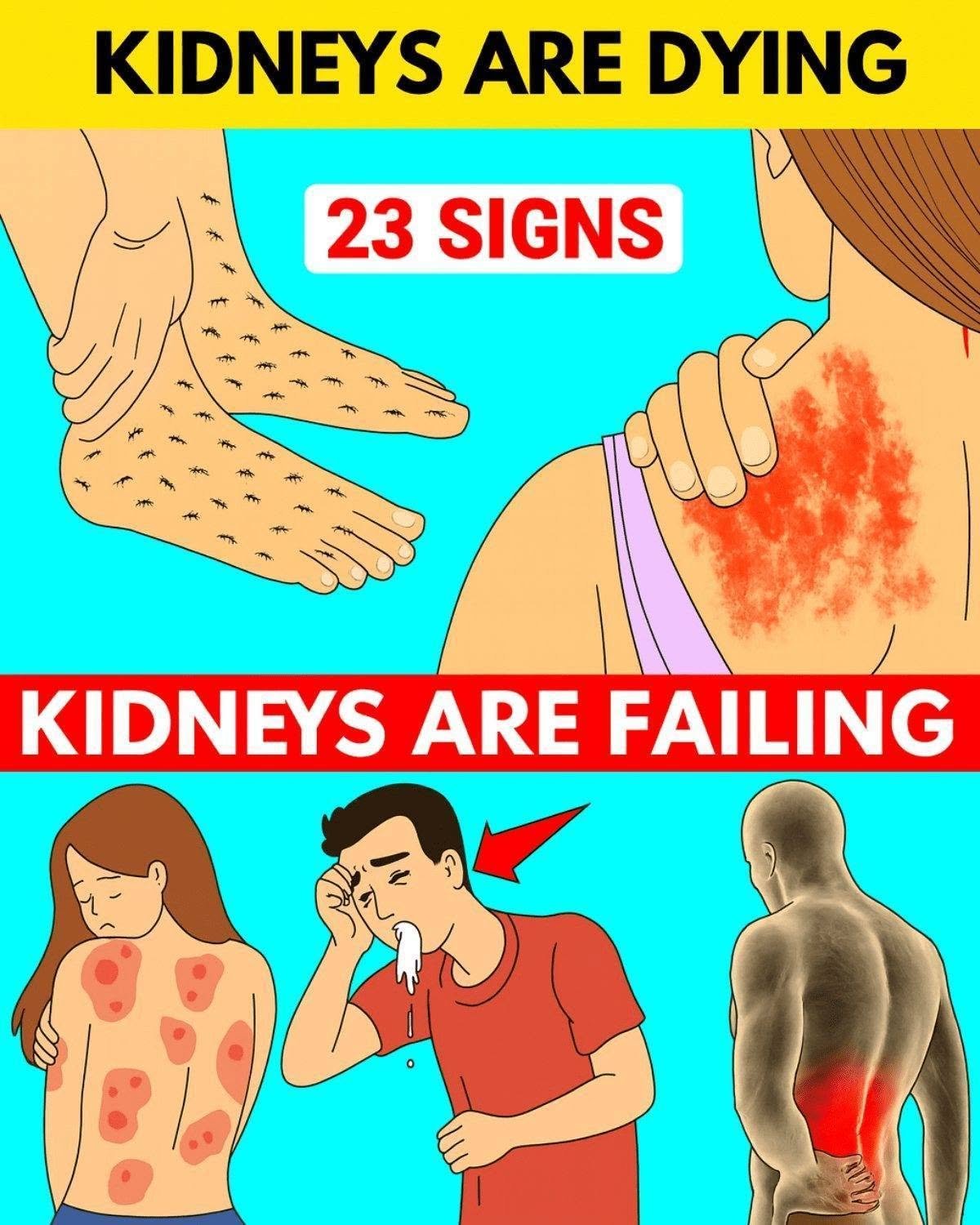
23 Strange Signs Your Kidneys Might Be in Trouble
Sensationalized wellness articles frequently promise a shocking list of “strange and unusual signs” that your kidneys are failing. Because the kidneys act as your body’s master filtration, fluid-balancing, and hormone-regulating headquarters, when they experience strain, the signals they send can show up in unexpected places all over the body.
While these unusual physical cues are rarely definitive proof of a diagnosis on their own, understanding what they physically represent helps separate internet myths from valuable clinical awareness:
Unusual and Subtle Signs of Kidney Strain
-
1. Excessively Foamy or Bubbly Urine:
-
What it means: If your urine frequently looks frothy—resembling scrambled eggs or the head on a poured beer—it often indicates proteinuria, meaning your kidney filters are letting protein leak through into the toilet.
-
-
2. Persistent Puffiness Around the Eyes (Periorbital Edema):
-
What it means: Waking up with heavy bags or swelling around your eyes can happen when the kidneys leak significant amounts of protein into the urine rather than keeping it balanced in the bloodstream.
-
-
3. Unexplained, Deep-Seated Itching (Pruritus):
-
What it means: When kidneys struggle to filter waste, phosphorus and other mineral byproducts accumulate in the blood, leading to severe skin dryness and intense, whole-body itching that lotions can’t fix.
-
-
4. A Metallic Taste or “Ammonia” Breath:
-
What it means: A buildup of urea in the blood (uremia) can alter your sense of taste, make meat taste metallic, or cause breath to carry a faint, unusual odor.
-
-
5. Frequent Nighttime Urination (Nocturia):
-
What it means: As kidney tissue loses its ability to concentrate urine properly, the body compensates by producing larger volumes of dilute urine, forcing multiple trips to the bathroom after dark.
-
-
6. Unexplained Muscle Cramps:
-
What it means: Electrolyte imbalances—specifically shifts in calcium, phosphorus, or potassium that the kidneys normally regulate—can irritate nerves and trigger painful nighttime spasms, particularly in the calves.
-
-
7. Swollen Ankles and Feet (Edema):
-
What it means: Impaired kidney function means excess sodium and fluid are retained in the body, which gravity pulls downward into the lower legs and feet.
-
-
8. Persistent Fatigue or Brain Fog:
-
What it means: Healthy kidneys produce a hormone called EPO (erythropoietin) that tells your body to make red blood cells. When kidneys struggle, anemia often follows, leading to profound exhaustion and difficulty concentrating.
-
-
9. Dry, Scaly, or Ashen Skin:
-
What it means: Mineral and bone imbalances tied to declining kidney health can severely dry out the skin and sweat glands.
-
-
10. Shortness of Breath:
-
What it means: This can happen for two reasons: fluid buildup backing up into the lungs, or low red blood cell counts (anemia) starving the body of oxygen.
-
-
11. High Blood Pressure That Is Hard to Control:
-
What it means: The kidneys help regulate blood pressure. When they are damaged, they narrow blood vessels and retain fluid, creating a frustrating feedback loop of hypertension.
-
-
12. Changes in Urine Color (Dark, Tea-Colored, or Bloody):
-
What it means: Blood leaking into the urine (hematuria) can make it look pink, brown, or red, signaling inflammation or irritation in the urinary tract or kidney filters.
-
-
13. A Constant Feeling of Coldness:
-
What it means: Anemia from reduced EPO production makes it very difficult for the body to maintain a comfortable internal temperature.
-
-
14. Loss of Appetite:
-
What it means: A general buildup of toxins in the bloodstream can severely dampen your hunger cues and make food unappealing.
-
-
15. Nausea or Vomiting:
-
What it means: Severe uremia (toxin buildup) can irritate the lining of the stomach, causing persistent queasiness.
-
-
16. Trouble Sleeping (Insomnia):
-
What it means: Between restless legs, nighttime cramps, fluid overload, and itching, achieving deep, restorative sleep becomes extremely difficult.
-
-
17. Pain in the Mid-Back or Flank:
-
What it means: While muscular backaches are common, a deep ache localized right below the ribcage on one or both sides can sometimes point to a kidney infection or kidney stones.
-
-
18. A Sudden Dislike for Meat:
-
What it means: Taste bud alterations caused by shifting metabolic wastes frequently make heavy proteins taste unappealing.
-
-
19. Unexplained Bruising or Bleeding Easily:
-
What it means: Advanced kidney strain can affect platelet function, making minor bumps result in unusual bruising.
-
-
20. Swollen Hands or Fingers:
-
What it means: Just like the ankles, fluid retention can make rings feel suddenly tight and hands feel puffy.
-
-
21. Restless Legs Syndrome:
-
What it means: An uncomfortable, irresistible urge to move the legs, often spiking at night due to toxin accumulation and nerve irritation.
-
-
22. Poor Concentration and Memory Slips:
-
What it means: Mild cognitive sluggishness can occur when the brain is exposed to altered electrolyte balances and lower oxygen delivery from anemia.
-
-
23. Overall “Unwellness” or Malaise:
-
What it means: A vague, persistent feeling that your body just isn’t running smoothly, which is often the body’s generalized SOS signal.
-
💡 Protecting Long-Term Kidney Health
Because the kidneys work quietly alongside your cardiovascular and metabolic systems, protecting them relies on keeping blood pressure and blood sugar in check, staying adequately hydrated, and being cautious with the frequent use of over-the-counter NSAIDs (like ibuprofen or naproxen), which can strain kidney filtration units over time.
Are you looking into these kidney signs out of general health curiosity, or have you or a loved one been monitoring any specific symptoms like persistent fatigue or swelling?
