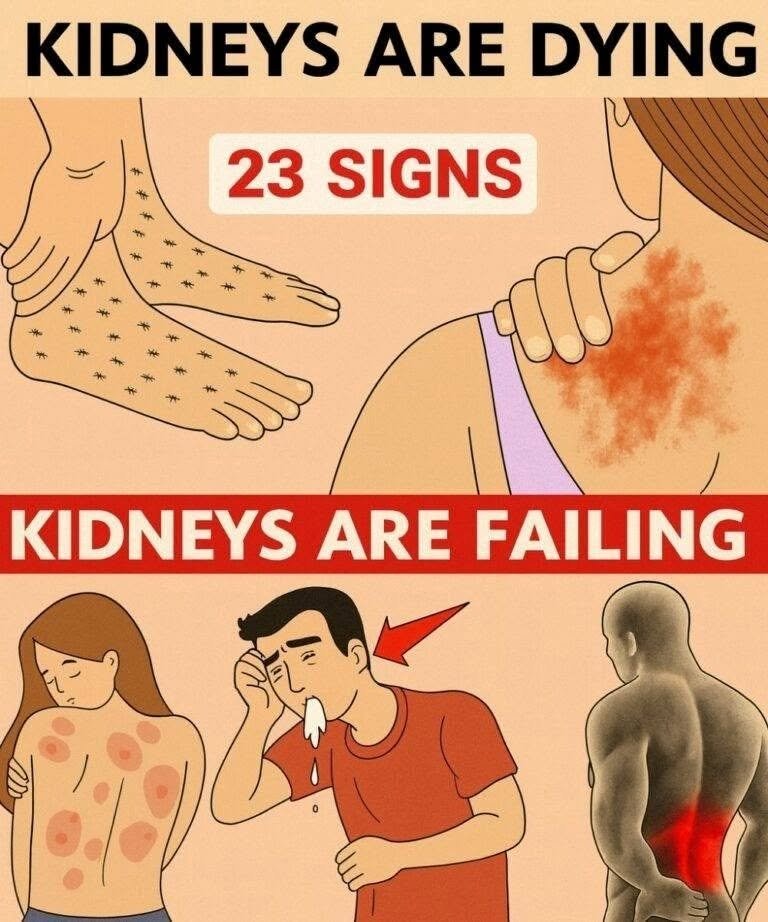
When people think of kidney trouble, they usually picture lower back pain or changes in urination. However, because the kidneys act as the body’s master filtration and chemical balancing system, when they begin to struggle, it can trigger a surprisingly wide range of unusual, seemingly unrelated signs throughout the entire body.
While clickbait headlines often exaggerate lists with numbers like “23 strange signs,” medical professionals do look at a fascinating spectrum of early and advanced indicators that signal kidney distress.
Key Warning Signs Your Kidneys May Be Struggling
-
Persistent Puffiness Around the Eyes (Periorbital Edema):
-
Why it happens: When kidneys are damaged, they can leak a large amount of protein into the urine instead of keeping it in the body. This protein loss often leads to noticeable swelling or puffiness, particularly around the eyes in the morning.
-
-
Foamy or Bubbly Urine:
-
Why it happens: Excessive bubbles in the toilet—resembling scrambled eggs or beer foam that requires multiple flushes—usually indicate excess protein (albumin) escaping into the urine.
-
-
Swollen Ankles, Feet, or Hands:
-
Why it happens: Reduced kidney function prevents the body from effectively eliminating extra sodium and fluid. This fluid retention leads to edema, most commonly pooling in the lower extremities.
-
-
Severe, Unrelenting Itchy Skin (Pruritus):
-
Why it happens: When kidneys can no longer keep the right balance of minerals and nutrients in the blood, a dangerous buildup of phosphorus can occur, causing deep, bone-level itching that doesn’t respond to standard lotions.
-
-
Changes in Urination Frequency (Especially at Night):
-
Why it happens: If the kidneys’ filtering units (nephrons) are damaged, it can alter your need to urinate, frequently causing you to wake up multiple times during the night to go (nocturia).
-
-
Metallic Taste in the Mouth or Ammonia Breath:
-
Why it happens: A buildup of waste products in the blood (a condition called uremia) can change your taste buds, make food taste metallic, and even cause bad breath that smells faintly like ammonia.
-
-
Unexplained Fatigue and Brain Fog:
-
Why it happens: Healthy kidneys make a vital hormone called EPO (erythropoietin), which tells your body to make oxygen-carrying red blood cells. Failing kidneys make less EPO, leading to anemia, chronic exhaustion, and trouble concentrating.
-
-
Muscle Cramps (Especially in the Legs):
-
Why it happens: Imbalances in electrolytes—such as low calcium or poorly controlled phosphorus and potassium levels—frequently trigger painful muscle spasms and cramps.
-
Important Medical Takeaway
Many early stages of chronic kidney disease (CKD) are completely “silent,” meaning you might not feel sick at all until the condition is more advanced. High blood pressure and unmanaged diabetes are the two leading causes of long-term kidney strain.
If you or someone you know is noticing persistent swelling, foamy urine, or unexplained fatigue, a simple routine blood test (checking creatinine and eGFR) and a basic urine test ordered by a doctor can quickly evaluate how well your kidneys are functioning.
