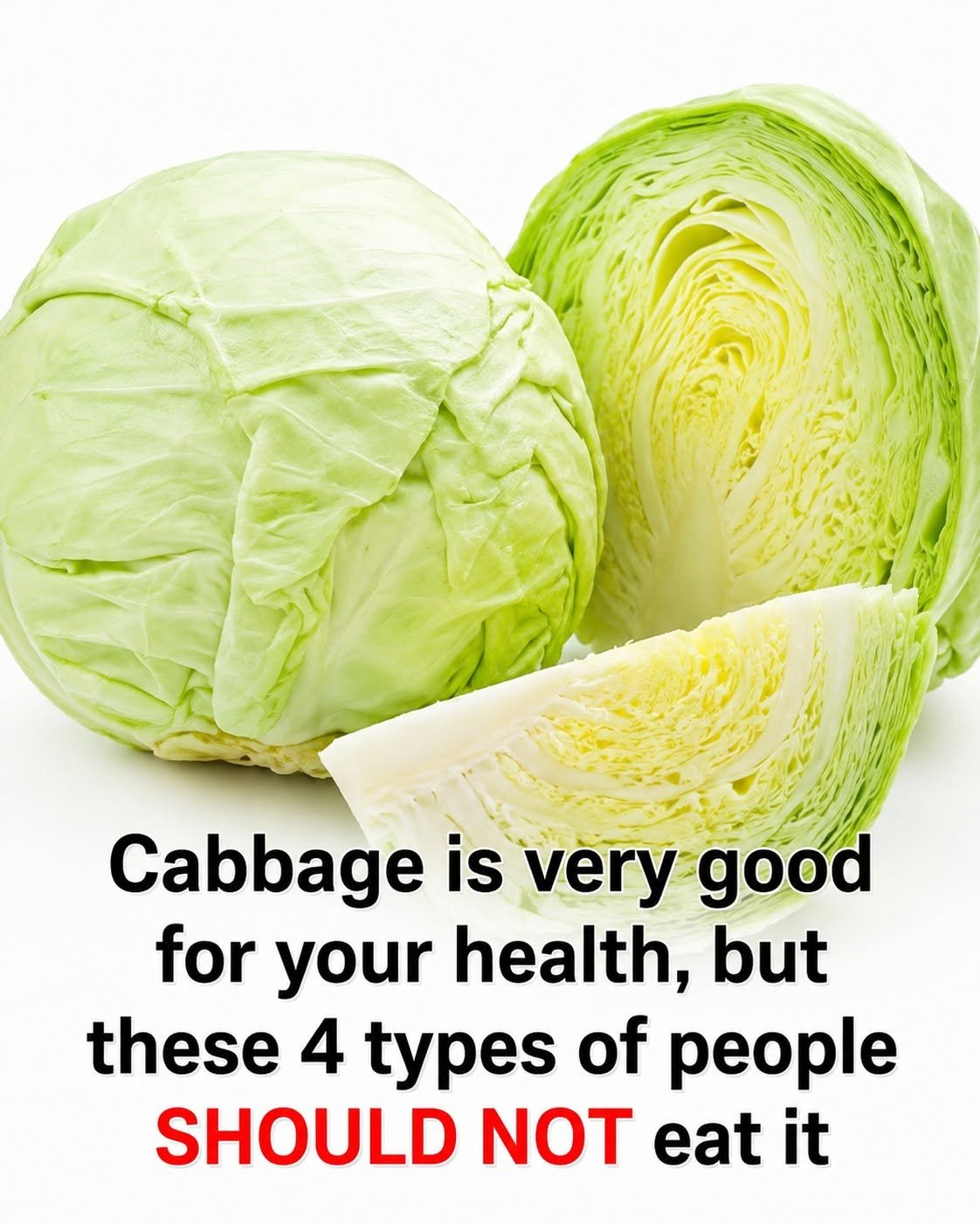
That headline loves to take a wholesome, nutrient-dense cruciferous vegetable and wrap it in a layer of dietary alarmism. By warning that specific groups of people “must avoid” cabbage, it turns a healthy food into a hidden hazard.
In clinical reality, cabbage is a powerhouse of fiber, vitamin C, vitamin K, and protective antioxidants (like glucosinolates). However, like almost any high-fiber, bioactive food, there are certain medical situations where individuals need to manage their intake rather than banish cabbage from their plates entirely.
Here is the grounded, clinical reality behind who needs to be mindful of cabbage and why:
1. People Taking Blood-Thinners (Anticoagulants)
-
The Concern: Cabbage is exceptionally rich in Vitamin K, which plays a critical role in blood clotting. If you take anticoagulant medications like warfarin (Coumadin), sudden, drastic shifts in your Vitamin K intake can interfere with how your medication works.
-
The Clinical Reality: You do not need to avoid cabbage completely. Instead, consistency is key. Keep your intake steady from week to week so your doctor can calibrate your medication dosage to match your normal diet.
2. Individuals with Irritable Bowel Syndrome (IBS) or FODMAP Sensitivities
-
The Concern: Cabbage contains complex carbohydrates called FODMAPs (specifically raffinose and fructans), along with insoluble fiber. For a sensitive gut, these compounds ferment rapidly in the large intestine, producing excess gas, bloating, and abdominal cramps.
-
The Clinical Reality: If you have severe IBS, raw cabbage might trigger discomfort. However, cooking cabbage breaks down some of those complex fibers, and many people tolerate small, manageable portions just fine.
3. People with Hypothyroidism (Underactive Thyroid)
-
The Concern: Cruciferous vegetables contain compounds called goitrogens, which can theoretically interfere with the thyroid gland’s ability to absorb iodine if consumed in massive, raw quantities over long periods.
-
The Clinical Reality: Unless you are eating mountains of raw cabbage daily alongside an existing iodine deficiency, normal dietary portions pose virtually zero risk to your thyroid function. Cooking cabbage neutralizes most of its goitrogenic properties entirely.
4. Anyone Prone to Severe Acid Reflux or GERD
-
The Concern: Raw cabbage is fibrous, dense, and can take longer to digest. Eaten in large quantities—especially late at night—it can sit heavily in the stomach and trigger acid reflux or heartburn for sensitive individuals.
-
The Clinical Reality: This is entirely about portion size and preparation. Lightly steaming or fermenting cabbage (like in sauerkraut) makes it much easier on the digestive tract.
The Takeaway: Cabbage isn’t a hidden poison for specific types of people; it’s a nutrient-packed vegetable that certain individuals just need to moderate or cook properly depending on their gut sensitivity, medications, or thyroid health.
Did this dramatic warning pop up while you were looking up healthy recipes, or are you navigating a specific dietary restriction right now?
