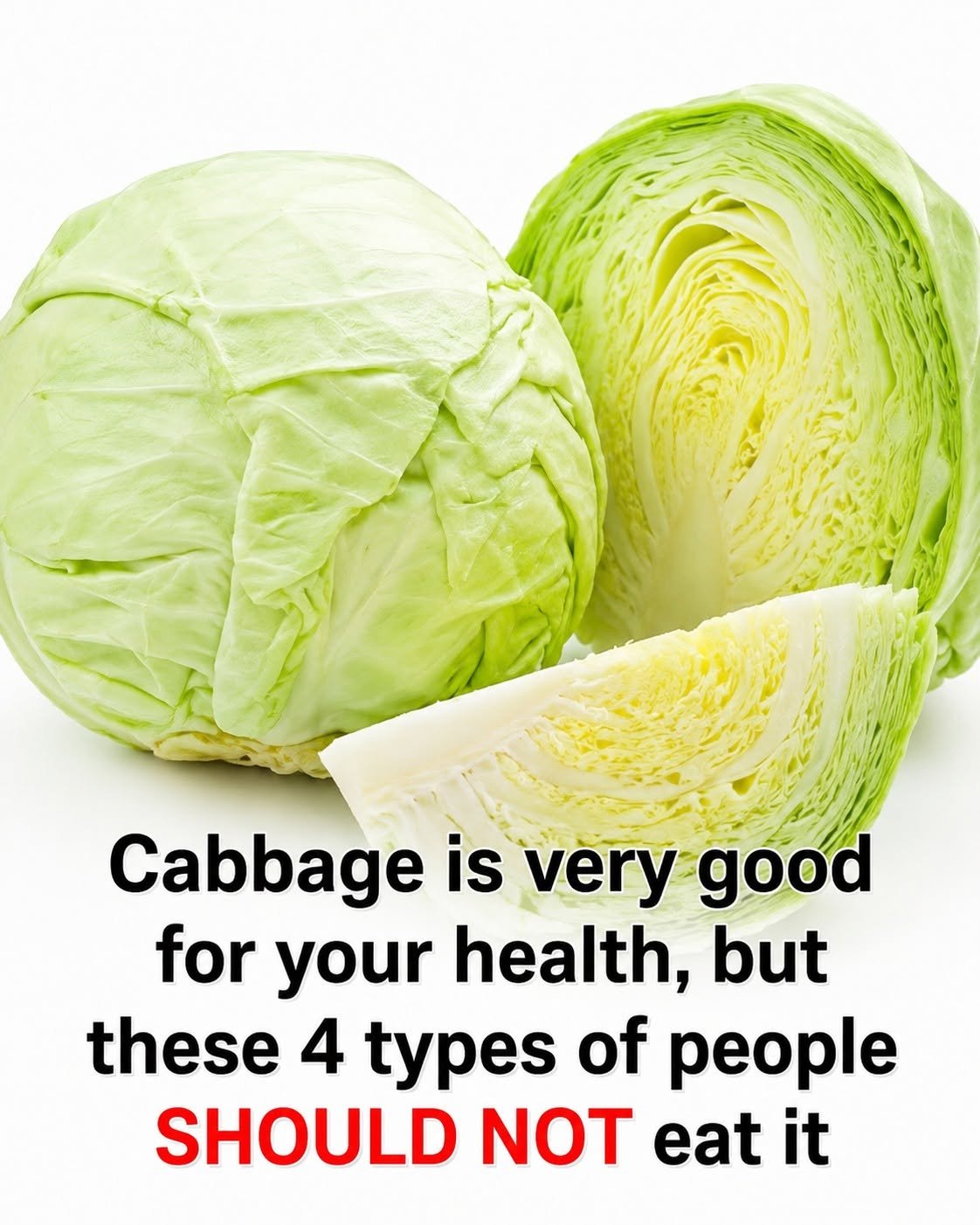
That headline is a classic piece of internet health fear-mongering. It takes a healthy, nutrient-dense cruciferous vegetable and tries to scare you into thinking it’s a hidden dietary hazard that might secretly be harming you.
In clinical reality, cabbage is an exceptionally healthy food packed with fiber, vitamin C, vitamin K, and powerful antioxidants. For the vast majority of people, eating cabbage is entirely beneficial. However, like any specific food, there are certain medical contexts where individuals need to monitor their intake—not because cabbage is “toxic,” but because of how its specific chemical compounds interact with certain health conditions or medications.
Here is the un-sensationalized medical reality behind who needs to be mindful of cabbage and why:
1. Individuals on Blood Thinners (Anticoagulants)
This is the most well-established clinical interaction involving cruciferous vegetables.
-
The Mechanism: Cabbage is exceptionally rich in Vitamin K, a nutrient that plays a vital role in blood clotting. Medications like warfarin (Coumadin) work precisely by antagonizing Vitamin K to prevent dangerous blood clots.
-
The Reality: You do not have to banish cabbage from your plate if you are on blood thinners. Modern cardiology guidelines emphasize consistency rather than strict elimination. If you suddenly start eating massive amounts of cabbage (or stop eating it entirely), it can fluctuate your Vitamin K levels and disrupt your medication’s efficacy. The key is keeping your intake steady and communicating with your doctor or clinical dietician.
2. People with Irritable Bowel Syndrome (IBS) or Severe Bloating
If you have a sensitive digestive tract, cruciferous vegetables can sometimes trigger uncomfortable symptoms.
-
The Mechanism: Cabbage contains raffinose, a complex sugar (oligosaccharide) that humans lack the specific enzyme to break down in the upper gut. When it reaches the large intestine, gut bacteria ferment it, producing gas. It is also high in fermentable fibers (FODMAPs).
-
The Reality: This doesn’t mean cabbage causes organ damage or disease. It simply means that if you struggle with chronic bloating, gas, or IBS, raw or large amounts of cabbage can exacerbate those symptoms. Cooking cabbage thoroughly breaks down some of these complex structures, making it much easier to digest.
3. Individuals with Hypothyroidism (Goitrogens)
Internet articles love to claim that cabbage will “destroy your thyroid,” but the science is far more nuanced.
-
The Mechanism: Cabbage contains compounds called goitrogens, which can theoretically interfere with the thyroid gland’s ability to uptake iodine if consumed in massive, unrealistic quantities.
-
The Reality: For someone with normal thyroid function, eating standard portions of cabbage poses zero risk to the thyroid. Even for individuals with hypothyroidism, moderate consumption of cooked cabbage is completely safe because the cooking process inactivates most of the goitrogenic compounds. You would have to eat raw cabbage by the truckload to cause a clinical issue.
4. Anyone with a True Allergy or Oral Sensitivity
While rare, food sensitivities exist for every single food on earth.
-
The Reality: A tiny subset of individuals may experience an IgE-mediated allergic reaction or cross-reactivity (such as oral allergy syndrome) to certain plant proteins. If eating cabbage consistently causes hives, swelling, or digestive distress, it’s a personal intolerance rather than a universal poison.
The Takeaway: Cabbage is a nutritional powerhouse, not a hidden danger. Unless you are managing specific medication interactions like blood thinners or dealing with severe IBS, there is no clinical reason to cut it out of your diet.
Did a dramatic nutrition blog try to convince you that a humble head of cabbage is dangerous, or were you looking up dietary guidelines for a specific health condition?
