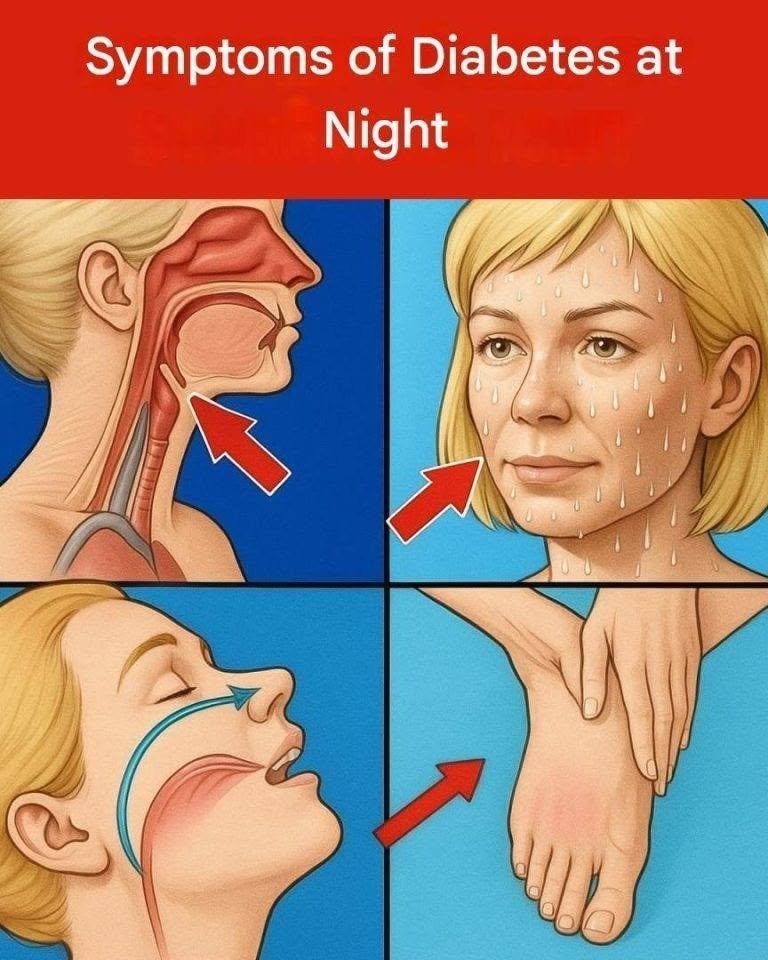
Medical Context: Nocturnal symptoms related to diabetes typically stem from hyperglycemia (high blood sugar), hypoglycemia (low blood sugar, often medication-induced), or diabetic neuropathy/autonomic dysfunction.
5 Diabetes Symptoms That Happen at Night
| Symptom | Underlying Cause | What It Looks/Feels Like |
| 1. Nocturia (Frequent Urination) | Hyperglycemia causing osmotic diuresis | Waking up 2+ times per night to urinate due to excess glucose pulling fluid into urine. |
| 2. Nocturnal Hypoglycemia Sweats & Tremors | Drop in blood glucose (<70 mg/dL), often reactive or insulin-driven | Drenching night sweats, cold/clammy skin, racing heart, or vivid/disturbed nightmares. |
| 3. Burning, Tingling, or Pain in Feet/Legs | Peripheral neuropathy | Worsening nerve pain, “pins and needles,” or burning sensation that peaks when lying down/warming up in bed. |
| 4. Excessive Thirst & Dry Mouth (Polydipsia) | Fluid loss from nocturia + high serum osmolarity | Waking up with a parched, sticky mouth and a strong urge to drink water overnight. |
| 5. Nocturnal Leg Cramps or Restlessness | Electrolyte imbalances, poor microcirculation, or neuropathy | Sudden, painful calf/foot muscle contractions or restless leg discomfort disturbing sleep continuity. |
Quick Differentiation: High vs. Low at Night
-
High Blood Sugar (Hyperglycemia): Usually paired with high morning readings, dry mouth, and frequent urination overnight.
-
Low Blood Sugar (Hypoglycemia): Often features sudden sweating, shakiness, confusion upon waking, or headache/fatigue the next morning (the Somogyi effect or nocturnal hypo rebound).
Safety Note: Persistent nighttime symptoms warrant checking overnight or fasting blood glucose levels and consulting an endocrinologist or primary care physician to adjust medication or evaluate neuropathy progression.
Are you experiencing these symptoms yourself or tracking them for someone with a diagnosed diabetes regimen?
