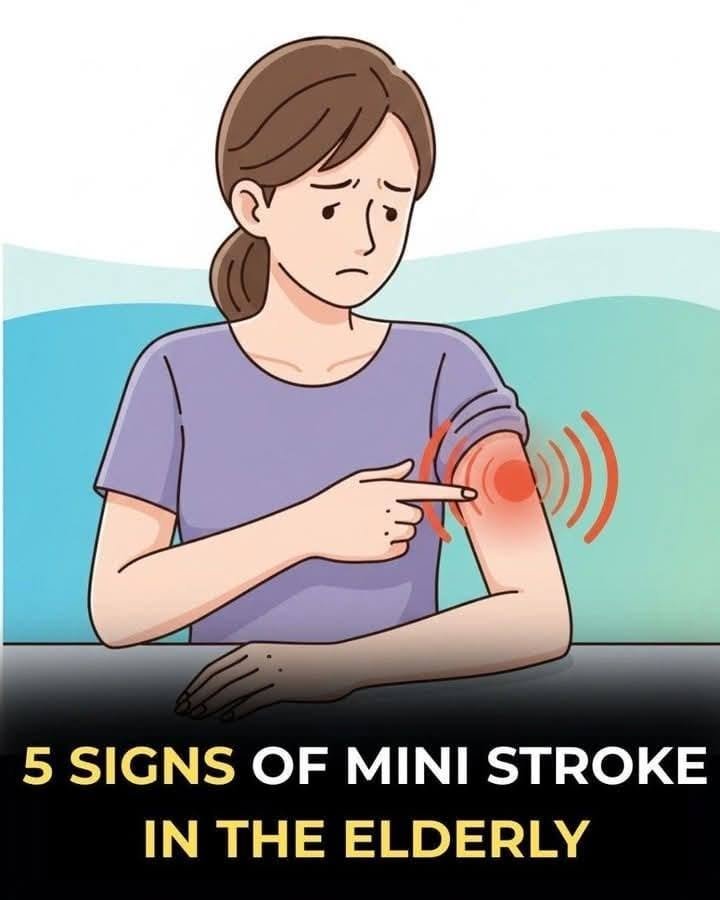
A mini-stroke—medically known as a Transient Ischemic Attack (TIA)—occurs when blood flow to a part of the brain is temporarily blocked. Unlike a major stroke, the blockage is brief, and the symptoms typically resolve within a few minutes to 24 hours without leaving permanent damage.
However, a TIA is a critical medical emergency and a major warning sign. Up to a third of people who have a TIA will eventually go on to have a full-blown stroke, with the highest risk occurring within the first few days and weeks following the mini-stroke.
Recognizing the subtle or sudden signs in older adults is vital. Doctors use the FAST acronym alongside other neurological indicators to identify a TIA:
1. Sudden Facial Droop or Numbness
-
The Sign: One side of the face suddenly droops or feels numb. If you ask the person to smile, their smile will appear uneven, or one corner of the mouth will sag downward.
-
Why it happens: A temporary disruption in blood flow affects the specific area of the brain that controls facial muscles.
2. Sudden Weakness or Numbness in One Arm (or Leg)
-
The Sign: Sudden weakness, heavy numbness, or a complete inability to lift one arm or leg. If you ask them to hold both arms out straight in front of them, one arm will drift downward uncontrollably.
-
Why it happens: The brain’s motor cortex, which controls limb movement on the opposite side of the body, is briefly deprived of oxygen.
3. Slurred Speech or Difficulty Finding Words
-
The Sign: Sudden slurring of speech, talking in a garbled or incoherent manner, or an inability to articulate words or understand what you are saying. They may sound confused or struggle to name simple objects.
-
Why it happens: The disruption hits the brain’s language centers (such as Broca’s or Wernicke’s areas), impairing communication.
4. Sudden Loss of Balance, Dizziness, or Coordination
-
The Sign: Sudden, uncharacteristic clumsiness, a feeling of the room spinning, staggering while walking, or a total loss of balance and coordination.
-
Why it happens: This typically indicates a TIA affecting the cerebellum or brainstem, the areas responsible for balance and spatial orientation.
5. Sudden Visual Disturbances in One or Both Eyes
-
The Sign: Sudden blurring, double vision, dimming of sight, or a complete temporary loss of vision in one eye (often described as a dark curtain coming down over their field of vision).
-
Why it happens: Temporary interruption of blood flow to the optic nerve or the visual processing centers of the brain.
CRITICAL ACTION REQUIRED: Even if all these symptoms completely disappear within 5 minutes and the person feels totally fine, you must call emergency services (911) or go to the nearest emergency room immediately. Never wait to see if it happens again. A TIA is your body’s ultimate “fire alarm” for a major stroke, and immediate medical evaluation can save a life.
Have you or someone you know recently experienced any sudden, temporary episodes like these?
