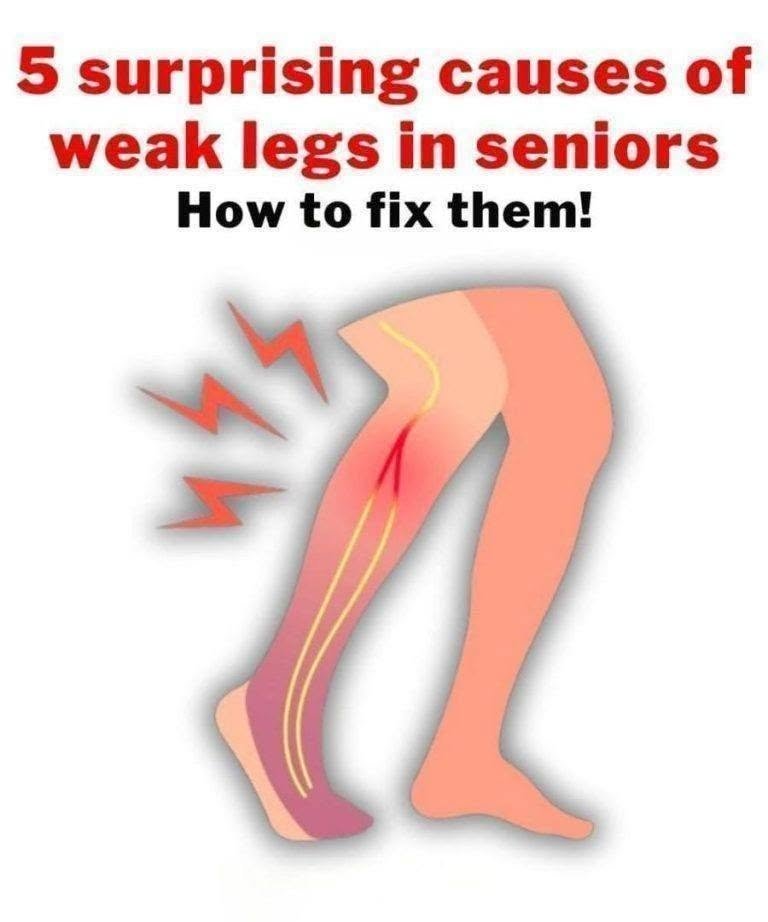
That classic health headline hits on a very common and frustrating clinical puzzle for older adults. When seniors experience progressive lower-extremity weakness, the default assumption is often just “getting older” or normal muscle loss (sarcopenia). However, geriatricians and physical therapists know that sudden or pronounced leg weakness is frequently driven by overlooked systemic, neurological, or nutritional triggers.
Here are 5 surprising causes of weak legs in seniors and the actionable, preventative ways to address them:
1. Chronic, Low-Grade Dehydration and Electrolyte Depletion
-
The Cause: As we age, our natural sense of thirst declines, meaning many seniors quietly live in a state of mild dehydration. When total body water and electrolyte levels (like potassium, magnesium, and sodium) drop, nerve signaling and muscle contraction become sluggish and inefficient, leading to sudden weakness, cramping, and heavy limbs.
-
The Fix: Prioritize consistent fluid intake paired with balanced electrolytes rather than just plain water. Adding a pinch of high-quality mineral salt, sipping bone broth, or utilizing low-sugar electrolyte packets can rapidly restore neuromuscular function.
2. Vitamin B12 Deficiency (The Neurological Mimic)
-
The Cause: Stomach acid production naturally decreases with age, making it much harder for the body to absorb Vitamin B12 from food. A deficiency doesn’t just cause fatigue; it can quietly damage the protective myelin sheath surrounding peripheral nerves, leading to leg weakness, unsteadiness, numbness, and a “heavy” feeling in the thighs.
-
The Fix: Request a routine B12 and methylmalonic acid (MMA) blood panel from your doctor. If absorption is an issue, sublingual B12 lozenges or injections bypass the gut entirely to restore nerve health.
3. Medication-Induced Myopathy (Statins and Blood Pressure Drugs)
-
The Cause: Many common medications prescribed to older adults—particularly cholesterol-lowering statins or certain diuretics—can cause drug-induced myopathy (muscle weakness, soreness, or breakdown). These drugs interfere with cellular energy production (coenzyme Q10 synthesis) in muscle tissue.
-
The Fix: Never stop a prescription independently, but always review your medication cabinet with a pharmacist or physician if unexplained muscle weakness sets in. Discussing a CoQ10 supplement or exploring alternative dosages can often resolve statin-related weakness.
4. Hidden Lumbar Spinal Stenosis (Nerve Compression)
-
The Cause: Years of wear and tear on the spine can lead to narrowing of the spinal canal (spinal stenosis) in the lower back. When standing or walking, the narrowed canal pinches the nerves traveling down to the legs, causing heaviness, cramping, or sudden weakness that forces the person to sit down and rest.
-
The Fix: Physical therapy focusing on core stability, gentle spinal flexion, and specialized postural adjustments can decompress the nerves. In more advanced cases, evaluation by a spine specialist or neurologist is key.
5. Inadequate Dietary Protein and “Anabolic Resistance”
-
The Cause: Aging bodies become less efficient at processing dietary protein to build and maintain muscle—a phenomenon called anabolic resistance. If a senior’s diet leans heavily on toast, tea, and crackers while skimping on high-quality protein, muscle mass wastes away rapidly (sarcopenia).
-
The Fix: Shift dietary focus toward easily digestible, nutrient-dense proteins (such as eggs, bone broth, slow-cooked meats, fish, or high-quality protein shakes) distributed evenly across meals to trigger muscle protein synthesis.
The Preventative Perspective
Lower-extremity weakness in older adults is almost always a signal rather than an inevitability. Addressing hydration, checking key nutrient levels, and ensuring adequate protein intake can dramatically preserve mobility, balance, and independence.
Are you or a loved one currently navigating sudden leg fatigue, or looking into ways to support strength and mobility as you age?
