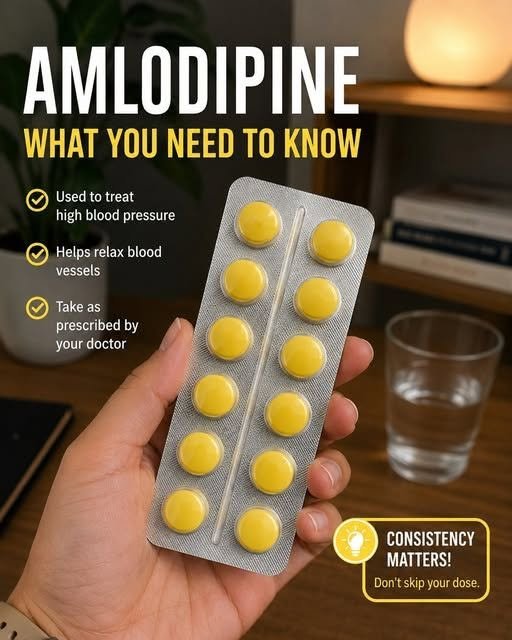
That classic clickbait countdown—“8 Habits You Should Stop This Year If You Are Taking Amlodipine… and Why”—uses the exact same playbook: take a standard maintenance medication and frame daily life as a minefield of hidden dangers.
While you don’t need to completely overhaul your lifestyle or panic over normal routines, taking a calcium channel blocker like amlodipine does mean your cardiovascular system operates under a specific pharmacological profile. Certain everyday habits can either fight against the drug or compound its side effects.
Strip away the alarmist countdown structure, and clinical pharmacology points to a few genuine behavioral adjustments you should keep in mind:
Habits to Monitor (And Why They Matter)
-
Overdoing Regular NSAID Use (Like Ibuprofen):
-
The Habit: Reaching for ibuprofen (Advil, Motrin) or naproxen (Aleve) constantly for everyday aches and pains.
-
Why: NSAIDs cause your body to retain sodium and water, and they can constrict blood vessels. This directly counteracts the mechanism of amlodipine, making your blood pressure medication less effective. Occasional use is usually fine, but a daily habit can quietly sabotage your blood pressure control.
-
-
Ignoring Sudden Shifts When Standing Up (Orthostatic Triggers):
-
The Habit: Springing out of bed or standing up too quickly from a deep couch.
-
Why: Because amlodipine relaxes and widens your blood vessels to lower pressure, fast postural changes can temporarily starve your brain of optimal blood flow, leading to lightheadedness or dizziness. Giving your body a few seconds to transition prevents this.
-
-
Heavy, Unchecked Salt Consumption:
-
The Habit: Eating a heavily processed, high-sodium diet while assuming the pill will “cancel it out.”
-
Why: Sodium pulls water into your bloodstream, increasing total fluid volume and pressure against your arterial walls. High dietary sodium forces amlodipine to work uphill against a constant influx of fluid retention.
-
-
Mindless Consumption of Certain Juices (Like Grapefruit or Pomegranate):
-
The Habit: Drinking large amounts of grapefruit juice or pomegranate juice regularly.
-
Why: While less intensely reactive with amlodipine than it is with other specific statins or blood pressure drugs (like felodipine), grapefruit and certain citrus/pomegranate juices contain furanocoumarins. These compounds can inhibit the liver enzymes (CYP3A4) responsible for breaking down amlodipine, potentially causing the drug to build up in your system and heighten side effects like swelling or low blood pressure.
-
-
Coupling It with Excessive Alcohol:
-
The Habit: Enjoying several drinks without accounting for how alcohol affects circulation.
-
Why: Alcohol is a vasodilator (it expands blood vessels). Combined with amlodipine’s vessel-relaxing effects, heavy drinking can cause an additive drop in blood pressure, triggering intense dizziness, flushing, fatigue, or fainting spells.
-
-
Stopping or Skipping Doses Erratically:
-
The Habit: Missing pills or stopping cold turkey because you “feel fine today.”
-
Why: Blood pressure medications rely on a steady, consistent concentration in your bloodstream to keep your arteries relaxed. Sporadic dosing causes your blood pressure to bounce up and down (rebound hypertension), which stresses your vascular walls far more than a consistently managed baseline.
-
The Takeaway
You don’t need to live in fear of ordinary habits, but working with your medication rather than against it makes a massive difference. Simple tweaks—like swapping routine NSAIDs for alternatives like acetaminophen when approved by your doctor, keeping an eye on sodium, and rising slowly—keep your treatment smooth and effective.
Are you or a loved one looking to optimize a daily routine around a blood pressure prescription, or tracking down other common lifestyle myths?
