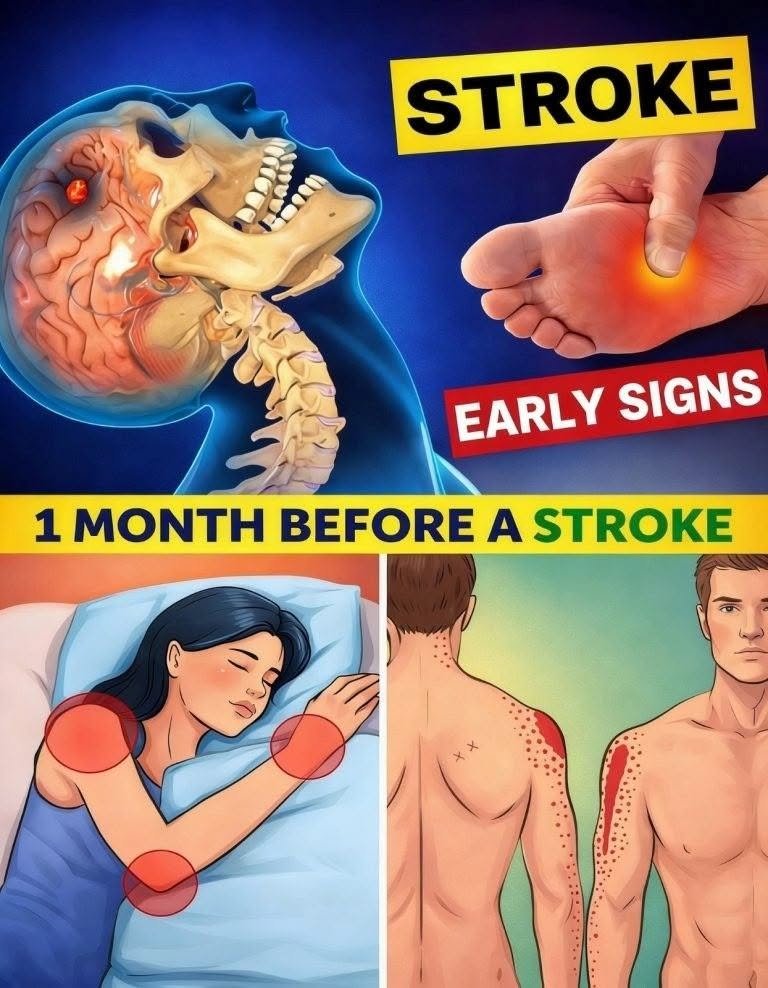
That headline is a high-anxiety classic, weaponizing the fear of a medical emergency by inventing a precise countdown (“one month before”) to create maximum panic. When viral health articles claim your body sends out a neat checklist of eight specific warnings weeks in advance of a stroke, they blur the line between actual acute medical symptoms and vague, everyday bodily aches.
In clinical reality, a stroke is an acute vascular event, but understanding your risk and recognizing true warning signs is genuinely vital.
Here is the un-sensationalized medical reality behind stroke symptoms, the myth of the “one-month notice,” and true prevention:
1. The Myth of the “One-Month Warning List”
Internet articles love to compile a laundry list of vague symptoms—like general headaches, fatigue, dizziness, or muscle twitches—and label them as “stroke warnings from a month prior.”
-
The Reality: A true stroke (whether ischemic or hemorrhagic) is an acute, sudden disruption of blood flow to the brain. While some people experience minor, temporary warning episodes called Transient Ischemic Attacks (TIAs)—often called “ministrokes”—these typically occur hours or days, not a neat 30 days, before a major event, and they require immediate emergency evaluation.
-
Vague Symptoms Are Not a Countdown: Everyday headaches, joint stiffness, or feeling tired do not mean you are having a month-long countdown to a stroke. Attributing unrelated discomforts to a looming medical disaster only causes unnecessary health anxiety.
2. What True Stroke Warnings Look Like (FAST)
Instead of looking for mysterious signs a month out, neurologists rely on immediate, unmistakable neurological red flags. The gold standard for remembering them is the FAST acronym:
-
F – Face Drooping: Does one side of the face droop, or is it numb?
-
A – Arm Weakness: Is one arm weak or numb? If the person tries to raise both arms, does one drift downward?
-
S – Speech Difficulty: Is speech slurred, are they unable to speak, or are they hard to understand?
-
T – Time to call emergency services: If you observe any of these signs, time is critical. Brain tissue is rapidly lost during a stroke, so immediate medical intervention saves lives and reduces permanent disability. Other acute signs include sudden confusion, severe sudden headache with no known cause, or sudden trouble seeing in one or both eyes.
3. Real, Evidence-Based Stroke Prevention
You don’t need a 9-step internet miracle list to protect your cerebrovascular health. Cardiologists and neurologists agree that stroke prevention boils down to managing core vascular risk factors over time:
-
Blood Pressure Control: Hypertension is the single biggest controllable risk factor for stroke. Keeping your blood pressure in a healthy range protects the fragile blood vessels in your brain.
-
Managing Metabolic Health: Keeping blood sugar levels stable (preventing or managing diabetes) and maintaining healthy cholesterol profiles prevent plaque buildup in your arteries.
-
Lifestyle Fundamentals: Regular cardiovascular exercise, avoiding smoking, limiting excessive alcohol, and eating a balanced diet rich in whole foods, fiber, and potassium drastically reduce your lifetime stroke risk.
जनगणना > The Takeaway: Strokes don’t provide a neat 30-day warning checklist of vague aches; they are acute emergencies signaled by sudden neurological changes like face drooping, arm weakness, and slurred speech. Real prevention is a long-term commitment to heart and vascular health.
Did a terrifying countdown video pop up on your feed, or were you looking into ways to support long-term cardiovascular health?
