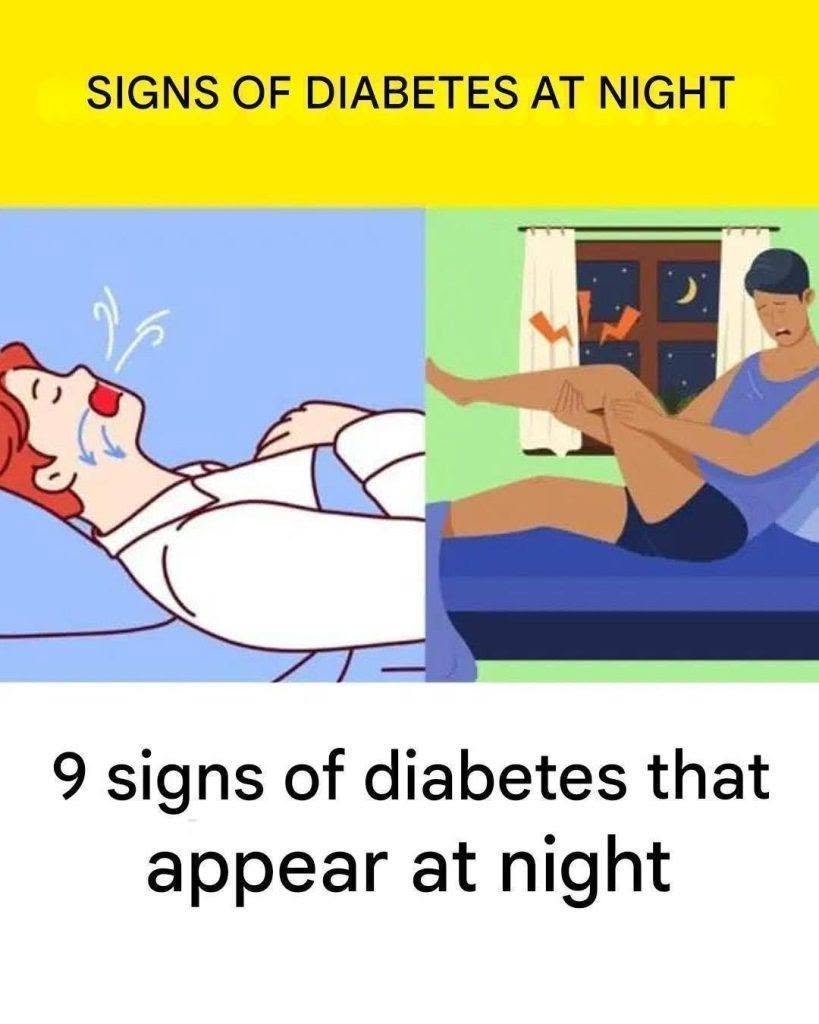
Nighttime symptoms often serve as an early indicator of shifting blood sugar levels, as sensory distractions fade and the body enters rest mode. Uncontrolled glucose levels can cause noticeable overnight disruptions.
Here are 9 key signs of potential diabetes or high blood sugar that manifest at night:
1. Frequent Nighttime Urination (Nocturia)
When blood glucose levels cross the renal threshold, your kidneys work overtime to filter and excrete the excess sugar through urine. This draws fluid out of tissues, forcing you to wake up multiple times during the night to empty your bladder.
2. Intense Midnight Thirst (Polydipsia) & Dry Mouth
Because frequent urination drains fluids and key electrolytes (such as potassium and magnesium), you may wake up with a parched mouth and an unquenchable thirst. Drinking water offers only temporary relief while blood sugar remains elevated.
3. Night Sweats & Sudden Midnight Arousal
If blood sugar drops too low overnight (nocturnal hypoglycemia)—often due to medication, missed dinners, or late insulin spikes—the body releases a surge of stress hormones like adrenaline and cortisol. This triggers sudden awakenings with a racing heart, cold sweats, or anxiety.
4. Burning, Tingling, or Numbness in the Feet
High blood glucose over time damages micro-blood vessels supplying peripheral nerves. This condition, diabetic neuropathy, causes burning, pins-and-needles, or sharp sensations that typically intensify when lying down due to reduced sensory distraction at night.
5. Nocturnal Leg & Foot Cramps
High blood sugar alters electrolyte balance—depleting magnesium while causing localized tissue dehydration. Combined with reduced peripheral circulation, this frequently leads to painful, involuntary spasms in the calves and feet during sleep.
6. Restless Legs Syndrome (RLS)
The overwhelming, uncomfortable urge to shift or move your legs when lying down is closely linked to nerve hyperexcitability and metabolic imbalances caused by elevated insulin and glucose levels.
7. Waking Up with Loud Snoring or Gasping (Sleep Apnea)
Insulin resistance and Type 2 diabetes are strongly correlated with Obstructive Sleep Apnea (OSA). Airway collapse causes temporary oxygen drops, leading to loud snoring, sudden choking or gasping episodes, and dry mouth upon waking.
8. Vivid Nightmares or Early Morning Headaches
Unstable overnight glucose levels—either high spikes or low crashes—disrupt normal sleep architecture (REM cycles) and restrict cellular energy supply to the brain. This can cause vivid dreams, nightmares, and waking up with a dull morning headache or feeling unrefreshed.
9. Late-Night Hunger Pangs (Polyphagia)
When insulin resistance prevents glucose from entering cells properly, your brain senses that your body is “starving” even if blood sugar is high. This triggers sudden late-night cravings or waking up feeling intensely hungry.
What to Do If You Notice These Signs
| Action Step | Clinical Rationale |
| Check Fasting Blood Sugar | Schedule an HbA1c test and fasting blood glucose evaluation with your healthcare provider. |
| Review Evening Nutrition | Avoid high-refined carbohydrate meals or sugary snacks late in the evening. |
| Hydrate & Balance Electrolytes | Sip water steadily during the day rather than chugging large amounts right before bed. |
If you’d like to understand these nocturnal signals better, Don’t IGNORE These Nighttime Signs of Diabetes walks through how nighttime blood sugar fluctuations impact sleep and nerve function.
