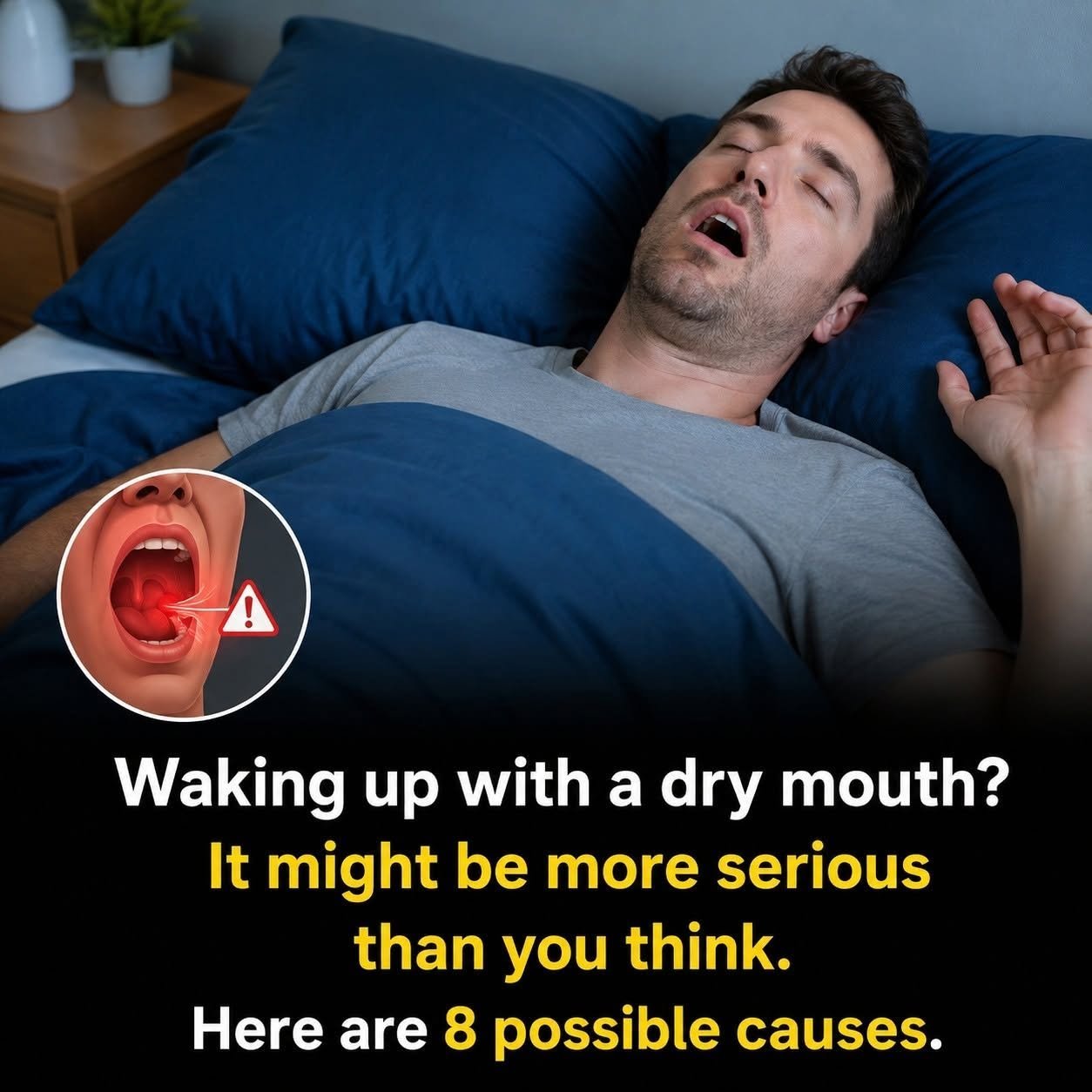
Dry Mouth at Night: 8 Warning Signs You Shouldn’t Ignore
Waking up occasionally with a dry mouth is common—often caused by sleeping with your mouth open, mild dehydration, or dry bedroom air. However, persistent nighttime dry mouth (medically known as xerostomia) can be more than just an annoying discomfort. Saliva plays a vital role in protecting your oral health, neutralizing acids, and keeping your throat lubricated.
When your salivary glands chronically underproduce saliva while you sleep, it can signal underlying health shifts or lead to complications that shouldn’t be ignored.
8 Warning Signs & Complications of Chronic Nighttime Dry Mouth
-
1. Frequent Dental Decay and Cavities (Especially Near the Gumline): Without the washing and mineral-restoring effects of saliva, your teeth lose their natural defense shield against plaque and cavity-causing bacteria.
-
2. Chronic Bad Halitosis (Morning Breath that Lingers): Saliva helps wash away food particles and dead cells. A dry mouth creates an ideal breeding ground for odor-producing bacteria, leading to persistent bad breath even after brushing.
-
3. Sticky, Thick Saliva or a Cotton-Like Sensation: Waking up feeling like your tongue is stuck to the roof of your mouth, or noticing that your saliva has a thick, ropey, or foamy consistency.
-
4. Difficulty Swallowing, Chewing, or Speaking First Thing: A severe lack of moisture can make it hard to clear your throat, swallow your morning water comfortably, or articulate words clearly until your glands kick back into gear.
-
5. Soreness, Burning, or Redness on the Tongue: The delicate mucous membranes of your mouth and tongue can become irritated, inflamed, or cracked due to constant dryness, sometimes causing a painful or burning sensation.
-
6. Frequent Sore Throats or Hoarseness Upon Waking: If you are breathing through your mouth all night, the dry airflow irritates the lining of your throat, leaving you with a scratchy or raspy voice every morning.
-
7. Changes in Your Sense of Taste: Saliva dissolves food chemicals so your taste buds can process them. Chronic dry mouth often dulls your palate, making food taste bland, metallic, or strange.
-
8. Cracked Lips and Sores at the Corners of the Mouth: A dry oral environment often extends outward, causing chapped lips, painful splitting at the corners of your mouth (angular cheilitis), or frequent canker sores.
Common Causes & When to See a Doctor
Persistent nighttime dry mouth is frequently a side effect of common medications (such as antihistamines, blood pressure drugs, antidepressants, or decongestants), mouth breathing due to nasal congestion or sleep apnea, or systemic conditions like dehydration or salivary gland disorders.
If you experience chronic dry mouth every night, it is worth mentioning to your dentist or primary care physician. They can check for underlying causes, protect your dental enamel with prescription fluoride if needed, or help adjust medications that might be contributing to the issue.
Are you noticing nighttime dry mouth frequently, or is it tied to a specific change like a new medication or seasonal congestion?
