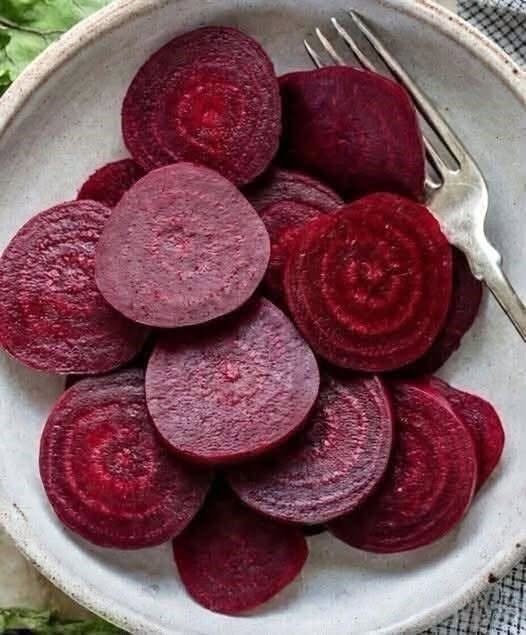
A Deeper Dive into the Science of Beets: Cellular Mechanisms and Nutritional Profile
To truly understand why beets have earned their reputation as a functional superfood, it helps to look closer at their specific biochemical makeup. Beyond basic vitamins and minerals, beets contain unique bioactive compounds that interact directly with our cardiovascular, nervous, and metabolic systems.
1. The Nitrate-Nitric Oxide Pathway: How Beets Lower Blood Pressure
The most extensively researched benefit of beets centers on their high concentration of inorganic nitrates ($NO_3^-$).
-
The Conversion Chain: When you eat beets or drink beet juice, the beneficial bacteria living on your tongue reduce these dietary nitrates into nitrites ($NO_2^-$).
-
Systemic Vasodilation: Once swallowed, stomach acid converts those nitrites into nitric oxide ($NO$) as they enter the bloodstream. Nitric oxide acts as a powerful vasodilator, signaling the smooth muscle cells inside your blood vessels to relax and widen.
-
The Hemodynamic Impact: This widening reduces peripheral vascular resistance, allowing blood to flow more freely. Clinical studies show that drinking a glass of beet juice can noticeably lower blood pressure within just a few hours, offering a natural complement to cardiovascular care.
2. Cellular Energy and Athletic Efficiency
The nitric oxide boost doesn’t just ease blood flow; it fundamentally changes how your cells use energy.
-
Mitochondrial Optimization: Nitric oxide improves the efficiency of oxidative phosphorylation—the process by which your mitochondria produce ATP (cellular energy).
-
Reduced Oxygen Cost: By making energy production more efficient, your muscles require less oxygen to perform the same amount of work. This translates to reduced fatigue and improved endurance during sustained aerobic exercise like walking, cycling, or running.
3. Comprehensive Nutritional Breakdown (Per 100g Raw Beets)
-
Calories: ~43 kcal
-
Carbohydrates: 9.6g (primarily natural sugars and complex dietary fiber)
-
Fiber: 2.8g (supports short-chain fatty acid production in the gut)
-
Folate (Vitamin B9): ~20% of the Daily Value, crucial for DNA synthesis, cellular repair, and cardiovascular protection (by regulating homocysteine levels).
-
Manganese & Potassium: Essential minerals that support bone mineralization, nerve function, and electrolyte balance.
💡 Maximizing Nutritional Retention in the Kitchen
How you prepare beets changes what nutrients you absorb:
-
Raw vs. Cooked: Eating beets raw (shaved thin or juiced) preserves 100% of their heat-sensitive nitrates and vitamin C. However, cooking them (especially roasting or steaming) breaks down tough cell walls, making their antioxidants like betalains much easier for your body to absorb.
-
Don’t Throw Away the Greens: Beet greens (the leafy tops) are actually more nutrient-dense than the root itself! They are loaded with vitamins A, C, and K, as well as calcium and iron. You can sauté them in olive oil and garlic exactly like spinach or Swiss chard.
Are you more interested in using beets for athletic stamina and heart health, or are you looking to experiment with them in new recipes?
